
President Praises Danantara's Performance, SOE Transformation Shows Results
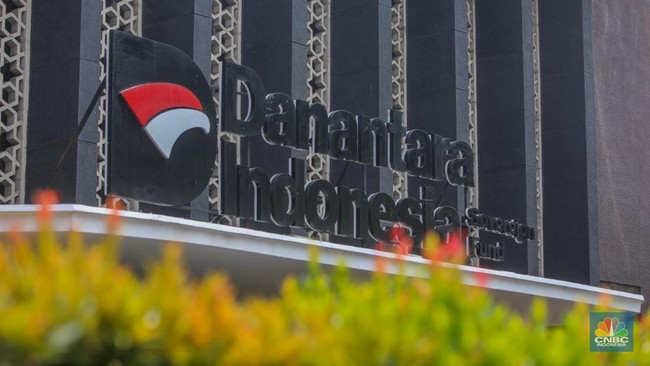
President Prabowo Subianto has praised the performance of the Danantara Indonesia Investment Authority in driving improvements across state-owned enterprises (SOEs). Speaking during his annual address at the Parliament Building in Senayan on Friday (14/8), the President highlighted significant profit growth figures. PT Timah recorded a 804.7% increase in profit, Pupuk Indonesia 253%, Semen Indonesia 196.5%, Pegadaian 84.6%, Pertamina 80%, Pelindo 60.4%, BTN 40.8%, and Bank Mandiri 24.3%.
Beyond profit growth, several SOEs demonstrated successful turnarounds. Krakatau Steel and Kimia Farma, which previously recorded losses, have now returned to profitability. Although the reporting periods vary, the overall performance trajectory indicates a clear positive trend.
The President’s appreciation marks a significant milestone for the SOE transformation under Danantara. Since its inception, the investment authority faced public scepticism, with questions raised about whether consolidating state assets under Danantara could truly make them more productive. These performance indicators are now beginning to provide answers, with improved profitability, corporate turnarounds, and ongoing transformation agendas showing positive momentum in state asset management.
Andre Rosiade, Deputy Chairman of House of Representatives Commission VI from the Gerindra Party, welcomed the positive performance. “This shows that the partnership between Commission VI and Danantara Asset Management has been successful in working together to reform SOEs,” he stated in Jakarta on Friday (14/8/2026). He noted that the partnership includes streamlining efforts to reduce the number of SOEs, making them more effective and efficient, as well as improving performance based on the revised SOE Law that established Danantara.
With Danantara’s presence, SOEs are becoming more focused on their core businesses and reducing non-value-adding activities. Streamlining has led to leaner structures, processes, and costs. State assets are being optimised to generate returns rather than merely sitting on balance sheets. Synergy among SOEs is also being strengthened to unlock economies of scale and scope, ensuring that state assets are managed productively to create value.
Communication analyst Hendri Satrio noted that Danantara’s role extends beyond reviving SOE performance to restoring public optimism. “It is clear that Danantara plays a very important and strategic role in Indonesia’s future development, at least during President Prabowo’s first term, and it is very likely to continue given the strategic role it currently plays,” he said.
The improvement in SOE performance is seen not as a coincidence but as part of a fundamental change in the management of state enterprises, including a focus on core business, organisational efficiency, operational discipline, asset optimisation, and strengthened governance.
Golkar Party politician Bambang Soesatyo stated that SOE reform is a crucial step to ensure state companies are more productive and contribute more significantly to the economy. “Reform of SOEs is a bold and necessary step, as too many unproductive state companies can burden state finances. SOEs must be healthy, professional, productive, and capable of creating added value. However, restructuring must also be carried out transparently, accountably, and professionally,” he said.
Strong SOE performance is not merely about large assets but about disciplined asset management, efficient organisation, and professional management. In this context, Danantara plays a vital role in ensuring state wealth is not just owned but actively managed to create greater value. This change represents not just administrative restructuring but a transformation in how state assets are managed to generate greater value for Indonesia. The fundamental shift is moving the measure of success from who manages state assets to how productively those assets work for the nation.