
President Prabowo’s Two Years of Energy Diplomacy in the Middle East
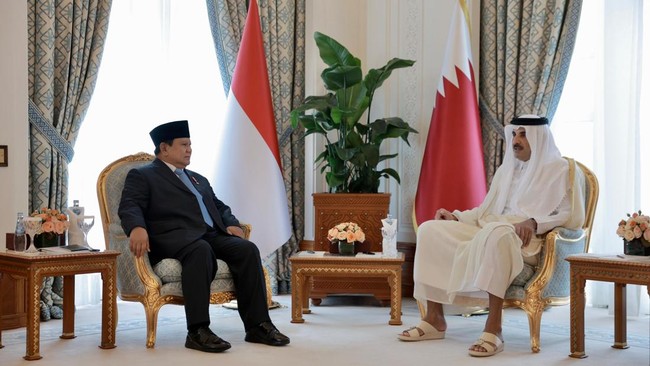
The two years of President Prabowo Subianto’s administration since 20 October 2024 have seen efforts to broaden Indonesia’s strategic ties with Middle Eastern countries, particularly Saudi Arabia, the United Arab Emirates (UAE) and Qatar.
Against a backdrop of global geopolitical change, these relationships are important to Indonesia’s national interests, from securing oil supplies and infrastructure investment to developing renewable energy and strengthening its diplomatic position in a region that is one of the world’s main energy-producing centres.
Energy diplomacy is part of foreign policy, linking domestic economic interests with the dynamics of international relations. Through it, the government seeks to secure access to energy resources, attract investment, expand technological cooperation and reduce the economy’s vulnerability to supply disruptions and global commodity-price fluctuations.
For Indonesia, this agenda is urgent because being an oil-producing country does not automatically guarantee national energy self-sufficiency. High oil consumption, the needs of the processing industry and the imbalance between domestic production and demand mean Indonesia still needs supplies from abroad.
Statistics Indonesia (BPS) data compiled by Katadata show that Indonesia imported around 17.58 million tonnes of crude oil and condensate in 2025. Nigeria accounted for about 26.3 per cent of the total, Angola 21.2 per cent and Saudi Arabia 18.1 per cent. This shows that Indonesia’s supplies come from several regions, while the Middle East continues to play an important role.
This composition provides a basis for assessing the Prabowo administration’s energy-diplomacy priorities more proportionately. The Middle East is a strategic partner because of its production capacity, geographic position and Gulf countries’ role in international energy markets, but it is not the only source supporting Indonesia’s oil needs.
Conceptually, Indonesia’s energy diplomacy should be understood through three interrelated dimensions. The first is supply security through access to oil and its derivatives; the second is investment to strengthen infrastructure and domestic production capacity; and the third is energy transformation through the development of low-carbon sources and improved efficiency.
These dimensions also show that diplomatic success cannot be measured solely by the frequency of presidential meetings or the headline value of announced agreements. More substantive measures include realised investment, certainty of supply contracts, operating infrastructure capacity, technology transfer and measurable changes in the national energy system’s vulnerability.
In this context, the first two years of the Prabowo administration can be seen as a period of strengthening ties and creating opportunities for cooperation. Any assessment of their impact on energy self-sufficiency must distinguish political agreements, investment commitments, definitive contracts and verifiable operational results.
Saudi Arabia, the UAE and Qatar as energy-diplomacy partners
Saudi Arabia has an important place in Indonesia’s energy diplomacy because it is a major oil producer, has influence in global energy markets and offers investment potential. On 2 July 2025, Prabowo met Crown Prince and Prime Minister Mohammed bin Salman in Jeddah to strengthen the two countries’ strategic partnership in the fields of the economy, investment and energy.
The discussions covered crude oil and its derivatives, refineries, petrochemicals, renewable energy, energy storage, clean hydrogen and carbon-management technologies. This scope offers an opportunity to link short-term supply needs with the development of industry and long-term energy transformation.
During the visit, the two countries also announced business agreements and cross-sector cooperation worth around US$27 billion. This figure cannot be treated as entirely realised energy investment, as it covers multiple sectors and forms of agreement at different stages of implementation.
The main challenge in the partnership with Saudi Arabia is turning political commitments into measurable economic benefits. The government needs to ensure that the agreements deliver competitive supply contracts, productive investment, stronger processing industries and verifiable increases in energy-storage capacity.
The UAE offers a different dimension of cooperation through investment in renewable energy and electricity infrastructure. In April 2025, PT PLN and Masdar signed a memorandum of understanding to explore developing a 100-megawatt floating solar power plant at Jatigede Reservoir in West Java.
The cooperation also creates the possibility of further development at the Cirata floating solar plant, which is already operating at a capacity of 145 megawatts. However, the planned Jatigede project must be distinguished from capacity already in operation: the memorandum does not establish that financing, construction and commercial operations have been completed.
For Indonesia, the partnership with the UAE could broaden access to financing and technical expertise for solar development. Its strategic value would be greater if it also strengthened domestic companies’ capabilities, developed the skills of the workforce and supported the integration of renewable energy into the national electricity system.
Qatar completes Indonesia’s energy-diplomacy network through economic ties, investment and bilateral strategic dialogue. The establishment of an Indonesia-Qatar Strategic Dialogue mechanism in April 2025 provides an institutional channel for expanding cross-sector cooperation, although its effectiveness will depend on follow-up through clearly defined programmes and projects.
Qatar’s position as a liquefied natural gas (LNG) exporter makes it relevant to Indonesia’s energy-diversification strategy. However, opportunities for cooperation must be assessed against domestic gas needs, contract prices, the availability of LNG reception infrastructure and the economics of its use in Indonesia’s energy system.
The three countries have different economic characteristics and energy interests, so Indonesia’s diplomatic approach should be tailored to each one’s strengths. Saudi Arabia could be a partner in supplies and the hydrocarbon industry, the UAE could strengthen renewable-energy investment, and Qatar could contribute through gas trade and broader economic cooperation.
The Strait of Hormuz and the geopolitical test of Indonesia’s energy security
Developments in the Middle East conflict in 2026 show that energy security cannot be separated from the safety of international shipping lanes. The Strait of Hormuz is a strategic chokepoint for global oil trade, so disruption there can affect cargo availability, transport costs, insurance premiums and international energy prices.
Reuters reported on 8 October 2026 that the number of ships crossing the Strait of Hormuz had fallen to its lowest level in more than two months after attacks on tankers intensified. Data from Kpler cited in the report recorded just seven commodity-carrying vessels passing through the strait on the previous Tuesday, highlighting the operational risks facing energy shipping.
On 8 October 2026, Brent crude was also reported to have risen by around 4.13 per cent to US$102.28 a barrel amid concern over Middle Eastern supplies. The increase illustrates how geopolitical risk can quickly translate into price pressure, although oil movements are also influenced by other factors, including output by exporting countries and global demand conditions.
For Indonesia, disruption in the Strait of Hormuz poses more complex risks than the possibility of direct imports from Gulf countries being halted. Energy companies must consider the origin of crude, where it is processed, shipping routes, refinery feedstock characteristics and the availability of alternative supplies when planning procurement.
BPS data compiled by Katadata show that five Middle Eastern countries—the UAE, Saudi Arabia, Qatar, Kuwait and Bahrain—accounted for around 14 per cent of Indonesia’s oil-product imports by volume in 2025. Singapore accounted for about 38.8 per cent and Malaysia about 20.8 per cent, meaning Indonesia’s energy security is also affected by regional supply chains in South-east Asia.
These figures underline the importance of distinguishing crude-oil imports from imports of refined oil products. Indonesia may buy processed products from another country even if all the crude used to make them did not come from that same country. Identifying risks therefore requires more detailed supply-chain mapping.
Dependence on imported products is also connected to domestic processing capacity and the compatibility of crude specifications with refinery facilities. Increasing refinery capacity can help meet domestic fuel needs, but the benefits still depend on feedstock availability, operational reliability and the economics of the products made.
In January 2026, Prabowo inaugurated an expansion at the Balikpapan Refinery that raised processing capacity from around 260,000 to 360,000 barrels a day. This is an important step towards strengthening domestic processing, but it does not automatically eliminate the need to import crude or dependence on international energy prices.
In responding to supply disruptions, the government needs to combine diplomacy with stock management, alternative procurement and logistics planning. Supplier diversification will be more effective if supported by flexible contracts, storage infrastructure, assessments of refineries’ ability to process different types of crude, and plans to reroute shipments when major routes are disrupted.
Diplomacy with Saudi Arabia and the UAE can help Indonesia maintain communication with supplier countries and seek alternative distribution arrangements. However, bilateral ties cannot guarantee the safety of shipping in a conflict zone. Energy-security strategies must therefore be designed to withstand prolonged disruptions affecting more than one trade route.
The gap between diplomatic commitments and energy self-sufficiency
A fundamental problem in evaluating energy diplomacy is the tendency to equate the size of an agreement with policy success. Yet memorandum-of-understanding values, investment commitments, definitive contracts, disbursements, facility construction and commercial operations are distinct stages and should each be measured using appropriate indicators.
The Indonesia-Saudi agreement worth around US$27 billion, for example, demonstrates the considerable potential for cross-sector cooperation. That figure cannot be used to establish how much energy investment has entered Indonesia without details of the projects, financing structures, implementation schedules and verifiable realised values.
The same applies to the planned 100-megawatt Jatigede floating solar project. An accurate assessment should be based on progress in feasibility studies, financing, permits and construction, as well as the capacity actually supplying electricity to the grid.
A gap between commitments and implementation can reduce the economic benefits of high-level diplomacy if it is not matched by inter-agency coordination and regulatory certainty. The government should develop a joint project-monitoring mechanism recording implementation stages, investment obstacles, responsible parties and completion targets.
Another issue is the relationship between energy diplomacy and national energy self-sufficiency. Diversifying suppliers can strengthen resilience to disruption in one region, but it does not automatically reduce import needs or increase domestic energy production.
Energy self-sufficiency requires policies that link oil and gas production, refinery development, consumption efficiency, electrification and the use of renewable energy. Diplomacy with producer countries remains necessary, but it should form part of a broader strategy to reduce structural vulnerabilities.
Indonesia should also consider the risks of investment in fossil-fuel infrastructure with long operating lives. Refineries and petrochemical facilities can support industrial needs, but investment decisions must take account of changes in energy demand, the development of low-carbon technologies and the potential long-term risk of stranded assets.
Cooperation with Gulf countries should be directed towards diversifying the energy portfolio and building technological capacity. Investment in energy storage, solar power, industrial efficiency, low-carbon hydrogen that meets emissions standards, and carbon-management technology could form part of a transition agenda tailored to Indonesia’s economic conditions.
In addition to technology, energy diplomacy requires transparency and public accountability. Reporting that separates agreement values, realised investment, capacity built and economic benefits would help the public assess whether foreign relations are producing tangible changes in national energy security.
Recommendations for Indonesia’s energy-diplomacy agenda
The first priority is to establish an emergency energy-diplomacy mechanism linking the Ministry of Energy and Mineral Resources, the Ministry of Foreign Affairs, Pertamina, PLN and relevant institutions. It should map supply risks, monitor shipping-lane disruptions, prepare alternative suppliers and test scenarios involving disruptions lasting 30, 60 and 90 days.
The second priority is to strengthen operational cooperation with Saudi Arabia through competitive supply contracts and measurable investment. The government should ensure that each commitment has priority projects, a financing structure, an implementation schedule and indicators of benefits to domestic industry.
The third priority is to accelerate the implementation of renewable-energy projects with the UAE. PLN-Masdar cooperation should be followed by certainty over development schedules, financing, construction and operations, with assessments taking account of electricity costs, environmental impacts and the need to strengthen the grid.
The fourth priority is to broaden supply diversification beyond the Middle East, taking economic and technical factors into account. Procurement from Africa, the Americas or other regions should be assessed on the basis of the delivered price after transport costs, compatibility with refineries, political risk and delivery certainty.
The fifth priority is to establish a public evaluation system for all bilateral energy cooperation. The government could issue an annual report distinguishing political commitments, memoranda of understanding, definitive contracts, disbursed investment, projects under construction and capacity already in operation.
That evaluation should include indicators measuring supply security, procurement costs, supplier concentration, domestic processing capacity and additional renewable-energy capacity. With consistent indicators, energy diplomacy can be assessed on verifiable results rather than simply on the number of meetings or the value of announced agreements.
Source: jawawa.id (https://jawawa.id/newsitem/president-prabowos-two-years-of-energy-diplomacy-in-the-middle-east-1792122665)
Originally published by CNBC Indonesia (https://www.cnbcindonesia.com/opini/20261016084654-14-776700/dua-tahun-presiden-prabowo-dalam-diplomasi-energi-di-timur-tengah), translated from Indonesian