
President Prabowo's Social Assistance Digital Revolution: From 200 Days to Minutes
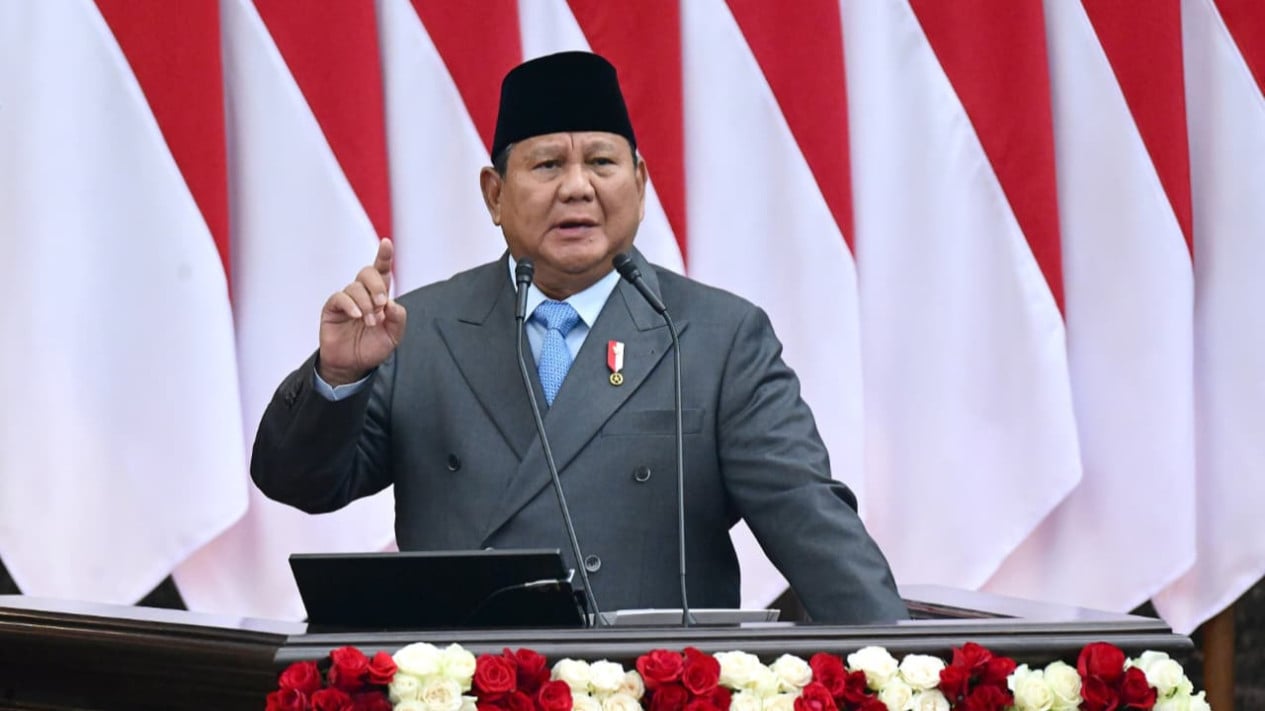
President Prabowo Subianto has highlighted the digitalisation of social protection as a form of government service transformation that directly eases the burden on citizens. He made the remarks during the Annual Session of the People’s Consultative Assembly (MPR) and the Joint Session of the House of Representatives (DPR) and the Regional Representatives Council (DPD) in Jakarta on Friday, 14 August 2026. Through digitalisation, the process of registering and verifying the eligibility of social assistance recipients, which previously could take up to hundreds of days, can now be completed in a matter of minutes.
The President stated that the digitalisation of social protection has been implemented in 153 districts and cities across 38 provinces. More than 3 million families have been registered, moving towards a national target of 49 million families upon full implementation. ‘The poor should not have to pay to prove that they are poor. The people should also not have to repeatedly submit data that the state already possesses,’ said Prabowo Subianto.
The President also confirmed that eligibility checks, which previously could take between 75 and 200 days, can now be completed in minutes. This digitalisation will continue to be expanded to cover all social assistance programmes, government aid, and subsidies as part of the implementation of the Integrated Pro-People Welfare agenda. According to Prabowo Subianto, the expansion of the digital social protection programme is aimed at improving targeting accuracy, transparency, and convenience for the Indonesian people.
Meanwhile, Minister of Communication and Digital Affairs Meutya Hafid, following up on President Prabowo Subianto’s directive to ensure the success of the digital social protection programme, stated that her ministry is continuing to strengthen the digital infrastructure that forms the foundation of the programme. With these steps, it is hoped that during national implementation, the digital system will be able to provide more optimal convenience, especially for citizens who are entitled to social assistance. ‘In line with the President’s directive, technology must truly be felt by the people. Digitalisation is not just about moving processes to a digital system, but about how technology cuts down the time, costs, and administrative burdens that the people have been experiencing,’ said Meutya Hafid. In terms of digital infrastructure to support the digitalisation of social protection, the Ministry of Communication and Digital Affairs is committed to providing wider and higher quality digital connectivity as an initial access point to make it easier for citizens to register in the social protection system portal.