
President Prabowo Ratifies Revised Police Law: Civilian Posts, Retirement Age, and Disability Inclusion
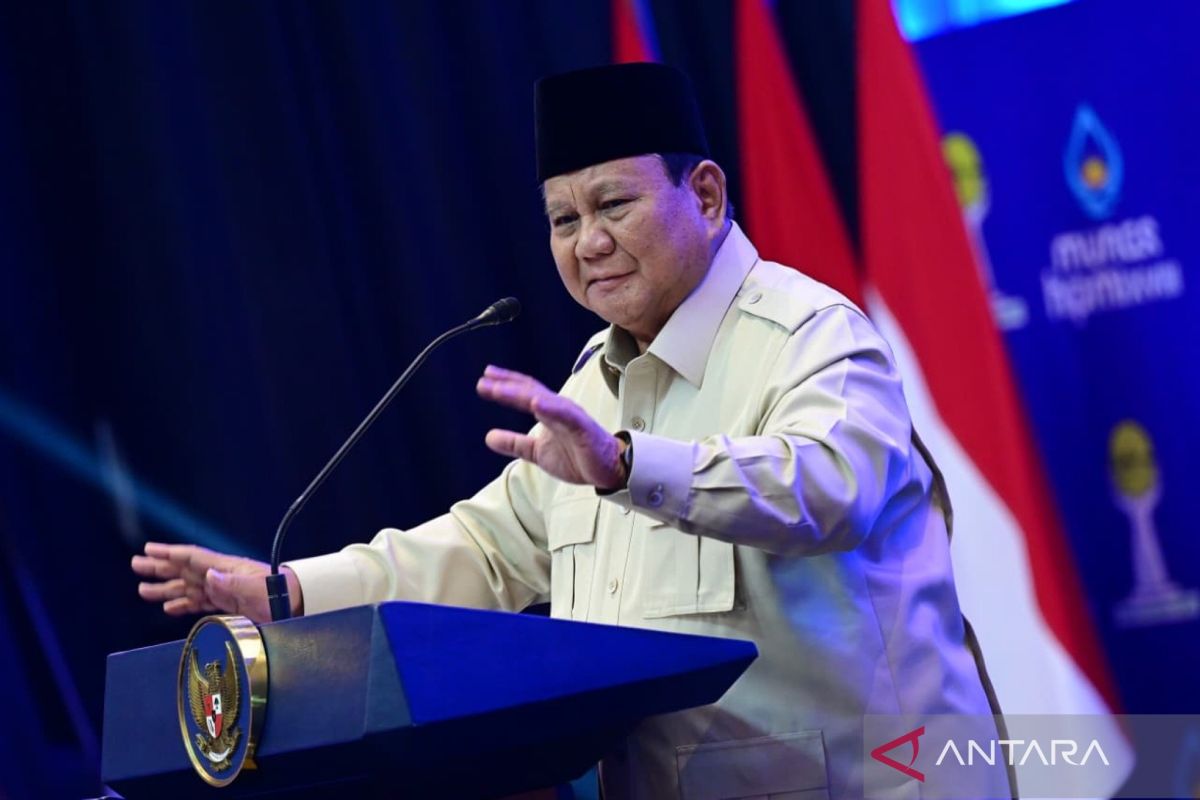
Jakarta (ANTARA) - President Prabowo Subianto has ratified Law Number 5 of 2026 concerning the Third Amendment to Law Number 2 of 2002 regarding the National Police of the Republic of Indonesia, which contains several crucial provisions.
These provisions range from the placement of active National Police members in positions outside the institution and changes to retirement ages, to opportunities for persons with disabilities to become members of the police force.
Quoted from the JDIH website of the State Secretariat Ministry, based on the copy of the Law ratified by President Prabowo Subianto on 17 June 2026, one of the significant changes is found in Article 28A, paragraph 1, which stipulates that National Police members may occupy positions outside the National Police organisation as long as they are related to policing functions.
Article 28A, paragraph 3 also stipulates that National Police members may occupy positions outside the institution if there is a request from ministries or agencies that require the expertise possessed by the police members.
Meanwhile, paragraph 4 opens the possibility for the assignment of National Police members outside the organisation based on presidential assignments.
Other changes are found in Article 30, paragraph 5, which regulates the retirement age of National Police members based on rank. Point (a) sets the retirement age for enlisted and non-commissioned officers at a maximum of 59 years; point (b) regulates the retirement age for junior officers, middle-ranking officers, and high-ranking officers at a maximum of 60 years; while point (c) stipulates that the service of four-star high-ranking officers may be extended for a maximum of one year as required, as determined through a Presidential Decree.
Furthermore, Article 30, paragraph 7 provides space for an extension of service for a maximum of one year for National Police members who possess specialised expertise and/or are highly needed in policing duties.
The Law also opens opportunities for persons with disabilities to become members of the National Police. This provision is regulated in Article 21, paragraph 2, which states that Indonesian citizens with disabilities may be appointed as National Police members as long as they possess the competencies required by the institution.
Meanwhile, point (o) regulates the duty of the National Police to protect and secure national vital objects, which includes important installations, strategic natural resources, and activities that have a significant impact on national stability.
The Law also adds Article 19A, which regulates the principles of police duty execution. Paragraph 1 emphasises that National Police members, in exercising their duties and authority, must adhere to the principles of professionalism, proportionality, transparency, and accountability.
Paragraph 2 regulates the implementation of a supervisory system through inspectorate functions, investigation oversight, as well as professional and security oversight, while paragraph 3 opens the use of technology and science within said supervisory system.
In the explanation of the Law, the use of technology includes the use of body-worn cameras, CCTV, artificial intelligence technology, public complaint systems, and other technologies that support a modern police force.
Paragraph 2 mandates the National Police to submit reports regarding the management of education, the enhancement of integrity, and organisational culture to the President and the House of Representatives (DPR).
Another change in the Law is the strengthening of the role of the National Police Commission (Kompolnas). Based on Article 38, paragraph 1, in addition to assisting the President in determining the direction of National Police policy and providing considerations in the appointment and dismissal of the Chief of National Police, Kompolnas is also tasked with providing input regarding the development of a culture of integrity, professionalism, organisational culture, and the performance of the National Police.
Article 38, paragraph 2 also expands the functions of Kompolnas, including receiving suggestions and complaints from the public regarding the performance of the National Police to be conveyed to the President and the Chief of National Police, providing input regarding the police education curriculum, and providing considerations regarding the formation of the police professional code of ethics.
In the general explanation of the Law, the government stated that these changes were made to adjust to the legal needs of the community, the evolving paradigm of law enforcement, and to encourage the modernisation of the National Police to be more professional, transparent, and high in integrity, while upholding human rights protections.