
President Prabowo Ratifies Law No. 5 of 2026 on Polri: Check Retirement Rules and Civilian Posts
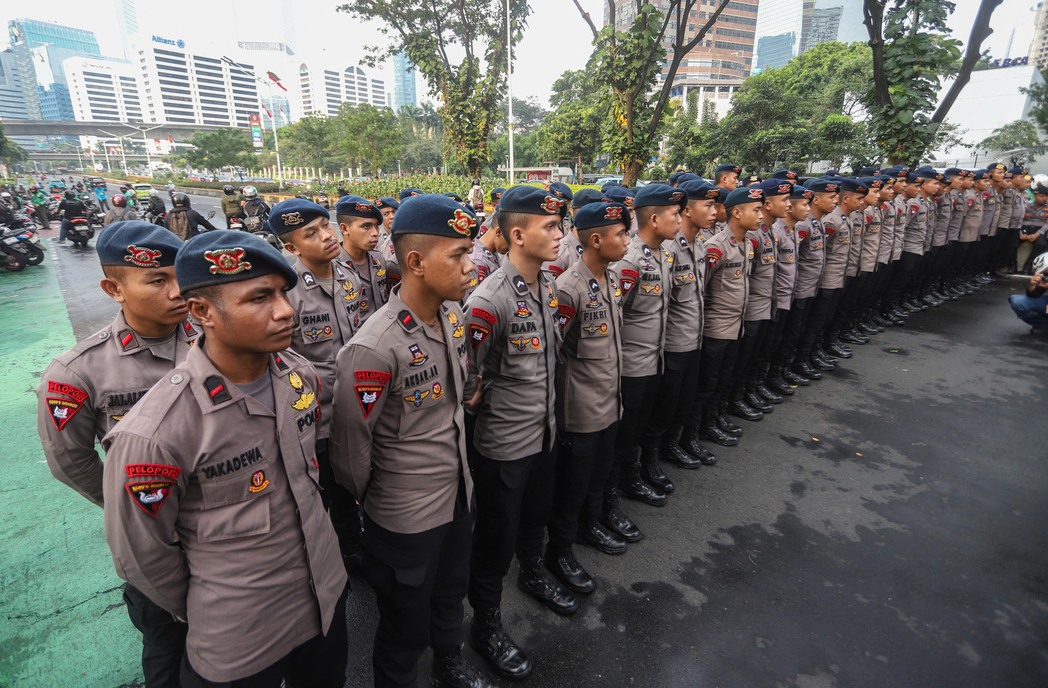
President Prabowo Subianto has officially signed Law No. 5 of 2026, the third amendment to Law No. 2 of 2002 concerning the Indonesian National Police (Polri). The latest regulation brings significant transformation, ranging from the placement of personnel in civilian posts and adjustments to the retirement age to inclusivity for persons with disabilities.
Based on a copy of the law published on the JDIH website of the Ministry of the State Secretariat, the regulation was ratified on 17 June 2026. One of the crucial points in this law is Article 28A, which regulates the flexibility of assigning active Polri members outside the police organisational structure. Article 28A paragraph (1) stipulates that active Polri members may hold positions outside the Polri organisation as long as these positions are related to police duties and functions. This is clarified in paragraph (2), which includes ministries or agencies that carry out functions of maintaining security, public order, protection, public services, and law enforcement. The placement mechanism can be carried out through two main channels.
Law No. 5 of 2026 also adjusts the service period of police members as regulated in Article 30 paragraph (5), detailing the latest retirement age limits. Additionally, Article 30 paragraph (7) provides room for a one-year service extension for members who possess special expertise or competencies that are critically needed by the institution.
Facing the challenges of the times, Article 14 paragraph (1) expands Polri’s duties in tackling cybercrime. Polri is required to coordinate with relevant ministries to strengthen national digital security. Furthermore, Polri has full authority to secure vital national objects, including strategic installations and important natural resources that impact state stability.
The modernisation of Polri also targets the supervision system. Article 19A encourages the use of cutting-edge technology such as body-worn cameras, CCTV, and artificial intelligence (AI) to ensure police duties are carried out professionally and accountably. On the other hand, humanistic aspects remain a priority. Article 32A requires the Polri education curriculum to include material on the protection of Human Rights (HAM) and democracy. Polri is also required to report on education management and integrity improvement periodically to the President and the DPR.
The function of the National Police Commission (Kompolnas) is also strengthened through Article 38. In addition to providing considerations for the appointment of the National Police Chief, Kompolnas is now authorised to provide input regarding the education curriculum, the development of an integrity culture, and to receive public complaints to be forwarded directly to the President and the National Police Chief. This revision of the Polri Law is expected to serve as a strong legal foundation in encouraging Polri to become a more modern, transparent institution that upholds human rights in serving the public.