
President Prabowo Prepares Strategy Towards Energy Self-Sufficiency
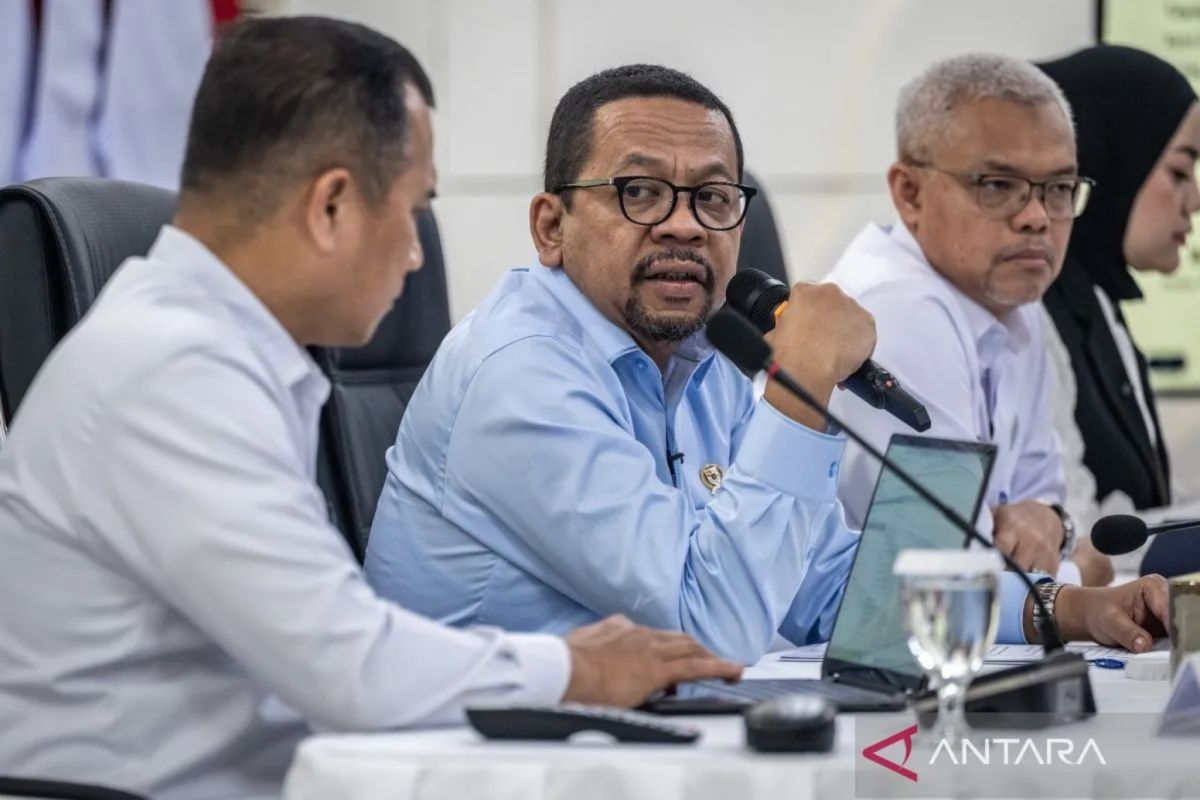
Jakarta (ANTARA) - The Head of the Indonesian Government Communications Agency (Bakom), Muhammad Qodari, has emphasised that President Prabowo Subianto is preparing various policies to reduce Indonesia’s dependence on energy supplies from abroad.
According to Qodari, President Prabowo has placed energy independence as one of the primary agendas of his administration from the outset. Consequently, various policies are being prepared to decrease Indonesia’s reliance on foreign energy imports.
“This nation must be independent. This nation must progress. Free from food dependence, free from energy dependence. That is all part of Mr Prabowo’s efforts,” Qodari stated in Jakarta on Saturday.
Qodari noted that these efforts are part of the structural reforms currently being implemented by the government, in line with the targets of achieving food and energy security.
Furthermore, he cited the government’s success in strengthening the food sector through increased rice and fertiliser production. However, he noted that challenges in the energy sector are far more complex due to the high level of dependence on oil imports.
“The energy issue is certainly more difficult. Why? Because our imports are very large. Our daily requirement is 1.6 million litres, but we can only produce 600,000,” he said.
The government is also encouraging the use of energy based on domestic raw materials. This includes programmes such as the B50 biodiesel programme for diesel and the development of the E20 ethanol blend for petrol.
Meanwhile, he stated that the decision to increase the price of non-subsidised fuel, namely Pertamax and Pertamax Green, is inseparable from global conditions.
According to Qodari, President Prabowo has prepared various strategies to reduce Indonesia’s dependence on energy imports.
“Regarding fuel, the external factor is very significant because, de facto, we as a nation are indeed lagging behind,” Qodari remarked.
He explained that the price of non-subsidised fuel in the country is currently heavily influenced by global geopolitical developments. Conflicts occurring in the Middle East, particularly those involving Iran, the United States, and Israel, are impacting global oil prices.
Iran’s strategic position, controlling the Strait of Hormuz, means that any tension in the region has a direct impact on the world energy market.
Nevertheless, Qodari emphasised that the public does not need to worry about subsidised fuel. This is because the government is maintaining the price of Pertalite to ensure it remains unaffected by global oil price volatility.
“Do not forget that we have two types of fuel. There are those that are subsidised, and there are those at market prices. The subsidised ones will not increase; they remain the same,” he concluded.