
President Prabowo Affirms Indonesia's Strong Welfare System, Orders Data Integration for Targeted Aid
President Prabowo Subianto has affirmed that Indonesia possesses one of the strongest social protection systems (welfare state) in the world. According to him, the various assistance programmes run by the government form an important foundation in the effort to reduce the poverty rate to a target of zero per cent.
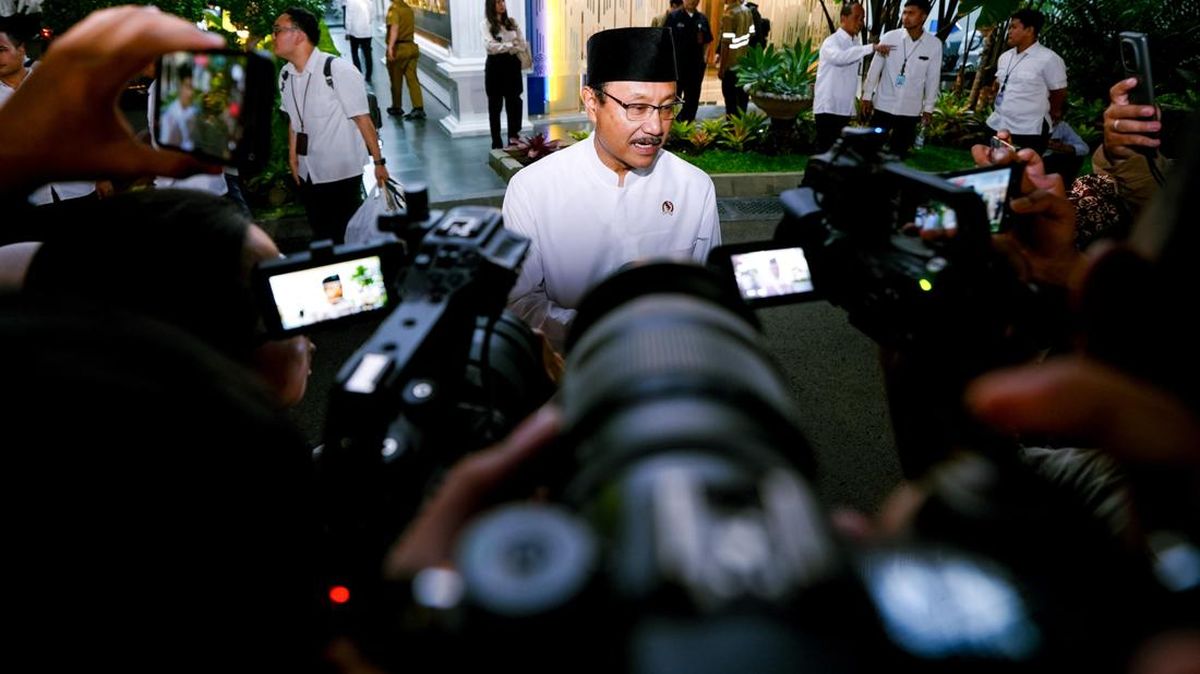
Prabowo made the statement while chairing a Plenary Cabinet Session at the State Palace in Jakarta on Monday (20/7). The session was attended by ministers of the Red and White Cabinet, including Minister of Social Affairs Saifullah Yusuf (Gus Ipul) and Deputy Minister of Social Affairs Agus Jabo Priyono.
Prabowo said Indonesia’s social protection system was built sustainably by previous administrations and continues to be strengthened under his government.
“So I want to affirm this: it turns out we have a social protection system, a welfare state, one of the strongest in the world. If we look at the programmes one by one, some of these programmes were implemented by the presidents before us, the government before us,” the President said.
In his presentation on the 2026 Welfare Support programme, Prabowo outlined a number of programmes coordinated by the Ministry of Social Affairs. The Family Hope Programme (PKH), for instance, reaches 10 million beneficiary families from deciles 1 to 4, with assistance valued between Rp75,000 and Rp250,000 per month.
In addition, the Sekolah Rakyat (People’s School) programme provides boarding school education to 44,635 students from decile 1 and 2 families, with benefits worth around Rp4 million per student each month.
The government also distributes Social Assistance for Social Rehabilitation Assistance (ATENSI) to 83,357 recipients with aid worth up to Rp2.4 million per year. Meanwhile, the Social Empowerment Programme reaches 15,000 beneficiaries, and the Empowerment Programme for Remote Indigenous Communities (KAT) targets 2,810 recipients with assistance of Rp10 million per recipient.
The President also presented various other welfare support programmes, such as the Kartu Indonesia Pintar Kuliah university card, the Indonesia Pintar Programme, Staple Food Cards, self-help housing stimulation assistance, the Housing Financing Liquidity Facility (FLPP), disaster assistance, energy subsidies, food aid, Free Nutritious Meals (MBG), and Free Health Checks (CKG).
According to the President, these programmes as a whole demonstrate the government’s strong commitment to building a social protection system that reaches people across all groups.
On that occasion, the President asked his cabinet to continue strengthening social protection governance through cross-sector data integration so that assistance can be distributed more accurately and on target.
“We must not ask the people to enter the same data repeatedly. We must not let people spend money just to prove that they are poor,” he stressed.
The President explained that the digitalisation of social assistance programmes is currently under way in 43 regencies and cities across 26 provinces, with around 1 million families registered out of a target of 12.5 million families.
Previously, people could spend around Rp150,000 to process various documents and register for assistance, whereas now the process can be carried out free of charge.
Furthermore, the President emphasised the importance of integrating social data, civil registration data, education, health, employment, housing, and beneficiary data so that targeting errors no longer occur.
“We must not allow wealthy people to receive assistance because their data was not updated. We must not allow poor families to miss out on assistance simply because they do not know an official or do not understand the bureaucracy. If our system is accurate, the target of zero per cent extreme poverty becomes far more achievable for us,” the President said.
In follow-up to these instructions, Minister of Social Affairs Saifullah Yusuf, or Gus Ipul, said the Ministry of Social Affairs is currently completing the process of verifying and consolidating social assistance beneficiary data together with regional governments, as part of strengthening the single-data-based distribution system.
“Today the data verification process continues. Hopefully, within the next month the entire data-linking process can be completed. There are recipients who no longer meet the requirements, and there are also new recipients coming in. We are consolidating all of this together with the regional governments so that the data becomes increasingly stable,” he said.
Gus Ipul explained that the ministry is also conducting a simulation of social assistance distribution through the Red and White Village/Urban Ward Cooperatives as an alternative distribution channel for aid. To date, social assistance has been distributed through the Association of State-Owned Banks (Himbara) and PT Pos Indonesia.
“We are running a simulation. Going forward, it is possible for distributors to open services at the Red and White Village/Urban Ward Cooperatives so that beneficiaries can collect their assistance there,” he said.
“We are even studying the possibility that the assistance can be spent directly at these cooperatives, so that the benefits become even greater for the public while simultaneously driving the village economy,” Gus Ipul said.
He added that the process of updating beneficiary data will continue to be carried out periodically so that social assistance becomes increasingly well targeted.