
President of Indonesia Calls on German Expert to Fix the Economy: Here's Who He Is!
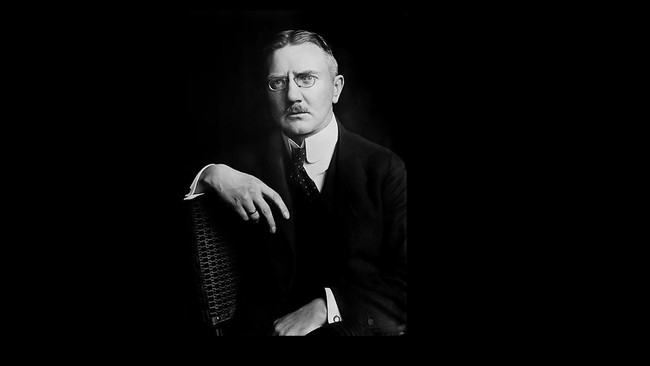
In the midst of the chaotic economy following war and independence, the Indonesian government in the early 1950s once called upon a highly renowned foreign economist on the international stage. This figure was no ordinary individual. He was Hjalmar Schacht, a German banker and economist who served as Minister of Economy and a trusted aide to Adolf Hitler in reviving Germany’s economy before the Second World War. At that time, Indonesia faced numerous severe challenges. High inflation, accumulating debt, and production activities had not fully recovered. The government sought an experienced figure deemed capable of providing a way out for the young, newly independent nation. The choice then fell on Schacht. Citing the Britannica website, Schacht was born in 1877 and spent much of his life in finance and banking. His name gained global recognition when he was entrusted to lead Germany’s central bank, the Reichsbank, during the Weimar Republic era. Under his leadership, Germany successfully emerged from the extreme hyperinflation that struck the country in the early 1920s. This success propelled Schacht’s reputation sky-high and earned him respect among international economists. When Adolf Hitler and the Nazi Party rose to power in January 1933, he was retained and tasked with restoring the national economy. One of his most famous policies was the financing scheme through MEFO bills. Through this instrument, the German government could fund industrial projects without directly printing money. Schacht ensured that every financial instrument was backed by real production to keep the money supply under control. In the research presentation ‘The Nazi Economy Prepared for War by Exploiting Everyone’ (2026), these policies successfully revitalised industry and drastically reduced unemployment figures. For Schacht, the central bank’s role was not merely to maintain numerical stability but to ensure the economic wheels kept turning. As long as the circulating money was used to boost real production, he believed inflation could be contained. Between 1933 and 1938, Germany’s economy recovered very rapidly. Full employment was achieved, and Germany re-emerged as a major economic power in Europe. However, this success became the beginning of conflict between Schacht and Hitler. When inflationary pressures began to emerge due to massive military expansion, Schacht requested that the spending pace be halted. Hitler refused. This difference in views led to Schacht’s dismissal from the Reichsbank on 19 January 1939. Despite being ousted from the Nazi power circle, Schacht’s name was already etched as one of the key figures behind Germany’s economic resurgence. After the Second World War ended, Schacht was tried at the Nuremberg Trials. However, he was ultimately acquitted. Although his reputation remained overshadowed by his closeness to the Nazi regime, his expertise and skills in economics were still acknowledged internationally. On that basis, Schacht subsequently became known as an economic consultant for various developing countries facing crises, including Indonesia. For Indonesia at that time, Hjalmar Schacht was regarded as a figure with the experience and ability to help the country escape the economic turmoil of the post-war and early independence period.
Source: jawawa.id (https://jawawa.id/newsitem/president-of-indonesia-calls-on-german-expert-to-fix-the-economy-heres-who-he-is-1777643517)
Originally published by CNBC Indonesia (https://www.cnbcindonesia.com/entrepreneur/20260430101004-25-731208/presiden-ri-panggil-ahli-jerman-buat-benahi-ekonomi-ini-sosoknya), translated from Indonesian