
President Lula's Turning Point
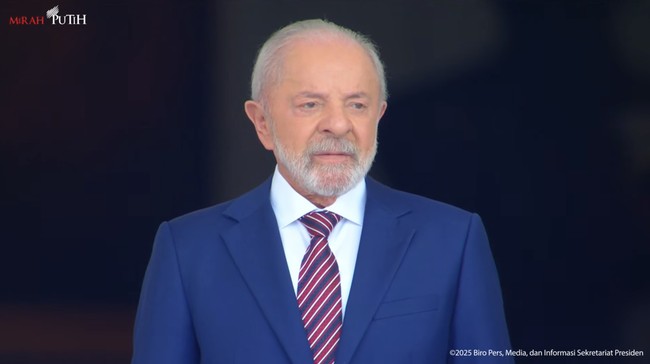
The inauguration speech of Brazil’s newly elected left-wing president, Luiz Inacio Lula da Silva, on 1 January 2003 offered hope for change to the Brazilian people. His favoured programme was to boost economic growth by relying on the country’s own internal strength. The narrative that got Lula elected was correcting the inequality in the ownership of national assets. Around 5.0% of conglomerates controlled 70% of agricultural land, whilst 50% of small farmers controlled only 2.0%-3.0% of productive agricultural areas. Income inequality in Brazil in the early 2000s was also extremely high, reflected in a Gini ratio of around 0.62. Brazil’s unemployment rate averaged 12% monthly in 2002.
As can be read in a 2007 study by three economists, Philip Arestis, Luiz Fernando de Paula and Fernando Ferrari-Filho from the Centre for Brazilian Studies at the University of Oxford, the election of President Lula worried market participants because of his anti-market rhetoric. As a result, Brazil’s country risk premium rose by 600 basis points to 2.4% in October 2002. Net capital outflows from Brazil increased. Foreign exchange reserves fell from US$42 billion in June 2002 to US$35.6 billion in November 2002, a drop of US$6.4 billion in just five months. The Brazilian real exchange rate per US dollar weakened drastically from 2.38 to 3.88. Similarly, Brazilian share prices, the Bovespa Index, fell to 10,981 at the end of December 2002, having previously reached around 17,150 in early January 2001. Brazil’s monthly inflation rose from 0.5% on 1 January 2002 to 1.3% in October 2002, with annual inflation reaching around 17% year-on-year.
Lula’s anti-market, socialist-leaning narrative increased the perceived risk of the Brazilian economy. Global investors exited Brazilian financial assets with the hashtag “sell Brazil”. International rating agencies removed Brazil from the investment grade category. Brazil’s economic condition worsened. Pressure on Lula to take corrective measures grew stronger, both domestically and internationally, including from the International Monetary Fund (IMF).
Finally, a turning point in the Brazilian economy occurred when the government agreed to accept an IMF bailout in 2003. Lula promised to comply with market rules by implementing disciplined fiscal policy, reducing fiscal dominance. Previously, the Banco Central do Brasil (BCB) had delayed raising the policy rate (Selic), the BCB’s benchmark interest rate, even though the Brazilian real exchange rate had depreciated drastically. The delay in raising the policy rate was to reduce the burden of government debt interest payments, eroding monetary policy independence. Lula increased fiscal credibility by raising the primary balance surplus as a ratio to Gross Domestic Product (GDP) from 3.75% to 4.25%. A primary balance surplus means total state revenue exceeds state expenditure without accounting for debt interest payments. Under pressure from the IMF, the BCB finally raised the benchmark interest rate, the Selic, to 23% to anticipate inflation that had already reached 17% annually. The sacrifice ratio was that Brazil’s economic growth fell to just 0.5% in 2003.
The Brazilian economy ultimately avoided crisis due to a commodity price boom. When Lula took power on 1 January 2003, global economic conditions were improving. Growth in the world’s two largest economies, the US and China, increased, and global trade volume rose significantly. Brazil’s trade balance surplus increased from US$24.9 billion in 2003 to US$44.8 billion in 2005. The current account surplus rose to US$14.2 billion in 2005. Brazil’s foreign exchange reserves also increased very significantly from US$37.5 billion in 2002 to US$53.8 billion in 2005. Brazil’s country risk premium improved, falling to just 313.8 basis points. This caused the Brazilian real exchange rate against the US dollar and the Bovespa index to strengthen. Lula’s most extreme step was to raise the tax rate, reduce government spending by postponing the implementation of populist programmes, and increase the primary balance surplus to 4.8% of GDP.
The success story of the Brazilian economy avoiding crisis in 2003 was due to two factors. First, strong domestic and international pressure pushed Lula to change policy by announcing a New Consensus Macroeconomic Policy (NCM). Second, improving global economic growth increased international trade volume, leading to a commodity price boom, with Brazil being a major exporter of several commodities such as soybeans, iron, steel, and beef.
What lessons can the Indonesian government learn from Brazil’s experience? First, when economic conditions deteriorate, better fiscal discipline is needed, reflected in a fiscal deficit ratio of around 2.0%-2.5% of GDP. Or, in an extreme case like Lula’s experience, changing a primary fiscal deficit condition into a surplus of 4.8% of GDP by 2005, where revenue exceeds state expenditure before accounting for debt interest payments. Second, carefully raising the benchmark interest rate (BI rate) so that it does not have an overly negative impact on economic growth, whilst at the same time bringing rising inflation expectations under control and reducing the volatility of the rupiah exchange rate per US dollar. This is important because a BI rate hike will make the cost of government debt to cover the fiscal deficit more expensive, potentially narrowing the government’s fiscal space to provide stimulus.