
President Ilham Aliyev, Netanyahu’s Ally Who Banned the Hijab in Azerbaijani Schools
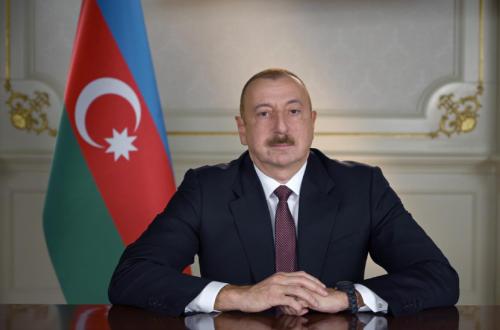
BAKU — Azerbaijan’s President Ilham Aliyev remains under international scrutiny. Under his leadership, Azerbaijan has strengthened its regional influence, drawing on its oil and gas wealth and its military success in retaking Nagorno-Karabakh. These achievements have been accompanied by controversies over democracy, corruption, civil liberties and the foreign policy direction of the Muslim-majority country.
Aliyev came to power in 2003 after his father, Heydar Aliyev — a prominent figure in the Soviet Communist Party who later became Azerbaijan’s president — handed the office to him in a controversial political process.
The continuation of power within one family has attracted scrutiny as a sign of weak competitive leadership turnover. Aliyev has since retained power through a series of presidential elections, while opposition groups and independent monitors have continued to criticise the conditions for political competition in Azerbaijan.
Freedom House says political and economic power in the country is concentrated in Aliyev and his family circle. This has raised questions about the independence of state institutions and the effectiveness of checks on the president.
Against this background, the label of anti-Islamic, applied by some critics to Aliyev’s government, is associated with the state’s secularism policies, restrictions on religious activity and the issue of wearing the hijab in educational institutions.
Azerbaijan is a Muslim-majority country whose constitution separates religion from the state and guarantees freedom of religion. The government upholds the country’s secular identity, a legacy of the period when Azerbaijan was part of the Soviet Union.
Controversy arises when secularism is implemented through restrictions that some members of the public view as obstacles to religious expression. Debate over school uniform rules that affect the wearing of the hijab, for example, highlights tensions between education policy, religious identity and state authority.
A 2026 report on Azerbaijan by Human Rights Watch (HRW) also recorded the detention of six women after they took part in religious activities and voiced pro-Palestinian slogans. They faced charges relating to unauthorised religious activity. HRW also reported allegations that the women were subjected to inhuman treatment in detention.
The case illustrates that concerns about religious freedom in Azerbaijan are not limited to the wearing of religious symbols. Religious activity that intersects with political expression, including support for Palestine, can also bring people into conflict with state authorities.
Source: jawawa.id (https://jawawa.id/newsitem/president-ilham-aliyev-netanyahus-ally-who-banned-the-hijab-in-azerbaijani-schools-1792140891)
Originally published by Republika (https://news.republika.co.id/berita/tmzqot393/presiden-ilham-aliyev-sohib-netanyahu-yang-larang-hijab-di-sekolah-azerbaijan), translated from Indonesian