
President Calls for Indonesia’s Sugarcane Recovery Rate to Reach 10%, but Current Levels Remain Far Lower
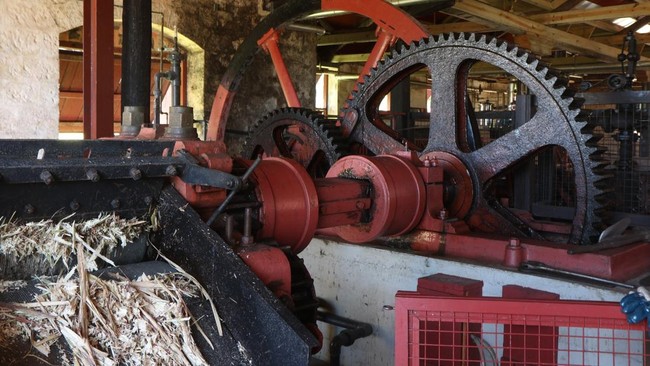
Jakarta, CNBC Indonesia – President Prabowo Subianto has called for the national sugarcane recovery rate to be raised to 10% to boost domestic sugar production. Indonesia’s rate currently stands at around 6.4–7%, well below the 12% achieved in several other countries.
Deputy Coordinating Minister for Food Hanif Faisol Nurofiq said increasing national sugar production would require more than expanding the area under cultivation. The government also needs to improve sugarcane crop productivity and raise recovery rates by improving cultivation practices and the efficiency of sugar-mill processing.
“Our recovery rate is still at 6.4% to 7%. Other countries have reached 12%. A few months ago, the President instructed us to reach 10%,” Hanif told reporters at his office in Jakarta on Friday (6 November 2026).
Indonesia currently has around 560,000 hectares of sugarcane, producing an average of nearly 3 million tonnes a year, Hanif said. That output is considered sufficient to meet domestic sugar consumption, but not the needs of industrial users, which remain dependent on imports.
The government is also targeting higher sugarcane yields. National productivity currently stands at around 65–70 tonnes per hectare, and the government wants to increase it by about 10–20 tonnes per hectare.
To meet the target, the government has drawn up an operational plan covering sugarcane cultivation, including the adoption of good agricultural practices (GAP), fertiliser use, crop maintenance and a programme to uproot and replant ratoon crops.
“Productivity really depends on good agricultural practices. We need to educate farmers through sufficient outreach,” he said.
However, the programme faces challenges, including reluctance among some farmers to uproot ratoon crops—sugarcane regrowth harvested repeatedly—particularly in areas where yields remain relatively high.
Hanif said ratoon renewal was important to maintain productivity and improve sugarcane recovery rates. Keeping crops in production without replanting risks lower yields.
Sugarcane should be kept in ratoon production for no more than around four to five years, he said. After that, productivity is certain to decline.
“If we do not do this, our productivity will fall. Ratoon crops should generally not be left without replanting for more than four to five years. After that, productivity is certain to decline,” he said.
He acknowledged that not all farmers were opposed to the programme, but said reluctance persisted in some areas, particularly East Java, where sugarcane productivity is relatively high.
Some farmers there are unwilling to uproot their crops because they can still produce substantial quantities of sugarcane, even when the ratoons are five years old.
“The ratoon-renewal programme is proceeding normally in some places. But in areas with particularly high productivity, such as East Java, farmers are still reluctant to uproot the crops because they have been there for a long time,” Hanif said.
Source: jawawa.id (https://jawawa.id/newsitem/president-calls-for-indonesias-sugarcane-recovery-rate-to-reach-10-but-current-levels-remain-far-lower-1793955039)
Originally published by CNBC Indonesia (https://www.cnbcindonesia.com/news/20261106124009-4-782953/presiden-minta-rendemen-tebu-ri-naik-ke-10-kondisi-asli-masih-begini), translated from Indonesian