
President Aims for Citizens to Celebrate Eid al-Adha with Shared Sacrifice
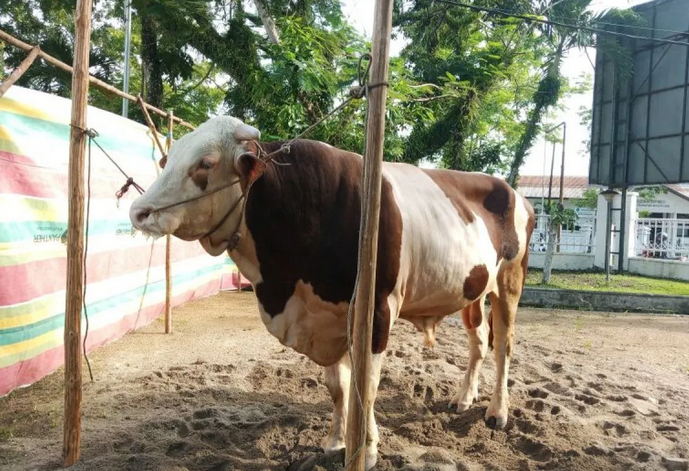
Wakil Menteri Sekretaris Negara (Wamensesneg) Juri Ardiantoro confirmed that the distribution of sacrificial cattle by President Prabowo Subianto for this year’s Eid al-Adha falls under the Presidential Social Assistance Programme (Banpres). The government has routinely implemented this initiative annually as a demonstration of state presence within communities.
Juri provided this explanation in response to public queries regarding the use of state funds for the President’s sacrificial animals. He stressed that the cattle donations are a manifestation of government concern for those in need, enabling them to celebrate the festive occasion joyfully.
“The President’s sacrificial cattle is government assistance to the public. The aim is for those in need to celebrate Eid al-Adha by jointly slaughtering sacrificial animals,” Juri stated in Jakarta on Wednesday (27 May).
This year, President Prabowo distributed 1,098 cattle across various regions in Indonesia. Juri deemed the use of Banpres funds for this programme reasonable and procedural, given that the practice has been a longstanding tradition of successive governments.
He also emphasised that the aid is solely for public benefit, not the President’s personal interests. “The government aims to ensure the state’s presence is directly felt by citizens through religious occasions rich in social values, such as Eid al-Adha,” he added.
In response to controversies over state fund usage, the Indonesian Ulema Council (MUI) stated that the head of state procuring sacrificial animals using state budget (APBN) does not contravene Islamic law. MUI’s Fatwa Commission Chairman, Asrorun Niam Sholeh, explained that the practice has strong fiqh foundations.
Citing a Hadith from Imam Bukhari, Niam noted that a leader or imam is encouraged to purchase sacrificial animals using Baitul Mal or state funds for the community’s benefit. In modern contexts, the national budget serves a similar role to Baitul Mal.
“In the current state context, the national budget functions as a modern Baitul Mal. Thus, state-sponsored sacrifices are purely for the welfare and public interest of the wider community. There is no issue under Islamic law,” Niam stated.
He added that the mechanism is akin to other social assistance (bansos) disbursements, differing only in the commodity provided—sacrificial animals. Since the meat is directly distributed to regions and not consumed personally by the President, the process is administratively and legally appropriate.
The initiative is expected to strengthen social solidarity, expand religious outreach, and ensure Eid al-Adha joy is evenly felt across all corners of the nation. (Iam/I-1)