
President Accelerates Processing at 13 Locations, Not Just Nickel and Mines
President Accelerates Processing at 13 Locations, Not Just Nickel and Mines
JAKARTA - President Prabowo Subianto has asked for the acceleration of the downstream program in 13 locations in Indonesia. The direction is no longer only based on energy and minerals, but also targets agriculture and fisheries.
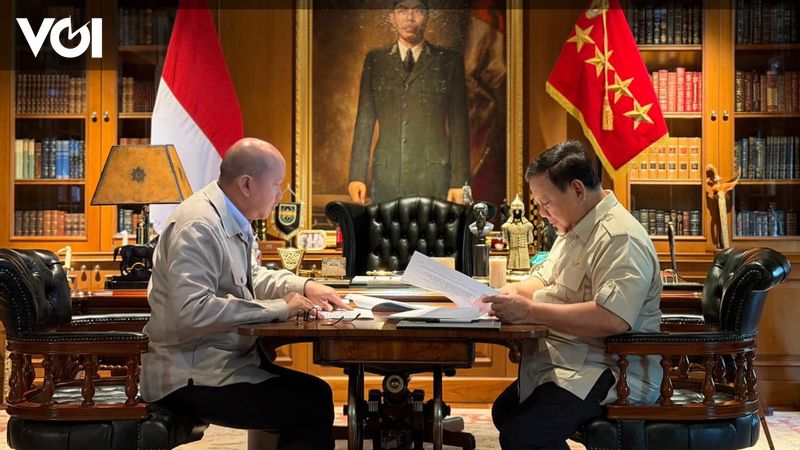
This was discussed when Prabowo received the Minister of Investment and Industrialization/Head of BKPM as well as the Head of BPI Danantara, Rosan Perkasa Roeslani, at his private residence in Hambalang, Bogor, West Java, Friday, April 24.
Cabinet Secretary Teddy Indra Wijaya said the meeting discussed the development of the downstream development program in a number of regions.
“The next development of the downstream program will be built immediately at 13 locations in Indonesia,” said Teddy in a written statement.
The meeting also discussed the interest of a number of investors who will invest in Indonesia. These investments include targeting the waste to energy sector, mineral resources, agricultural industry, labor-intensive, and garment.
“Several investors will invest in Indonesia, especially in the fields of waste to energy, mineral resources, as well as the agricultural, labor-intensive, and garment industries,” said Teddy.
Prabowo, said Teddy, emphasized that the downstream industry should not stop at the energy and mineral sectors. The President asked that the program be expanded to agriculture and fisheries.
“President Prabowo wants that downstream not only in the energy and mineral sectors, but also must be expanded in the agricultural and fisheries sectors,” explained Teddy.
This direction is important because the downstream has been more often read by the public as a mining business, especially nickel and other minerals. In fact, added value can also be pursued from rice fields, gardens, the sea, food factories, textiles, to labor-intensive industries.
The challenge is not small. Industrialization requires investment, electricity, land, technology, skilled labor, and markets. Without it, large programs can easily turn into a list of good projects on paper.
For the government, downstreaming is a way to hold more economic value within the country. Raw materials are not only sold out, but processed first to open up employment and provide greater added value for the national economy.