
Preserving Water: When Places of Worship Become Educational Spaces
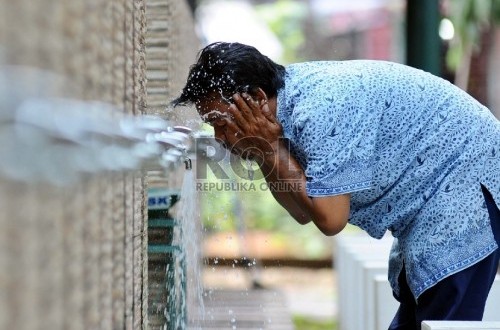
The issue of water is not merely a matter of resource availability. There is another equally important issue: human behaviour in water usage. Therefore, facing the threat of drought is not enough by simply building water supply infrastructure, digging wells, expanding piping networks, or distributing water during a crisis. The community must also be equipped with the knowledge and habits of how to use water wisely.
This is where public education plays a crucial role. So far, water-saving campaigns have more frequently been delivered through mass media, social media, schools, workplaces, or government programmes. All these channels are certainly important. However, there is one social space that is very close to people’s lives and has the potential to become an important part of the water conservation movement: places of worship.
Indonesia possesses a strong religious life. Mosques, prayer rooms, churches, temples, viaries, and other places of worship are not only sites for religious rituals. These places are also spaces for social interaction, value-based education, character building, and strengthening care for others and the environment. This potential should be utilised more optimally.
Water and Behavioural Issues
When discussing water shortages, attention is often focused on natural factors. These include prolonged droughts, climate change, reduced rainfall, damage to river basins, or declining groundwater reserves. These factors are indeed important.
However, just as decisive is how humans treat water. A frequently encountered phenomenon is water flowing from taps without being used, leaks being left unaddressed, and the excessive use of water for cleaning yards, vehicles, or public facilities. All of these are small examples of behaviours that, if continued, can become major problems.
The problem is that some members of the community may not have received simple and practical education regarding what should be done when water is abundant and what needs to be done when entering the dry season. The public is often encouraged to “save water,” yet that message sometimes remains merely a slogan.
The community does not always receive concrete examples. These examples include how much water is actually needed, when a tap needs to be closed, how to reuse water that is still viable, and how to build water-saving habits in daily life. The challenge is not solely a lack of public concern, but also the sub-optimal process of education that transforms knowledge into habit.
Places of Worship as Educational Spaces
Places of worship possess an advantage that not all public communication channels may have. The messages delivered within them can touch upon aspects of knowledge as well as values and behaviour.
In the context of Muslims, for instance, wudhu (ablution) is an important part of preparing for worship. However, performing wudhu does not mean using water excessively. Islamic teachings actually provide an example of using water sufficiently and avoiding extravagance. This message is highly relevant to current environmental challenges.
“Purity in worship does not have to be realised through the excessive use of water.” The same message can be substantively developed within the context of other religions and religious traditions according to their respective values. The essence is to build awareness that protecting the environment and natural resources is part of human responsibility.
Therefore, water conservation messages can be delivered through sermons, lectures, religious studies, Sunday school, religious education, community activities, community meetings, or various other religious forums. The message does not need to be complicated.
For example: “Use water sufficiently. Close the tap after use.” Or, “Water is a blessing. Let us use it wisely.”
Such simple messages may seem small. However, if delivered consistently and practised by the community in daily life, the impact can be significant.
Imagine if thousands of places of worship across various regions simultaneously became centres for water-saving education. The message would not just be heard once, but repeatedly. Children hear it from teachers, parents implement it at home, religious leaders convey it in sermons, and worship facility managers lead by example through facility management.
Source: jawawa.id (https://jawawa.id/newsitem/preserving-water-when-places-of-worship-become-educational-spaces-1788411402)
Originally published by Republika (https://analisis.republika.co.id/berita/tkrrdr490/menjaga-air-ketika-tempat-ibadah-menjadi-ruang-edukasi), translated from Indonesian