
Preserving the Ngejot Tradition in Bali's Muslim Villages
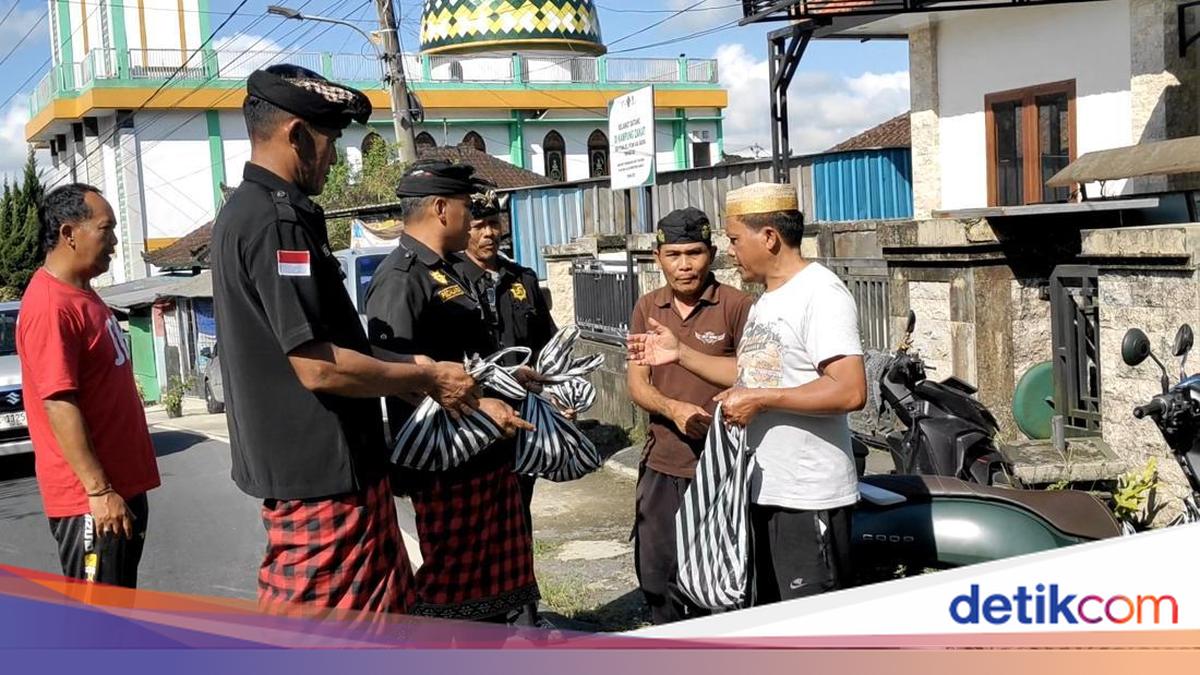
Kitchen smoke rises in Angantiga Village, Petang, Badung, as residents prepare dishes for Eid al-Adha. At a vacant plot in front of the village mosque, locals ready containers of food and sacrificial meat to deliver to their Hindu neighbours, a unique Balinese tradition called ngejot, preserved to maintain harmony.
‘It is also shared with our Hindu neighbours, known as ngejot. We have inherited this tradition for centuries, sharing joy during this festive occasion,’ said the head of Angantiga Muslim Village, Petang, Badung, Wednesday afternoon (27 May 2026).
This sharing activity culminates a day of communal effort involving all villagers since morning. From dawn, congregants gathered to slaughter and skin sacrificial animals voluntarily until midday.
‘Regarding Eid al-Adha, the animal slaughter is carried out by the villagers themselves. We first collect and present the meat to the local customary elders,’ he added.
Distribution is carefully managed to ensure all residents, regardless of faith, can partake in the festive blessings. Priority is given to the most vulnerable members of the community.
‘This means distributing not only to the general public but also to the poor. We prioritise the needy in the distribution,’ he explained.
Through consistent practice of the ngejot tradition, tolerance and local cultural uniqueness in Petang are hoped to endure the test of time. Close familial bonds between religious communities in Badung are expected to be preserved by future generations.
‘For our current generation, we hope future ones will continue this tradition. It is a distinctive practice that strengthens ties with our Hindu neighbours,’ he concluded.
A similar tradition takes place in Lebah Muslim Village, Semarapura Klod Kangin Subdistrict, Klungkung. The sacrificial committee distributes meat to Hindu residents in the area.
This interfaith meat distribution is an annual tradition upheld by locals to preserve religious harmony and brotherhood.
Lebah Muslim Village Head H Samsul Hakim explained that distributing sacrificial meat to Hindu neighbours is an annual practice. To mark the occasion, meat is symbolically presented to Hindu representatives.
‘We do this every year to demonstrate Islam as a mercy to all. When we are happy, we share that joy; when sad, we seek help from Allah. Distribution occurs directly at the slaughter site,’ Samsul said.
This year’s Eid al-Adha saw Lebah Muslim Village’s committee slaughter 36 animals: 29 goats and seven cattle.
Slaughter began at 8 AM and concluded around 2:30 PM WITA.
‘Alhamdulillah, all entitled recipients have received their share without exception. Both rich and poor in our 643 households have been included,’ Samsul added.
‘For the less fortunate and poor, we give additional portions if there are leftovers. Alhamdulillah, all was distributed today,’ he added.
MUI Klungkung Chairman H Agus Radiman stated that 196 animals—154 goats and 42 cattle—were sacrificed across Klungkung. Slaughter will continue until 12 Zulhijjah, or 29 May 2026.
‘This sacrifice is not just for Muslims; we also share with our non-Muslim brothers and sisters,’ Agus said.
LDII Bali’s Regional Leadership Council on Padang Griya Street, Padangsambian, West Denpasar, also distributed meat to local residents.
LDII Bali Deputy Chairman Hardilan said the ngejot tradition has been passed down through generations in the LDII Bali complex during Eid al-Adha. ‘Neighbours are our closest kin. When trouble arises, we turn to neighbours first,’ he said.
Hardilan also cited a hadith stating that if neighbours see or smell food being prepared, it is obligatory to share. ‘Here, they see the slaughtering and so on,’ he added.
He added that all LDII branches across regencies and cities follow the same practice, with a total of 10,000 meat parcels distributed for ngejot.
‘By observing our activities, we are confident the youth will continue this tradition. Ngejot has been practised by ancestors in Bali and Java,’ he concluded.
Non-Muslim resident Anak Agung Ngurah Suwarta gladly received a meat parcel. ‘This has happened many times annually; we’ve been neighbours for so long, like family,’ he said.
Ngurah expressed joy at participating in the Muslim Eid celebration. His relationship with mosque officials is close and warm. ‘It’s important for Muslims to give charity through sacrifice during Eid al-Adha,’ he explained.
Source: jawawa.id (https://jawawa.id/newsitem/preserving-the-ngejot-tradition-in-balis-muslim-villages-1779885253)
Originally published by detikBali (https://www.detik.com/bali/berita/d-8507278/merawat-tradisi-ngejot-kampung-kampung-islam-di-bali), translated from Indonesian