
Preserving the Meaning of 'One' in the National Education System
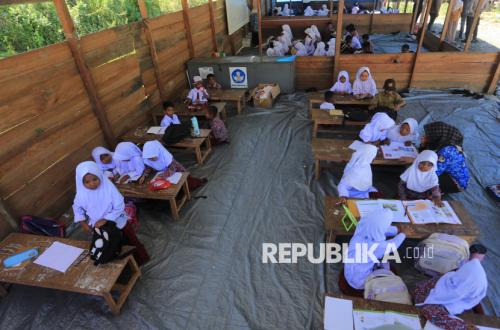
For a child, education should ideally be a complete journey. They enter primary school, progress to secondary level, choose a general or vocational path, and then perhaps pursue higher education and a profession. From the student’s perspective, all these stages are one interconnected path. However, behind this journey, the governance of Indonesian education is becoming increasingly complex. There are many laws, ministries, institutions, providers, standards, and sectoral interests. All feel responsible for education, but they do not always move in the same direction. This is where the discussion of the Draft Law on the National Education System (RUU Sisdiknas) finds its significance. The issue is not just about curriculum, teachers, compulsory education, financing, or budgets. The more fundamental question is how to ensure that all education remains within one national system, rather than turning into islands of provision dominated by sectoral egos.
Article 31, Paragraph (3) of the 1945 Constitution mandates that the government organises and implements one national education system. The word ‘one’ certainly does not mean that all education must be managed by a single ministry. Indonesia is too diverse to be uniform. Religious education has its own distinctiveness. Official education has a special mandate. Professional education requires the involvement of sectoral ministries, universities, hospitals, collegiums, and professional organisations. However, acknowledging these specificities is not the same as justifying each sector or ministry building its own educational regime. The diversity of providers must remain within one big house that shares the same academic standards, quality assurance, data system, recognition, and accountability.
Specialist medical education illustrates this risk. The shortage of specialist doctors is a real problem. The Ministry of Health is obliged to map needs, determine which specialisations are lacking, strengthen hospitals, and ensure medical personnel are available in the regions. The problem arises when the shortage of doctors is immediately translated as a shortage of graduates. From this diagnosis, a push is born to open hospital-based education pathways. The hospital then not only becomes a venue for clinical learning but potentially emerges as the main education provider.
This shift can occur through several stages. First, the issue of doctor distribution is treated solely as a matter of numbers. In fact, an increase in graduates does not automatically make doctors settle in remote areas. They need facilities, support from other health workers, a decent income, career certainty, and a family environment that allows them to stay. If the root problem is distribution, the solution should be distribution policies: regional scholarships, fair service contracts, incentives, strengthening hospital facilities, regional service networks, and clear career paths. Do not burden education with problems whose main source lies elsewhere. Second, the ministry that uses the workforce moves from a role of mapping needs to becoming an education provider. At this point, the institution that determines needs, prepares facilities, utilises graduates, also potentially controls its own educational process. Third, a separation emerges between the categories of lecturer and clinical educator. A doctor can be excellent in service and have long clinical experience. However, clinical competence is not automatically the same as academic competence. Higher education demands the ability to develop knowledge, conduct research, understand methodology, design learning evaluations, carry out the Tridharma of higher education, and maintain academic integrity. A quality gap can appear if practical experience is considered sufficient to replace academic qualifications. This does not mean all educators in a hospital-based model are unqualified. Many clinical doctors have excellent academic capacity. What must be prevented is the formation of two standards: university lecturers are subject to academic requirements and the Tridharma, while educators on other pathways are assessed primarily based on clinical expertise. If left unchecked, the same degree could be born from different governance, educator standards, and quality assurance mechanisms. At the institutional level, the issue is not merely the location of learning, but the centre of academic control. When a hospital can help design the curriculum, manage education, assess participants, and be involved in awarding certificates and degrees, the university risks becoming merely an administrative partner. If its academic oversight is weak, the collaboration can turn into a borrowing of legitimacy.
The RUU Sisdiknas must close this gap. Every form of education that produces an academic, vocational, professional, specialist, or sub-specialist degree must be subject to one national architecture. Hospitals may be centres of clinical learning and take a large role in implementation. However, academic authority, lecturer qualifications, curriculum, research, accreditation, and degree awarding must remain connected to the national higher education system. The division of roles must be clarified. The Ministry of Health is responsible for the map of workforce needs, service standards, distribution, hospital readiness, and clinical competence. The ministry handling higher education maintains academic standards, educator qualifications, research, the degree system, and quality assurance. Universities hold academic responsibility. Hospitals provide cases, facilities, and clinical supervision. The collegium develops professional competencies. This is not about who is the most powerful, but about who does what. The state must also ensure that the national education system is not merely a collection of articles, but a shared commitment that the journey of a child’s education is truly one.
Source: jawawa.id (https://jawawa.id/newsitem/preserving-the-meaning-of-one-in-the-national-education-system-1785729114)
Originally published by Republika (https://analisis.republika.co.id/berita/tj63mb393/menjaga-arti-satu-dalam-sistem-pendidikan-nasional), translated from Indonesian