
Preserving the Culture of the Land of Birds of Paradise through Festivals
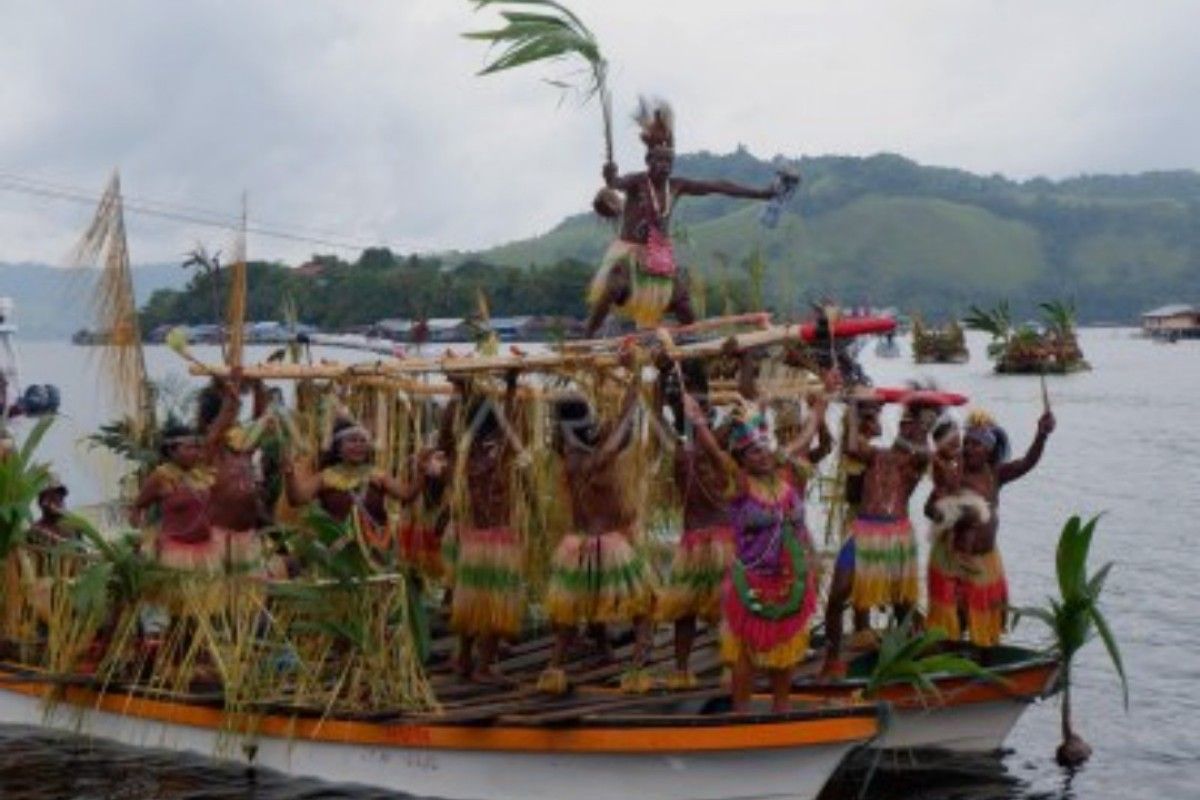
The high level of consistency shown by the Papuan people in maintaining their cultural heritage through festivals deserves appreciation.
The Land of Papua is not merely a geographical region in eastern Indonesia, but a magnificent expanse housing thousands of traces of civilisation from hundreds of ethnic groups, each linking their lives to their own unique languages, arts, and rituals. There are approximately 250 tribes spread across six provinces in Papua, possessing immense cultural diversity in the form of dance, music, and handicrafts.
Amidst the heavy currents of modernisation and digitalisation that erode local identities, the challenge of preserving the ancestral heritage of the Papuan land is becoming increasingly real. The preservation of this heritage is carried out, among other ways, through cultural festivals. These annual tourism agendas are expected to serve as living spaces, educational arenas, and stages for affirming the identity of Papua’s indigenous communities.
Among the various cultural festivals that have been held, four are currently conducted on a regular basis: the Baliem Valley Cultural Festival in Jayawijaya, the Asmat Pokman Festival in Asmat, the Sentani Lake Festival in Jayapura Regency, and the Biak Munara Wampasi Cultural Festival in Biak Numfor Regency. Each event possesses a different character, as they grow from the social and cultural environments of the local communities.
The Baliem Valley Cultural Festival, held in Jayawijaya Regency, Highland Papua Province, is the longest-running and most widely known event in the Land of Papua. First organised in 1989, it has since developed into an annual agenda showcasing the cultural richness of the people in the Baliem Valley. Various attractions are presented, such as traditional dances, traditional games, pig racing, and the ‘bakar batu’ (stone burning) ritual. Held every August, the event is organised by the Jayawijaya Local Government through the Department of Culture and Tourism, in collaboration with the community, traditional leaders, artists, MSMEs, and various other parties. In early August 2024, it was recorded that 270 international tourists visited to witness the festival.
The Asmat Pokman Festival, held every October, has a unique character as it is organised through a partnership between the Agats Diocese and the Asmat Regency Government. This cooperation demonstrates how the festival has evolved from a long-standing relationship between local communities, religious institutions, and the government in preserving and promoting Asmat culture. During the festival, visitors can witness the carving process, view artworks, enjoy local cuisine, and watch boat parades. The name change to the Asmat Pokman Festival in 2019 carries a meaning related to craftsmanship, as the festival serves as a space for the Asmat people to express their works, culture, and identity. Woodcarving is a primary attraction, but other activities such as weaving, dance, song, rituals, local cuisine, sago processing, and boat parades are also featured.
Another cultural event is the Sentani Lake Festival, named after the location where it takes place. The festival uses Lake Sentani and the surrounding community’s culture as its main stage. Having been held since the early 2000s, it is a programme of the Jayapura Regency Government. The Jayapura Regency Government stated that the objectives of the Sentani Lake Festival include promoting tourism, natural beauty, and cultural diversity, while simultaneously preserving local wisdom through the involvement of all community components.
Meanwhile, the Biak Munara Wampasi Cultural Festival, held every October since 2012, features flagship cultural attractions such as ‘Snap Mor’ and ‘Apen Beyeren’, which are two sacred traditional customs of the Biak tribe. ‘Snap Mor’ is a tradition of communal fishing in shallow waters or reefs during low tide, known as the ‘meti’ season. During this event, the community goes to sea carrying nets, spears, or traditional Biak fishing tools called ‘kalawai’ to catch fish in coral reef areas. Another attraction, ‘Apen Beyeren’, or the tradition of walking on hot stones, is a sacred ritual involving walking barefoot on stones that have been heated to temperatures of approximately 360 degrees Celsius. This feat can only be performed by chosen men with pure hearts who have undergone fasting rituals and have been strengthened by the prayers of traditional elders.
Source: jawawa.id (https://jawawa.id/newsitem/preserving-the-culture-of-the-land-of-birds-of-paradise-through-festivals-1790953273)
Originally published by Antara (Indonesian) (https://www.antaranews.com/berita/5769131/menjaga-budaya-bumi-cenderawasih-melalui-festival), translated from Indonesian