
Preserving the City, Limiting Nighttime Noise
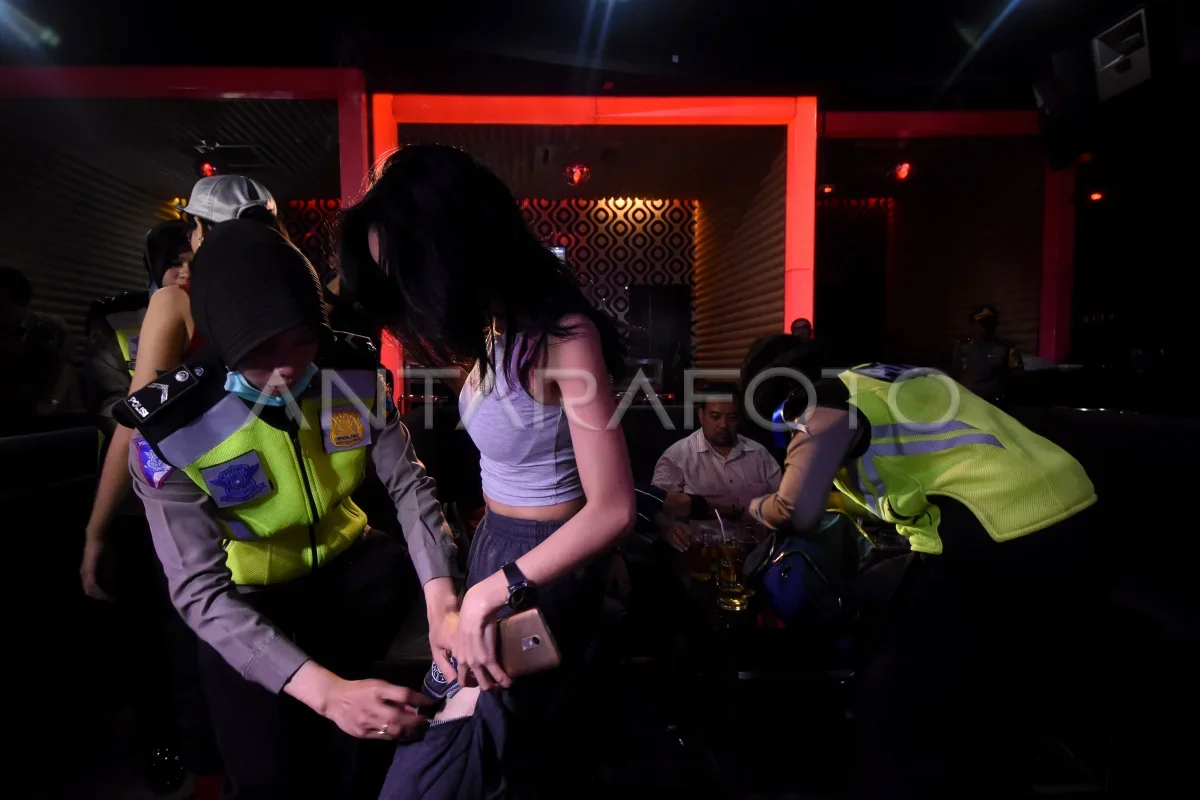
Surabaya (ANTARA) - A city is more than just a collection of buildings, roads, commercial centres, and entertainment venues. A city is also a space for human growth, including for the children who will eventually inherit its face and direction.
Surabaya, East Java, is one of Indonesia’s major cities, continuously functioning as a hub for trade, services, education, industry, and tourism. The pulse of this activity requires diverse spaces for its citizens, but simultaneously demands that the government be meticulous in determining which activities should be developed, controlled, or restricted to ensure urban growth remains aligned with the public interest.
Therefore, the Surabaya City Government’s decision not to allow the addition of new discos or nightlife venues deserves deeper reading than a mere restriction on a specific type of business. This policy touches upon a larger question: what kind of city is being built, and what kind of space is deemed important to preserve.
Surabaya Mayor Eri Cahy and stated on 2 October 2026 that there will be no new discos added. The city government noted that there are currently approximately 13 discos in Surabaya. Applications for nightlife venues will also be scrutinised regarding spatial planning compliance, including urban planning certificates and building documents.
On one hand, this decision is easily understood as a child protection policy. On the other hand, a metropolitan city must also manage economic needs, tourism, employment, investment, and the rights of adults to enjoy legal recreational spaces. This is where the issue becomes interesting. The government is not only required to be able to say ‘no’, but must also clearly explain why the current number is considered sufficient, how that sufficiency is determined, and what indicators are used for evaluation.
The figure of 13 discos should not remain merely an administrative number. The government needs to maintain an open database regarding locations, capacity, operating hours, compliance, violation rates, and environmental impacts on the surrounding area. Thus, control does not appear as a decision based on the whims of those in power, but as part of measurable urban governance.
Surabaya itself possesses Regional Regulation Number 3 of 2025 concerning the Surabaya City Regional Spatial Plan 2025–2045. This regulation positions the control of spatial utilisation as part of sustainable urban development, directing Surabaya to become a compact and inclusive city. This means the debate regarding discos actually sits within a broader framework. Every space must have a function consistent with the character of the area, environmental carrying capacity, citizen safety, and urban development goals.
Protecting children is a far more important reason than mere city image. Law Number 35 of 2014 emphasises the state’s obligation to guarantee children’s rights to live, grow, develop, and receive protection from violence and discrimination. Surabaya has a long track record in this agenda. In July 2026, the Ministry of Women Empowerment and Child Protection and the Indonesian Child Protection Commission appreciated Surabaya’s commitment to fulfilling child rights and protection. The city government has also maintained the ‘Main’ category status for Child-Friendly City for seven consecutive years.
However, being a child-friendly city is not achieved solely through titles, playgrounds, or banning children from certain places. A child-friendly city is truly tested by the government’s ability to manage the entire ecosystem of a child’s life, from homes, schools, roads, and public spaces to transport, residential environments, and commercial spaces.
Therefore, the ban on adding new discos can be one instrument, but it should not be treated as a sole solution. The problem is evident from field supervision experiences. In August 2026, the Surabaya City Government followed up on citizen reports regarding a coffee shop suspected of selling alcoholic beverages and running karaoke with loud music until approximately 02:00 WIB. The inspection was conducted after residents reported the disturbance.
This fact shows that issues of order and environmental protection do not stop at discos. Risks can arise from various types of businesses that combine entertainment, music, alcohol, and nightlife activities. The Municipal Police (Satpol PP) have also conducted supervision of several general entertainment venues, including discos, nightclubs, bars, and other businesses. During the Ramadan 2026 supervision, for instance, officers found violations regarding the sale of alcoholic beverages and seized 61 bottles during one of the operations.
This is where the measure of policy success must be expanded. It is not just about how many discos have not increased, but whether violations have decreased, whether the residents’ environment is more comfortable, whether children are more protected, whether nighttime traffic is more orderly, and whether entrepreneurs are increasingly compliant.