
Preserving the Bornean Rhino through In Vitro Fertilisation
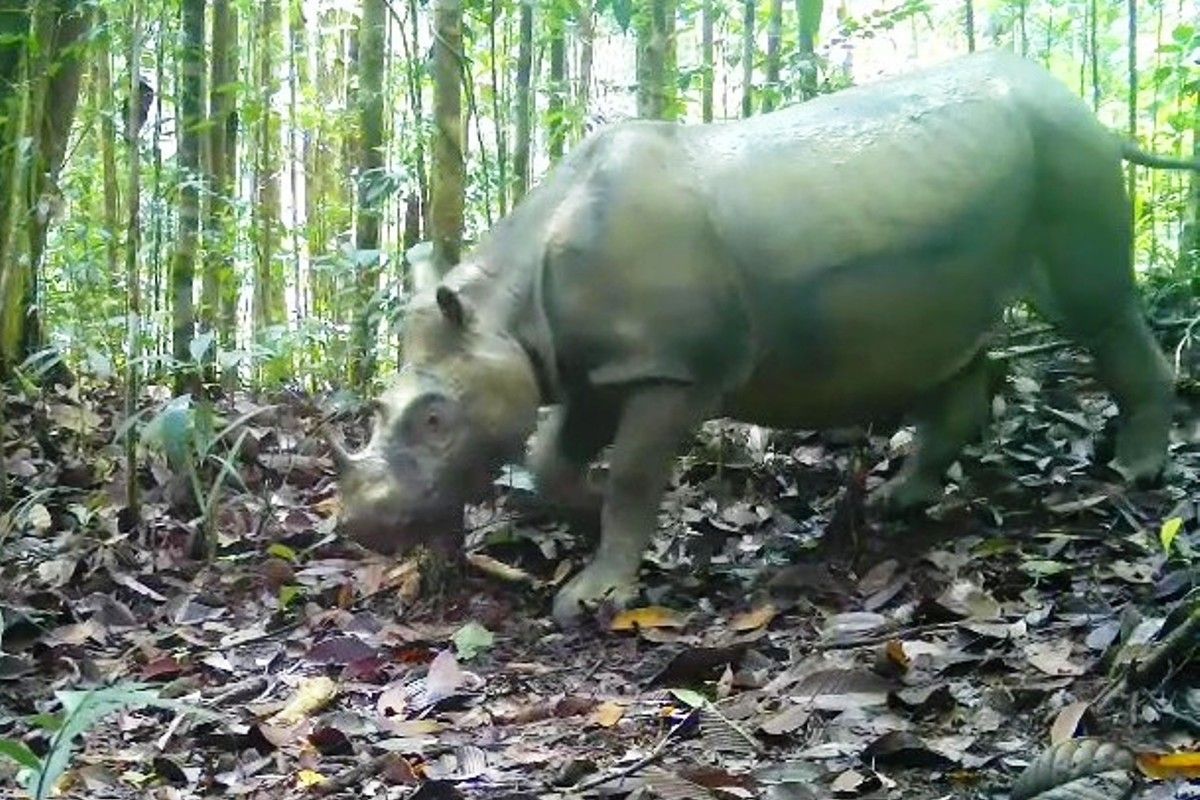
This is a final endeavour, a protracted struggle to ensure that future generations do not only recognise the Bornean rhino from books or historical archives, but can still witness it roaming freely in the dense forests of Kalimantan.
Behind the thick jungles of East Kalimantan’s interior lies a tense story. Amidst the pressure of environmental degradation and habitat isolation, the fate of one rare subspecies is now on the brink. Currently, only two Dicerorhinus sumatrensis harrissoni, better known as the Bornean rhino, remain. Even more worryingly, both are female. Meanwhile, time continues to march on.
Recognising the increasingly real threat of extinction, the East Kalimantan Natural Resources Conservation Agency (BKSDA) held a crucial meeting on 8 June 2026 in Balikpapan during the Coordination Meeting for the Rescue of the Pari Mahakam Ulu (Mahulu) Rhino. This coordination meeting was not merely a routine agenda. It marked a turning point and an emergency measure, possibly even the last chance for Indonesia to prevent this rare animal from disappearing from the face of the earth forever.
Of the two remaining rhinos, one is Pahu, a rhino now living under strict supervision at the Kelian Rhino Sanctuary in East Kalimantan. The other is Pari Mahulu, who has become the focus of the conservation world as the only Bornean rhino still living freely in the wild. However, Pari lives in a condition of isolation, without a mate and without a male, thus having no opportunity to breed naturally.
Pari’s existence in the forests of Mahakam Ulu Regency is akin to a hidden diamond. Its value is priceless, but the threat of losing it is equally immense. Pari is trapped in solitude. She has no chance to continue her lineage. Should she die one day before being rescued, all the genetic material, evolutionary traces, and the hope of sustaining this subspecies risk vanishing with her.
Therefore, leaving Pari isolated poses too great a risk. If she dies unmonitored, the extinction of the Bornean rhino will become a reality. East Kalimantan, and indeed Indonesia, would lose one of its treasured biodiversity assets. On that basis, a major decision was taken. Pari must be translocated, or moved, to a safer location. This translocation is not merely about moving an animal from one place to another. The step represents an effort to save the last genetic heritage still possessed by the Bornean rhino.