
Preserving Sago as Papuan Identity and Local Food Security
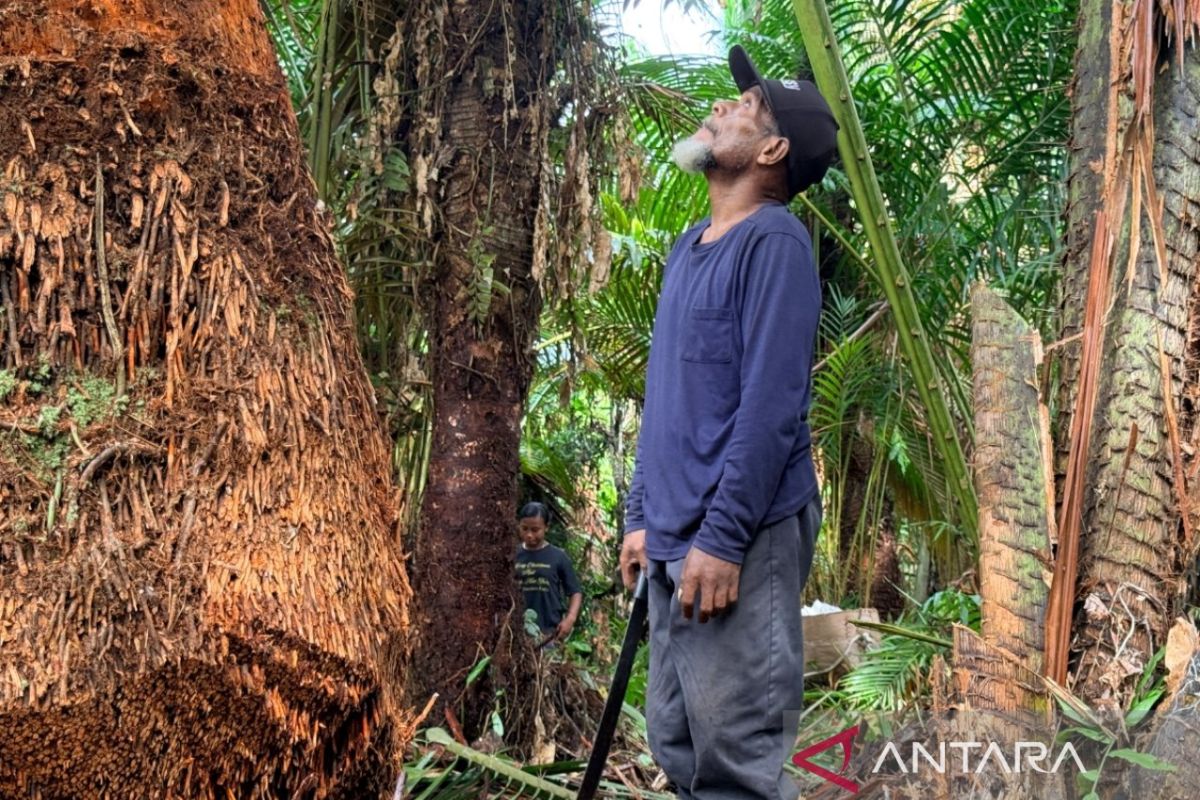
The sago forests, as a source of local food production in Papua, represent significant potential for government and stakeholder efforts to achieve self-sufficiency and food security based on locality. The depletion of sago forests due to land conversion in several districts and cities must be addressed by raising awareness among all parties to protect these forests as a future food buffer for the Papuan people. The shrinking of sago forests in various regions of Papua not only threatens the food security of indigenous communities but also risks erasing the cultural identity of the Papuan people, which has been inherited for hundreds of years. Professor of Anthropology at the Faculty of Social and Political Sciences, Cenderawasih University, Akhmad Kadir, stated that sago has far broader potential than merely being a staple food source. When discussing sago, one is not only talking about South Papua, West Papua, or other administrative regions, because sago is the identity of the Papuan people. Based on field research on food security and local wisdom, sago is closely linked to the social, cultural, economic, and ecological life of indigenous communities. Papua itself is known as one of the world’s largest centres of sago diversity. Various types of sago grow and are utilised by communities using traditional knowledge passed down through generations. However, this situation now faces a serious threat from increasingly massive land conversion for various interests and plantations, such as in Merauke, South Papua. Sago forest areas that once stretched widely are now continuously shrinking. This issue cannot be viewed solely from an environmental aspect. It is not just about the loss of food availability, but also the loss of identity, local knowledge, and the history of the Papuan people. Behind every expanse of sago forest lies local knowledge developed over centuries. Indigenous communities possess the ability to recognise various types of sago, understand their characteristics, determine harvest times, and process them into various necessities of life. This knowledge is not recorded in academic books but lives on in the daily practices of indigenous communities and is passed down between generations. Therefore, when the sago forest disappears, it is not only the trees that are lost, but also the knowledge and cultural values that accompany them. Besides being a food source, sago also has a strong social and cultural function in the lives of indigenous Papuan communities. In several communities, including the Marind people in the southern region of Papua, sago is an important part of various traditional rituals, from conflict resolution and receiving guests to traditional feasts and funeral processions. For indigenous communities, sago is not merely a food ingredient but a symbol of the relationship between humans, nature, and ancestors. This means sago is life and part of the value system that lives within indigenous communities. In addition to threats to the sago forests, the changing consumption patterns of the Papuan people, who are increasingly shifting to rice and instant foods, pose a new challenge as the younger generation begins to lose closeness with the local food that has been part of Papua’s cultural identity. If this condition continues without serious preservation efforts, Papua risks losing one of the important foundations of its culture. The threat to the sustainability of sago in Papua is no longer just an environmental issue but has become a matter of identity, culture, and the future of the community’s food. To address this issue, joint steps are needed from the government, academics, indigenous communities, and all stakeholders. Therefore, there is a need to protect sago forest areas from uncontrolled land conversion, strengthen cultural education for the younger generation, and recognise the local knowledge of indigenous communities as part of a cultural heritage that must be preserved.