
Preserving Nusantara's civilisation through fragile manuscripts
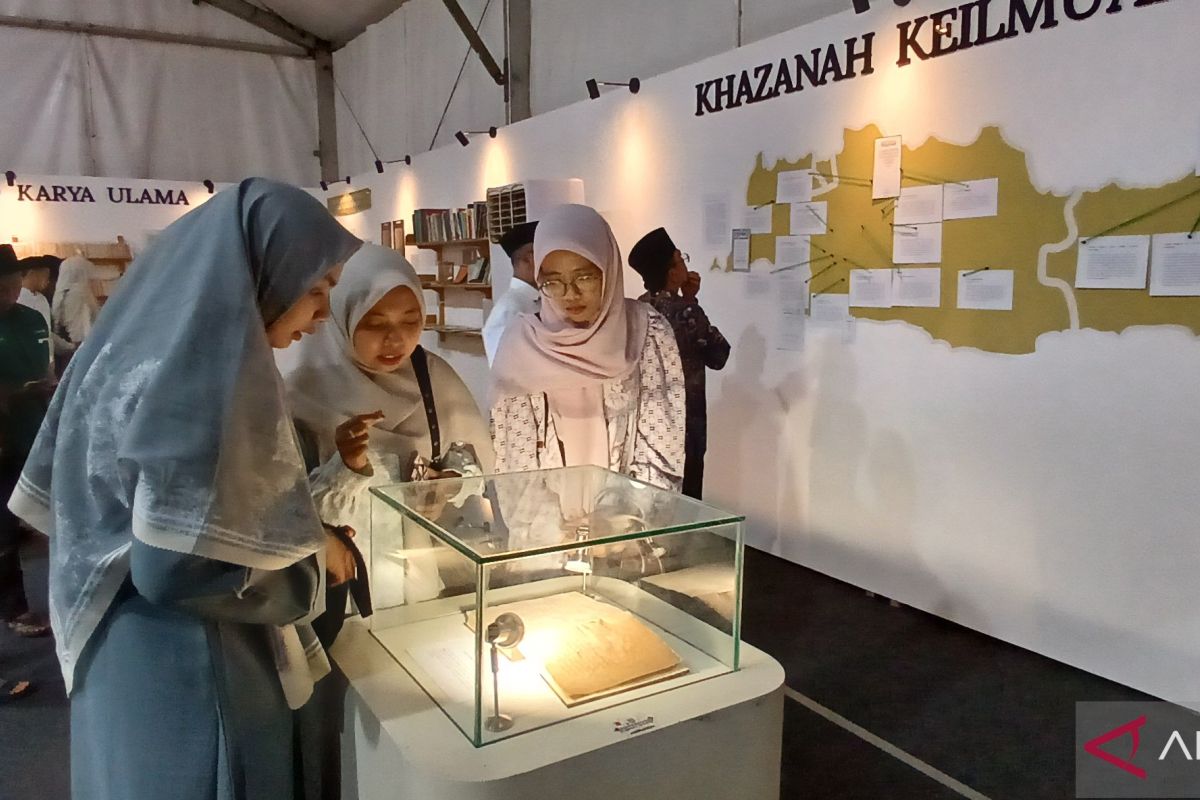
The old sheets of paper appear fragile. Some edges have begun to yellow, several parts are riddled with holes, while the accumulated dust serves as a testament to their long journey through time.
For Ustaz Adi Ivanto, these sheets are not merely old papers waiting to decay. Within them lies knowledge, records of life, and traces of the Nusantara civilisation that may not necessarily be found in modern history books.
Ustaz Adi is the Head of the Preservation and Conservation Division of Nahdlatul Turots, an organisation dedicated to the preservation of the works and manuscripts of Nusantara scholars. His passion for manuscripts has led him to independently study maintenance techniques, which he then shares with the public and the younger generation.
To him, the principle of maintaining and honouring these manuscripts is not a burden, but an honour, as it involves protecting both the physical form of various manuscripts and their contents, ensuring they serve as historical evidence for future generations.
A book is not immediately treated as an object to be repaired. Its condition is first inspected to determine the appropriate course of action, as every manuscript possesses different levels of damage and material characteristics.
The first stage involves cleaning the manuscript of dust and dirt. Following this, the condition of the paper is examined, including its acidity levels. If the paper is too acidic, deacidification is performed—a process of reducing or neutralising the pH level to slow down the degradation process.
Holes in the paper can be patched using the ‘mending’ technique (visible repair). If necessary, manuscripts can also be laminated using special archival paper made from Japanese mulberry or kozo fibres.
This technique differs from the plastic lamination commonly known to the public. The use of plastic can actually complicate the restoration process if the layer becomes damaged.
“When we perform paper lamination using paper that allows for future restoration, it is still possible. This traditional Japanese technology cannot yet be fully produced by us to the same standard,” said Adi Ivanto, when met by ANTARA at the Turots Clinic during the 35th Muktamar of Nahdlatul Ulama (NU) in Jombang, East Java, on Monday (31/8).
Digitisation of Manuscripts
The work of maintaining manuscripts undertaken by Adi Ivanto is by no means simple. In fact, out of thousands of titles that have been digitised, the number that can be physically preserved remains very limited.
Since its formation in 2020, Nahdlatul Turots has digitised more than 2,000 manuscript titles. Meanwhile, manuscripts that have undergone the physical preservation process have not yet reached five per cent.
Limitations in cost, materials, technology, and human resources present significant challenges.
Adi recognises that the preservation of manuscripts cannot be the responsibility of a single organisation alone. Therefore, given these conditions, public education is necessary. Such activities are a vital part of the manuscript preservation movement.
The institution also continues to strive to foster public awareness so that people know how to handle the books or manuscripts they possess.
One such effort is carried out through the Turots Clinic. The public can consult regarding the condition of manuscripts, including when they find family heirlooms or legacies from a kiai that have suffered damage.
It is not uncommon for ‘turots’ (manuscripts) to arrive in a very fragile state. With the available expertise, the team endeavours to clean, repair, and rebind these books so they can be read without losing their original character.
These efforts also target the younger generation. A number of students are involved to get closer to the manuscripts, while simultaneously understanding that these seemingly old and unappealing objects actually hold a wealth of knowledge.
Interest among the youth in manuscripts usually grows once they become acquainted with their contents. This is because Nusantara manuscripts do not only discuss religion.
Within these manuscripts, one can find records of events, recipes, medicinal knowledge, social sciences, politics, mathematics, and even knowledge related to chemistry.
Scholars of Nusantara in the past did not only serve as religious teachers. They were imams, teachers, community figures, and even leaders who served as points of contact for the community to address various issues.
Their works even extended beyond the borders of Nusantara. A number of works by Indonesian scholars are known and studied within the Islamic scholarly traditions in the Middle East.
Several names, such as Sheikh Yasin Al-Fadani (a great scholar from Padang, West Sumatra, nicknamed Musnid ad-Dunya, a global expert in chains of narration) and Sheikh Nawawi Al-Bantani (an Indonesian scholar who brought honour to the nation internationally) are part of this long legacy. The works of Nusantara scholars are used in teaching at various Islamic educational institutions abroad.
This legacy makes Adi Ivanto even more certain that manuscripts are not merely relics of the past. They are evidence that Nusantara possesses a long intellectual tradition.
Particularly in the era of Artificial Intelligence (AI), when a piece of writing can be recreated with just a command in seconds. However, Adi emphasises that the existence of original manuscripts is becoming increasingly important.
Digitisation does allow the contents of manuscripts to be stored and disseminated. However, digital copies cannot fully replace the existence of the original objects.
In the current era of AI, if we show a digital result, people might say that AI can also create it; but when we can maintain the existence of these books, there is physical evidence.
Because of this, manuscripts located abroad are also a concern.
Adi mentioned that many Nusantara manuscripts are still stored in various countries and have not yet returned to Indonesia.