
Preserving NU's Purity, Safeguarding Indonesia's Independence
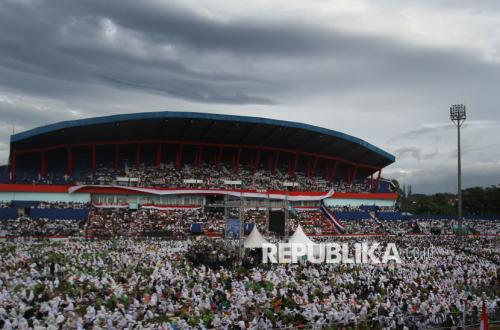
August 2026 is a special month for Indonesia. Eighty-one years have passed since this nation gained independence. At almost the same time, Nahdlatul Ulama (NU), which was born in 1926, is entering its second century through its 35th Congress at Bahrul Ulum Islamic Boarding School, Tambakberas, Jombang, 27–31 August 2026. This congress is officially positioned as NU’s highest forum to formulate the direction of its struggle for the next five years while strengthening ukhuwah and the commitment to Islam rahmatan lil ’alamin.
The meeting of these two historical moments should not be read as a coincidence. Indonesia is entering a decisive phase. NU is also entering a decisive phase. Indonesia is heading towards Golden Indonesia 2045. NU is heading towards its second century.
Both face the same question: are we able to transform our vast historical capital, demographics, human resources and social strength into moral strength to build the future?
This question is far more important than merely who becomes president, minister, governor, regent, chairman of an organisation, or who wins in a contest. For a nation and an organisation will ultimately not be saved by positions. They are saved by the character of the people who hold those positions.
Eighty-one years after the Proclamation, we certainly cannot say Indonesia is not yet independent. Indonesia is a sovereign state with a long record of development achievements. But independence has a meaning far deeper than merely being free from colonialism. Independence must mean freedom from poverty, ignorance, injustice, corruption, fear, discrimination, dependency, and arbitrariness.
Here the ideas of Nobel Prize-winning economist and philosopher Amartya Sen become highly relevant. In Development as Freedom, Sen views development as the expansion of real freedoms enjoyed by human beings. Poverty, tyranny, limited economic opportunity, poor public facilities, and intolerance are forms of unfreedom that prevent people from living a life they value.
Therefore, Golden Indonesia 2045 must not be measured only by economic growth, infrastructure development, the size of GDP or Indonesia’s position in the world economic ranking.
The more fundamental questions are: Are Indonesian people increasingly free to live with dignity? Are farmers increasingly prosperous? Are fishermen increasingly sovereign? Do workers obtain a decent living? Do village children receive an education equal to that of city children?
Does the law apply equally to the small and the powerful? Do officials truly work for the people? Does natural wealth truly bring welfare to society? And most fundamentally: is the state increasingly trusted by its people? For a strong state is not merely one with great power. A strong state is one trusted by its people.
The challenges facing Indonesia today are also no longer the same as in the past. The world is experiencing geopolitical fragmentation, trade wars, protectionism, armed conflict, supply chain shifts, technological competition, artificial intelligence, energy and food crises, climate change, and the struggle for influence among major powers.
The government itself, in the Macroeconomic Framework and Fiscal Policy Principles 2026, acknowledges that globalisation, which previously emphasised cooperation, has shifted towards fragmentation and competition, while protectionism, trade wars and geopolitical tensions increase uncertainty. At the same time, the government places the achievement of Golden Indonesia 2045 as a strategic agenda.
In such circumstances, Indonesia needs mature unity, not forced unity. We need cooperation between the state and civil society. We need a government that is strong, yet humble. We need community organisations that are critical, yet constructive.
Source: jawawa.id (https://jawawa.id/newsitem/preserving-nus-purity-safeguarding-indonesias-independence-1787003449)
Originally published by Republika (https://analisis.republika.co.id/berita/tjx2ve451/merawat-kemurnian-nu-menjaga-kemerdekaan-indonesia), translated from Indonesian