
Preserving Forests, Caring for Water Sources, Safeguarding Life
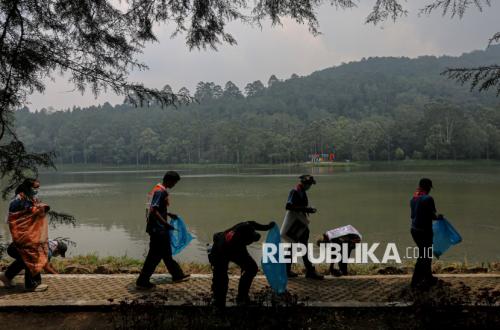
Water is an inseparable part of life. Humans, animals, and plants all require water to survive. Therefore, maintaining water availability should not only be a concern during droughts or floods, but should be a shared awareness practised at all times.
In an environmental context, water and forests share a very close relationship. A forest is not merely a collection of trees, but a vital component of the water management system. Vegetation helps absorb rainwater into the ground, reduces surface runoff, maintains soil moisture, and assists in controlling erosion. When vegetation cover decreases, nature’s ability to regulate water can also be disrupted.
A significant example of this relationship can be seen in the Citarum River Basin (DAS Citarum) in West Java. The Citarum River plays a strategic role for the community, ranging from providing raw water and agricultural irrigation to generating electricity and supporting various economic activities along its flow.
The Citarum Basin supplies water needs for millions of people and plays a vital role in supporting the agricultural sector. The irrigation network sourced from the Citarum system serves hundreds of thousands of hectares of paddy fields. This means the sustainability of the Citarum is not only related to the water we consume, but also to the food that reaches the people’s tables.
The role of the Citarum is also linked to energy. The cascade dam system of Saguling, Cirata, and Jatiliuhur is a crucial part of Citarum water resource management, with functions encompassing electricity supply, irrigation, raw water provision, and flood control. Thus, a single river is directly linked to various fundamental community needs.
In the upstream area, Situ Cisanti at the foot of Mount Wayang, Tarumajaya Village, Kertasari District, Bandung Regency, is known as the ‘Kilometre Zero’ point of the Citarum River. This area serves as the confluence of several springs that are vital components of the Citarum’s upstream system.
Discussing the Citarum requires more than just looking at its river flow; we must also examine what is happening in its catchment areas. The condition of the forests, soil, springs, and community activities in the upstream region are interconnected with how water is absorbed, stored, and subsequently flows to the downstream areas.
This is where forests play a vital role. Tree roots help maintain soil structure, while vegetation helps slow down rainwater runoff. When rain falls in areas with good vegetation cover, part of the water can seep into the ground and become part of the water reserves. Conversely, a reduction in vegetation cover can increase surface runoff and erosion.
This issue does not mean that every instance of forest destruction automatically leads to disaster. However, when environmental damage occurs widely and persists over the long term, the ecosystem’s ability to maintain water balance can decline. Under certain conditions, this can increase the risk of floods, landslides, droughts, and the decline of water quality and availability.
Several past studies have described the forest cover in the Citarum upstream as being in a critical state, including figures as low as 8.9 per cent. Such data is important as a record of past environmental issues, but it should not be used blindly to describe the current situation without updated data. Changes in environmental conditions must be interpreted based on the latest data so that discussions regarding the Citarum remain proportional and accountable.
What is more important now is how to maintain the momentum of recovery and the sustainable management of the Citarum. Efforts to protect the upstream area cannot rely on a single party. The government holds the authority and policy-making power, the community plays a role in guarding the surrounding environment, while the business world, academia, and various other groups can also participate according to their respective capacities.
Preserving forests does not mean ignoring the needs of the communities living around them. On the contrary, a conservation approach must run alongside the social and economic interests of the community. Sustainable environmental management will be stronger if the community is not merely an object, but becomes part of the solution.
At the same time, regulations are still necessary. When there are activities proven to damage forest areas, pollute water sources, or violate environmental provisions, law enforcement must proceed proportionally and based on evidence. Environmental protection is not sufficient through mere appeals; it requires consistent governance and supervision.
We also need to change our perspective on water. Water is often only felt to be important when the tap stops running, wells run dry, paddy fields lack supply, or floods enter residential areas. In reality, the existence of sufficient and high-quality water is the result of a long process heavily influenced by the condition of the surrounding environment.
Therefore, protecting water sources should not be a seasonal agenda. It should not only be undertaken during floods, droughts, or disasters, but should become part of long-term habits and policies. Planting and caring for trees, protecting springs, reducing pollution, managing waste, and using water wisely are all parts of the collective effort that can be undertaken.
The Citarum teaches us that environmental issues know no territorial boundaries. What happens upstream can have consequences downstream, and vice versa. Similarly, the activities of communities and industries along the river flow will determine the overall environmental quality of the Citarum.
Ultimately, preserving forests is not just about maintaining trees. Preserving forests means safeguarding life.
Source: jawawa.id (https://jawawa.id/newsitem/preserving-forests-caring-for-water-sources-safeguarding-life-1791374209)
Originally published by Republika (https://analisis.republika.co.id/berita/tmja9e490/menjaga-hutan-merawat-sumber-air-menjaga-kehidupan), translated from Indonesian