
Preserving Blessings, Managing Markets
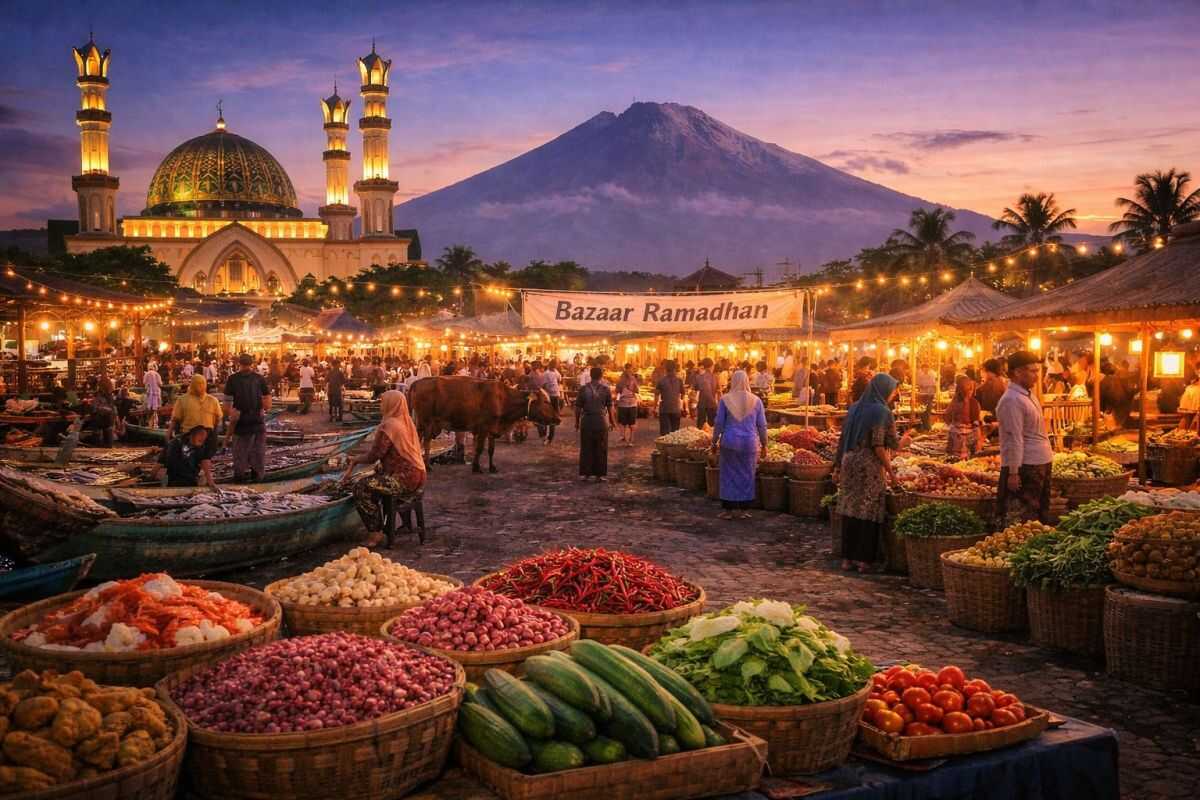
Mataram (ANTARA) — As the holy month of Ramadan approaches, life across many parts of Indonesia begins to accelerate. The vibrant aromas of bustling markets, lively culinary bazaars, and the flurry of people preparing their daily necessities form part of the distinctive rhythm of welcoming the month of blessings.
In West Nusa Tenggara (NTB), the atmosphere extends beyond mere religious overtones. The provincial and district governments are moving in concert to ensure communities are prepared for the fasting period.
From Mataram in the west to Bima in the east, various strategies are being implemented to maintain price stability, food security, healthcare services, and the strengthening of the local economy.
These preparations serve as a reflection of bureaucratic capacity, as well as cross-sectoral synergy in addressing the heightened socio-economic dynamics during Ramadan.
NTB’s readiness for Ramadan is not simply a matter of goods and services availability. This annual phenomenon brings with it the classic challenges of surging food demand, rising prices for chillies, onions, and cooking oil, as well as fluctuations in meat and fish prices.
For this reason, the province has demonstrated an innovative and solution-oriented approach, combining market intervention, MSME empowerment, and optimisation of local resources to ensure communities can observe their worship in peace whilst keeping essential goods affordable.
Food markets
The rise in bird’s eye chilli prices ahead of Ramadan has become one of the primary concerns. In early February 2026, bird’s eye chilli prices in NTB reached Rp90,000 to Rp95,000 per kilogramme — and in Mataram, they hit Rp110,000 per kilogramme. This is far above the reference price of Rp57,000 per kilogramme.
The price surge has been driven by heavy rainfall disrupting harvests, high volumes of supply being shipped out of the region, and increasing local demand. The provincial government immediately intervened through affordable food drives and community markets.
NTB Governor Lalu Muhammad Iqbal took to the field, monitoring markets in Mataram, East Lombok, and other districts, ensuring the prioritisation of local supply distribution before shipments to other regions, whilst simultaneously curbing extreme price spikes.
Beyond chillies, the stability of other staple food stocks has also been a focus. NTB’s Bulog (National Logistics Agency) recorded rice availability of approximately 154,000 tonnes — sufficient to meet needs for up to 10 months ahead. Cooking oil stocks stand at 307,000 litres, whilst beef supply is being maintained by bringing in livestock from Sumbawa, up to 10,000 head of cattle.
This strategy demonstrates a proactive approach — not merely relying on price monitoring, but also intervening in the supply chain so that communities continue to have access to food at reasonable prices.
An innovative approach has also been applied through crop diversification drives. The government is encouraging farmers to plant chillies as intercrop alongside other vegetables, to utilise home gardens for growing food commodities, and to optimise harvests throughout the year.
This strategy does not merely maintain food availability but also increases farmers’ incomes, reduces dependence on supply from specific production centres, and creates independent household food security.
An example of this can be seen in Central Lombok, where an affordable food drive was carried out in collaboration with local communities and related sectors, strengthening regional food security whilst curbing inflation ahead of Ramadan.
Ramadan bazaars have become part of the strategy to strengthen the local economy. Bilebante Village, which was awarded Best National Tourism Village in 2025, is hosting the Bilebante Ramadan Bazaar as a centre for local culinary products and goods.
The event has revived a building that had lain dormant for five years, whilst simultaneously serving as a venue for community gathering, increasing residents’ incomes, and strengthening MSMEs.
The vibrant bazaar also supports community-based green tourism attractions, extending the benefits of the creative economy and driving the integration of tourism and the local economy in a single initiative with tangible impact.