
Preserving Betawi Heritage, Haeda Sold Door-to-Door Bir Pletok and Reaped Significant Profits
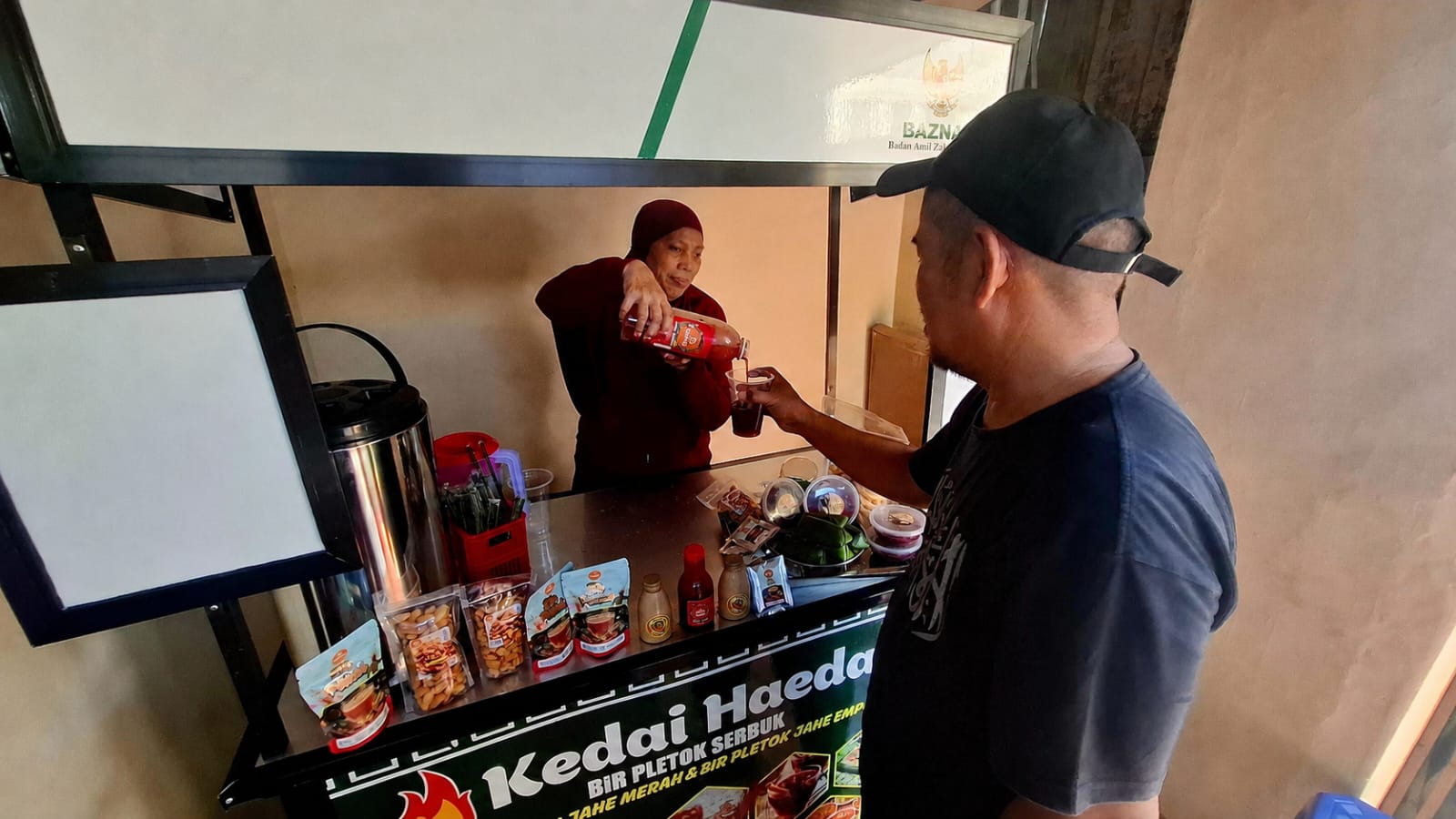
Before her products were in high demand at bazaars, Haeda took a long journey to introduce her homemade bir pletok. Armed with a passion for preserving Betawi flavours, she marketed the spice beverage by going from house to house, offering it directly to potential customers. Bir pletok is a traditional Betawi beverage that is alcohol-free and known for its various health benefits. The blend of spices, including ginger, lemongrass, sappanwood, turmeric, Java ginger, and aromatic ginger, is believed to help warm the body and relieve cold symptoms. It was from her love of Betawi culture that Haeda saw an opportunity to preserve tradition while building a business. The business journey began in 2020, when the COVID-19 pandemic hit Indonesia. At that time, residents in her neighbourhood in Kampung Rambutan, Ciracas, East Jakarta, needed herbal drinks to maintain their immune systems. The local community unit head asked Haeda to make jamu or spice drinks for the residents. Haeda said the business idea eventually emerged to make bir pletok and empon-empon made from turmeric, Java ginger, aromatic ginger, and lemongrass. With initial capital of around Rp300,000, Haeda bought various raw spice ingredients, bottles, and packaging to start production. At the time, the Kampung Rambutan area was a COVID-19 red zone. This condition meant many residents were undergoing self-quarantine at home, severely limiting outdoor activities. This situation gave birth to a unique marketing method. Haeda sold bir pletok door-to-door by placing bottles of the drink in front of residents’ fences or house doors. Initial production reached 50 bottles of 250 millilitres, sold at Rp15,000 per bottle. Almost every day, she supplied bir pletok to neighbours during the pandemic. The 51-year-old woman recalled placing the bir pletok drink in front of their houses, at their doors or fences. Over time, Haeda began to expand her business network. She became acquainted with BRI when attending a community reunion activity at Trisakti University. From there, she received information about Rumah BUMN, fostered by PT Bank Rakyat Indonesia (Persero) Tbk, which opened various entrepreneurship training programmes for micro, small, and medium enterprises. Rumah BUMN is a Corporate Social Responsibility and Social and Environmental Responsibility programme of the Ministry of SOEs managed by BRI. Through this programme, Haeda obtained various training, ranging from financial management and marketing strategies to business digitalisation and market access expansion. She admitted that since actively participating in the training in 2025, a major change occurred in her mindset in running the business. She feels the change in how her mindset became more business-focused, from initially just selling ordinarily to knowing where the market segments are. According to Haeda, her product marketing is now carried out through two channels, online and offline. Online sales are made through instant messaging applications, while offline sales are obtained through a shop and various bazaar activities. BRI’s Rumah BUMN also provides assistance related to digital marketing, halal certification, and opportunities to market products through fostered outlets after a curation process. Haeda felt the direct impact of this assistance. The business, which was initially run from home, gradually upgraded and began appearing at various large-scale bazaars. Haeda said her business went from zero to upgrading, from being just home-based to moving into bazaars. One of her most memorable experiences was participating in the bazaar at Pendekar Fest 2025, the team and jersey launch event for Persita Tangerang for the BRI Super League 2025/2026 competition last year. From that activity, Haeda managed to earn millions of rupiah in income. She has also participated in various similar activities outside Java, such as in Semarang and Surabaya. Active participation in various bazaars and the consistency of utilising digital sales channels brought major changes to the development of the Kedai Haeda business. Her presence in various bazaar activities gave her the opportunity to introduce bir pletok to new consumers from various circles. On the other hand, digital marketing became one of the strategies that also underpinned her business growth. Haeda utilises instant messaging applications and social media to reach customers more effectively. These efforts have borne fruit. Haeda revealed that her business turnover has experienced a quite significant increase compared to when she first started the business. If previously the income earned was only around Rp600,000 to Rp700,000, now the turnover achieved can reach around Rp6 million. She stated there has clearly been a turnover increase thanks to the BRI bazaars she participated in and from online sales as well. Besides bir pletok, Haeda also sells sour turmeric drinks, beras kencur, red sticky rice tapai, tojin nuts, kepok banana chips, and others. With the right marketing strategy and a willingness to continue learning and adapting, Haeda is optimistic that her business can continue to grow while introducing Betawi culinary heritage to more people. However, her business journey has not always been smooth. Haeda admitted to being a victim of fraud by an event organiser at a bazaar in the Kuningan area, South Jakarta. About 300 MSME players participated in the activity and were asked to pay a stall rental fee of Rp200,000. Haeda had prepared stocks of merchandise in a special way.