
Preserving Batukaru Forest through Customary Law
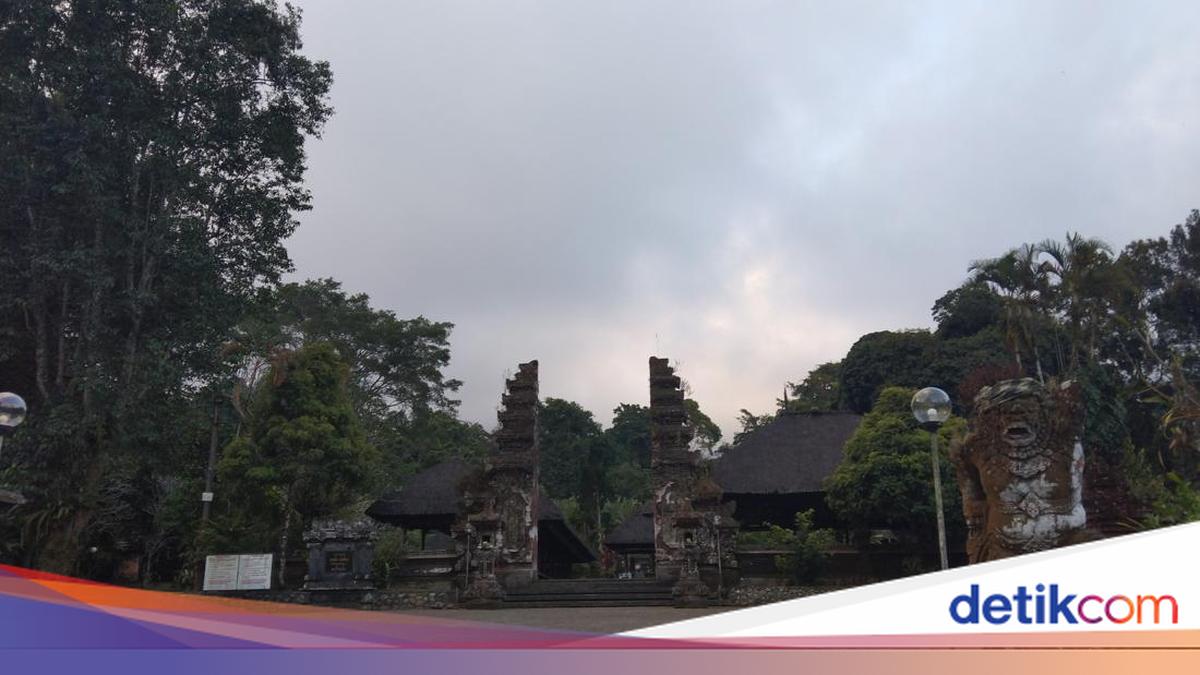
The customary village of Wongaya Gede, in Penebel District, Tabanan, continues its efforts to preserve the protected forest and the area of Pura Luhur Batukaru. Strict customary rules are applied to ensure that the Batukaru Forest and the sacred sites within it are not disturbed.
Customary rules in the form of awig-awig have long been applied by the Wongaya Gede customary village. This is a form of responsibility borne by the customary community in protecting the protected forest as well as the sanctified area.
Based on a decree, the Wongaya Gede customary village community has been given responsibility for safeguarding a protected area of around 119 hectares. “Besides the protected forest, we also safeguard the sanctity of the area,” said Bendesa Adat Wongaya Gede, I Ketut Sucipta, on Thursday (27/8/2026).
The responsibility of protecting the forest is also part of the customary community’s efforts to maintain the ecological function of the Batukaru area. The forest is considered to play an important role in the life of the community, so its preservation must be safeguarded together.
“The forest is our lungs, so we are obliged to preserve it,” Sucipta stressed.
Sucipta said that in the 1970s, some members of the community still depended on forest products for their livelihood. Timber theft was also still common at that time.
Entering the 1980s, the community began to realise the development of tourism. Gradually, dependence on forest products decreased and the community began to abandon activities involving the extraction of forest products.
The Wongaya Gede customary village then strengthened its customary rules through perarem and awig-awig to ensure the forest remains sustainable. The awig-awig, among other things, regulates sanctions for community members caught stealing or illegally felling timber.
Customary sanctions do not only take the form of an obligation to perform a mecaru ceremony, but the offender is also required to return or pay according to the value of the timber that has been taken. “The money is returned, whatever the value of the timber that has been cut,” Sucipta explained.
The heaviest punishment for violators is to shame the offender in public by giving them a sign reading ‘Timber Thief’. This sanction serves as a form of social pressure as well as a warning so that similar acts do not happen again.
These customary rules are still applied today. Sucipta revealed that a case of theft of kasuwa timber occurred not long ago. The offender was subjected to sanctions in the form of a mecaru ceremony, was required to replant trees, and had to pay according to the value of the stolen timber.
Kasuwa timber itself is a rare type of wood that only grows in the highlands. In the Batukaru protected forest area, this type of wood is only found on the slopes of Mount Batukaru.
The Wongaya Gede customary village covers a fairly large community. There are eight customary villages with 12 banjar adat and around 6,600 households that are part of the community environment associated with the area.
“For the Wongaya Gede community, customary rules are not merely for punishing violators. More than that, awig-awig is a social instrument for fostering awareness that the forest is a heritage that must be protected and passed on to the next generation,” Sucipta explained.
Source: jawawa.id (https://jawawa.id/newsitem/preserving-batukaru-forest-through-customary-law-1788011499)
Originally published by detikBali (https://www.detik.com/bali/budaya/d-8636720/melestarikan-hutan-batukaru-dengan-aturan-adat), translated from Indonesian