
Preserving Ancestral Heritage Through Gotong Royong at Mulud Adat Bayan
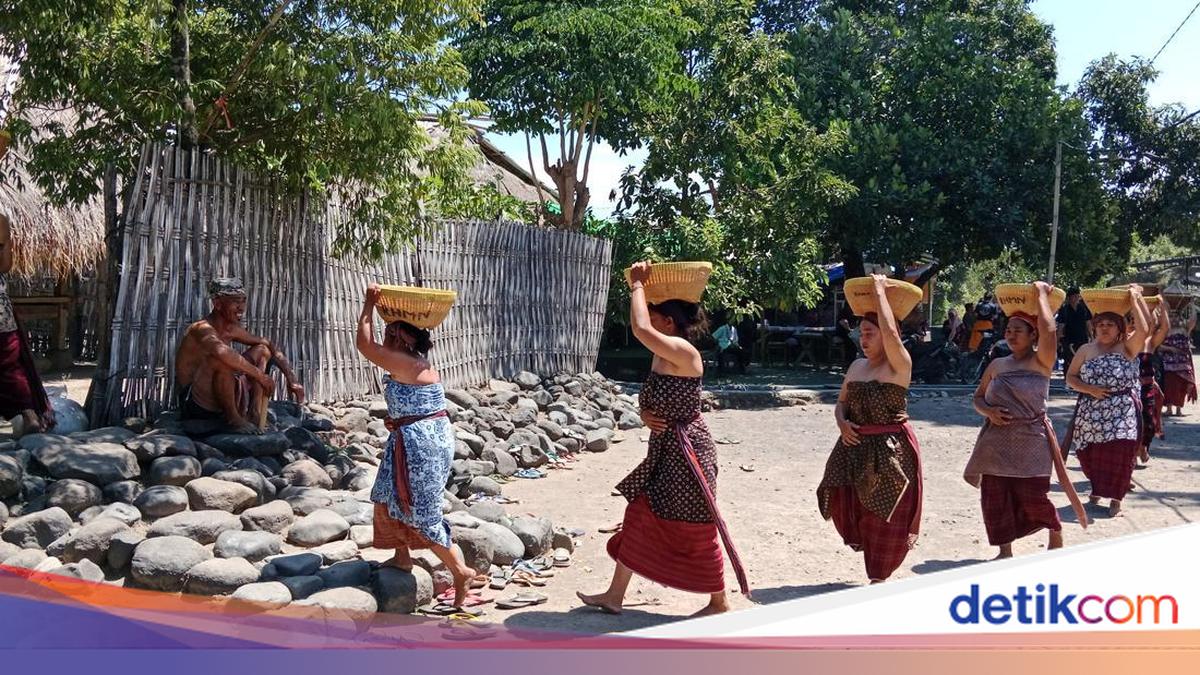
The Mulud Adat Bayan in North Lombok, West Nusa Tenggara (NTB), is not merely about customary ritual. Behind the series of traditions lies a spirit of gotong royong that the Bayan community has maintained from generation to generation.
A day before the customary ritual takes place, residents begin bringing various agricultural produce and livestock. From rice, tubers, to rice and glutinous rice are collected to meet the needs of the tradition. In addition to agricultural produce, residents also bring livestock such as buffalo, goats and cattle.
“The holed coins, chickens, goats, then cattle and buffalo are purely from the community. Not imposed on customary leaders or the village government, nothing is imposed. This is purely from the community itself,” explained Bayan Village Head, Satriadi, when met by detikBali on Saturday (29/8/2026).
These staple items are brought by the community to pay vows. Once the desired vow is fulfilled, they pay it by handing over staple goods or livestock.
Satriadi gave an example: if a community member is ill and vows to hand over a buffalo at Mulud Adat, when that person recovers, the vow must be paid at Mulud Adat.
“Because so many people make vows, every year there are hundreds of people bringing livestock, such as chickens, goats, buffalo, cattle, not to mention rice, glutinous rice, holed coins and rupiah currency,” Satriadi explained.
All the staple goods and livestock brought are processed through gotong royong at the traditional house complex, both in Karang Bajo Village and in Bayan Village itself. The processed food will later be enjoyed together after the peak ritual of the Mulud Bayan tradition.
“These items are brought by the community on a self-help basis. Then they are processed, cut, cleaned and cooked through gotong royong. Later, we eat them together as well,” Satriadi added.
For an ordinary Maulid, the organising committee would invite the community to attend. Meanwhile, at Mulud Adat Bayan, the community comes on their own and it is not permitted to invite others.
“The difference between Maulid Adat and an ordinary Maulid in the village is that for an ordinary Maulid, we must invite guests, invite family, invite friends. But at this Maulid Adat, it is strictly forbidden, not permitted to invite.
Because the essence of this Maulid Adat is a form of our belief in the cultural heritage of our ancestors,” Satriadi explained.
Source: jawawa.id (https://jawawa.id/newsitem/preserving-ancestral-heritage-through-gotong-royong-at-mulud-adat-bayan-1788003958)
Originally published by detikBali (https://www.detik.com/bali/budaya/d-8639688/merawat-warisan-leluhur-lewat-gotong-royong-di-mulud-adat-bayan), translated from Indonesian