
Preserving 37 Traditional Villages Amid Batam's Modernisation
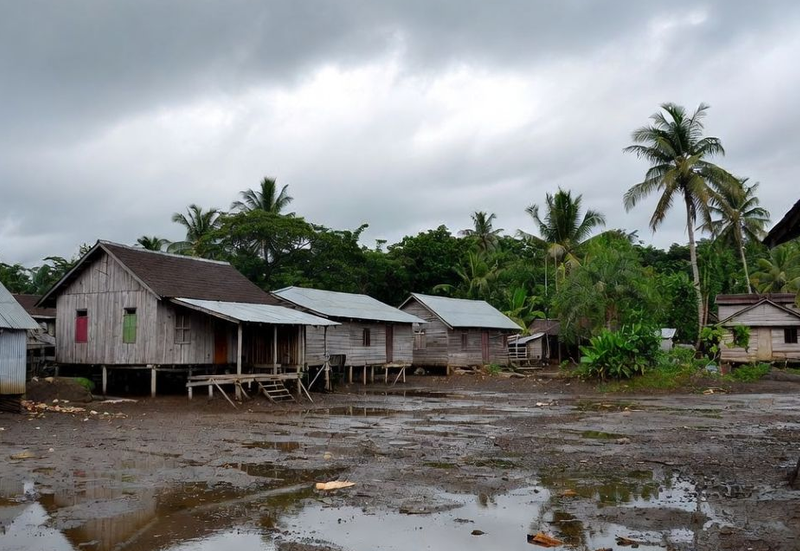
Batam has long been synonymous with the roar of industrial engines, the bustle of international ports, and a growing skyline of skyscrapers. As a Free Trade Zone, the island serves as a magnet for global investment, forcing the city’s landscape to transform rapidly. However, amidst the expansion of concrete and highway asphalt, there remain traces of life far older than Batam’s status as an industrial hub: the Kampung Tua.
Kampung Tua are more than just clusters of wooden houses along the coast. They represent a collective memory, a space where the identity of the Batam Malay community persists, and a silent witness to the island’s origins before modern development took over. Recognising the importance of preserving this heritage, the Batam City Government is now strengthening legal protection measures through the drafting of a Regional Regulation (Perda) regarding the Arrangement of Kampung Tua.
For years, the existence of 37 Kampung Tua sites in Batam has relied solely on Mayoral Decrees (SK). While these provided initial recognition, this legal basis is deemed insufficient to withstand the massive dynamics of urban development. The demand for space for infrastructure and investment often intersects with the boundaries of these traditional territories.
The Regional Secretary of Batam, Firmansyah, emphasised that the transition from a Mayoral Decree to a Regional Regulation is a crucial step to provide long-term legal certainty for residents. “Currently, the basis for designating Kampung Tua still uses a Mayoral Decree. Moving forward, this must be strengthened through a Regional Regulation to ensure stronger legal certainty and to serve as a guideline for their arrangement and management,” he stated on Monday (29/6).
With the implementation of the Perda, Kampung Tua will no longer be viewed as areas that hinder development, but rather as an integral part of the urban spatial planning that must be protected and developed sustainably.
Development in Batam, led by Mayor Amsakar Achmad and Vice Mayor Li Claudia Chandra, is directed towards creating balance. On one hand, Batam must continue to compete as a modern, international-standard city; on the other, its cultural roots must not be severed.
The Draft Regional Regulation (Ranperda) for the Arrangement of Kampung Tua is designed to regulate several strategic points. Firmansyah added that Kampung Tua are part of the historical footprint of Batam’s growth. Therefore, their arrangement must be conducted in a directed manner so that historical, cultural, and community identity values are maintained amidst industrial encroachment.
The process of drafting this regulation is not being conducted behind closed doors. The Batam City Government emphasises the importance of public consultation to absorb aspirations directly from the grassroots. This forum involves various elements, including academics, traditional leaders, community figures, and representatives from the 37 Kampung Tua themselves.
“Input from the community and stakeholders is vital to ensure the regulation drafted truly meets the needs on the ground,” explained Firmansyah. Through such feedback, the academic manuscript of the Ranperda will be refined before being submitted to the Batam City Regional House of Representatives (DPRD) for further discussion.
Several areas included in the Kampung Tua category include Tanjung Riau, Nongsa Pantai, Teluk Lengung, Bagan, Tanjung Piayu Laut, and dozens of other sites scattered across the coastal areas of Batam Island and surrounding islands.
This move by the Batam City Government is expected to become a new milestone in the preservation of Malay culture in the Riau Islands. With strong regulation, Kampung Tua are expected to transform into well-arranged, clean areas that still hold firmly to tradition. This also opens opportunities for the development of culture-based creative economies that can improve the welfare of local residents.
Ultimately, preserving the Kampung Tua is about preserving the soul of Batam. Amidst the growing skyscrapers, these first traces of history must remain standing as a reminder of the city’s origins and identity.