
Premium Rice Supervision Tightened, Amran Requests Bulog to Increase Supply
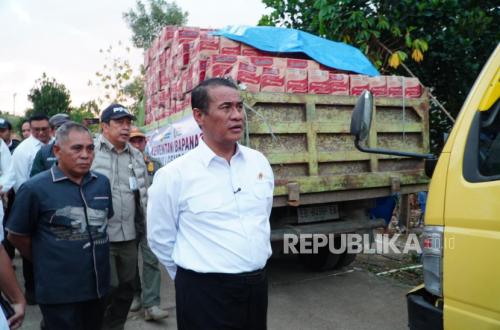
The Minister of Agriculture, Andi Amran Sulaiman, has ordered tightened supervision over premium rice prices. He has requested the National Food Agency (Bapanas) to take action against any violations, including price manipulation regarding the maximum retail price (HET) of premium rice.
Amran stated that price monitoring must be conducted alongside efforts to ensure that the supply of premium rice remains available in the market. The government does not want the public to face difficulties in obtaining premium rice or encounter prices that do not comply with regulations.
“This includes monitoring the manipulation of the maximum retail price for premium rice. We have instructed the Secretary-General and the newly appointed Deputy to supervise and take action,” Amran said when met by journalists at the Parliament Complex, Senayan, Jakarta, on Wednesday (16/09/2026).
Amran also requested that Perum Bulog optimise the distribution of premium rice to modern retail stores. According to him, rice stocks are available, so public needs must be met immediately through strengthened supply to the market.
“We have asked Bulog to optimise the supply of premium rice because stocks are plentiful. They must immediately supply modern retail stores. There is no other option except to meet the needs of the community,” Amrand said.
Supervision of premium rice has come to the fore amidst the handling of alleged fraud regarding fortified rice products. Previously, Amran announced the discovery of 25 types of rice marketed as fortified products that were suspected of not meeting the quality and nutritional content stated on their labels.
The government has ordered these products to be withdrawn from circulation, revoked the relevant permits, and is processing the parties suspected of involvement in accordance with legal provisions. Amran stated that these findings resulted from inspections of products marketed as fortified rice.
“First, we have ordered a withdrawal; second, we have revoked the permits; third, we are proceeding with legal action. We are being firm. And consumers, please do not buy them,” Amran said in Jakarta on Monday (15/09/2026).
He mentioned that the 25 products were identified following laboratory testing. The products marketed as fortified rice, according to Amran, were found not to meet the required fortification levels. Instead, they were found to be ordinary rice.
Inspections of the fortified rice content were conducted through several certified laboratories, including the Bogor Agricultural Institute (IPB) and the National Research and Innovation Agency (BRIN). These findings are significant because fortified rice is intended for vulnerable groups, such as the poor, pregnant women, breastfeeding mothers, and toddlers who require additional nutritional intake.
Amran assessed that excessively high prices also prevent the fortification programme from reaching its intended targets. He noted that the target groups might struggle to afford products sold at high prices.
“The purpose of fortification is for vulnerable groups, stunting prevention, the poor, breastfeeding mothers, and toddlers. At a price of Rp 50,000, it is impossible for them to buy it. It should be around Rp 20,000 or even Rp 13,000, as we provide food assistance. But these are being sold at prices that never meet the government’s target,” Amran said.
The Deputy Minister of Law, Edward Omar Sharif Hiariej, previously stated that these findings indicate potential criminal fraud and violations of the Consumer Protection Act, as the products sold do not match the contents listed on the labels, potentially harming consumers.
The Indonesian National Police Food Task Force has also conducted assessments regarding food safety standards, nutritional content, and quality. Joint inspections with relevant agencies were carried out from 10–12 September to scientifically verify the findings, trace distribution chains, and investigate potential criminal acts.