
Premium Rice Disappears from Retailers: The Government's Explanation
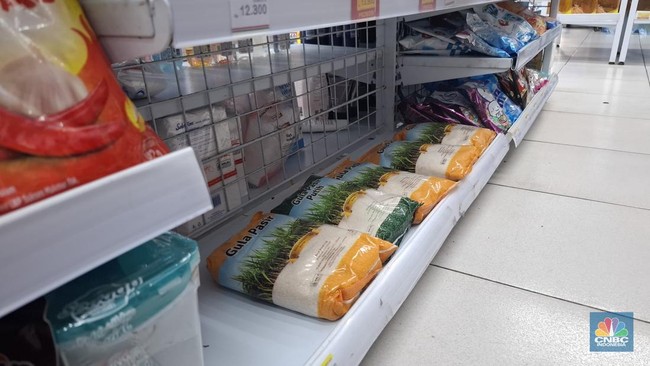
The National Food Agency (Bapanress) has ensured that the availability of rice in Indonesia, particularly premium rice, remains secure. The scarcity observed in several modern retail outlets is not attributed to a shortage of national rice stocks.
Hermawan, Deputy I for Food Availability and Stabilisation at Bapanas, stated that the situation occurred because producers who previously supplied fortified rice to modern retailers are no longer producing those products. This cessation of production followed inspections by Bapanas and the Food Task Force, which found discrepancies between nutritional content and the claims stated on product labels.
According to laboratory results, almost 90% of the inspected fortified rice production was found to be problematic. Consequently, these products were ordered to be withdrawn from circulation in modern retail stores. The matter is currently being evaluated by the National Police Food Task Force.
Although premium rice is reportedly scarce in several modern retailers in the Jakarta area, Hermawan emphasised that general rice stocks are still available. Premium and medium-grade rice can still be widely found in traditional markets. Based on checks by the Food Task Force at the Cipinang Rice Market (PIBC), the price of premium rice at the trader level is currently around Rp14,200 per kg, which remains below the maximum retail price (HET) of Rp14,900 per kg.
In terms of supply, trading activities at PIBC reach approximately 2,500-3,000 tonnes of rice per day. The government continues to strengthen the distribution of Food Supply and Price Stabilisation (SPHP) rice and Food Assistance to maintain market supply. In Jakarta, SPHP distribution is conducted through traditional markets, Food Houses (RPK), Cheap Food Movements, modern retailers, and small grocery stores. PT Food Station Tjipinang Jaya has distributed SPHP through 128 verified outlets, a network set to expand to over 200 points.
The supply issue for premium rice in modern retail is most felt in Jakarta because the region does not produce its own paddy and relies on supplies from other areas. Outside of Jakarta, the supply condition for premium rice in modern retail is reported to be better, with local premium rice available in regions such as Sulawesi and West Java.
Hermawan also refuted claims that premium rice prices from producers have become too high to enter modern retail, citing the PIBC prices as evidence. He urged against relying on one-sided claims from producers, stating that field facts from Task Force inspections must be prioritised.
Meanwhile, the government’s rice reserves (CBP) at Bulog are currently estimated at approximately 4.2 million tonnes, expected to remain between 3.4 and 3.6 million tonnes by the end of the year. The arrival of the rainy season is also expected to boost planting activities and paddy production between October and December.
The government has requested that the public do not panic regarding the rice supply. Supervision will continue to ensure that circulating rice complies with labels, quality, and applicable price regulations. Hermawan noted that selling medium-grade rice under a premium label or misrepresenting vitamin content constitutes fraud and violates consumer protection laws.