
Premature Grey Hair: What Causes It?
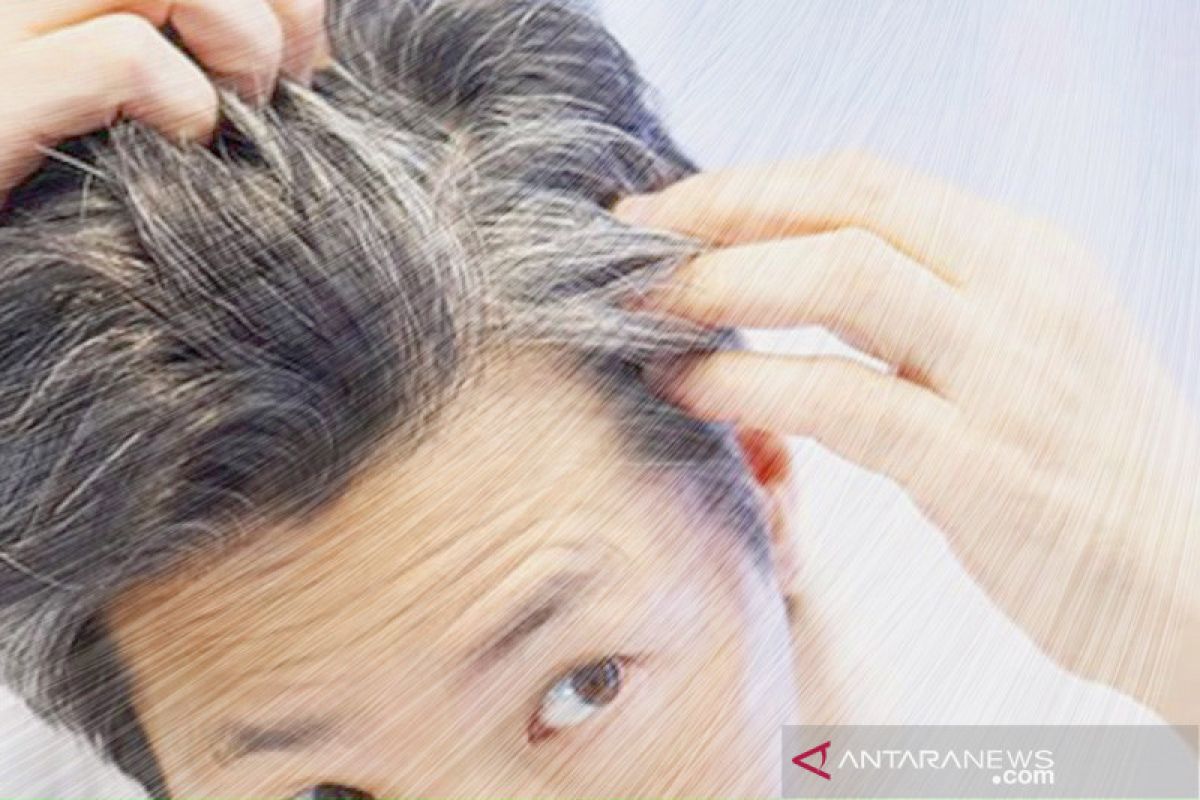
Jakarta (ANTARA) — Grey hair is often associated with ageing. However, white or grey hair can also appear in teenagers and adults in their twenties. This can raise questions, particularly when the number of grey hairs increases despite a person still being relatively young.
Grey hair forms when hair follicles produce less melanin, the pigment that gives hair its colour. This process can be influenced by genetic factors, biological changes, health conditions and everyday habits.
According to a scientific review published in the International Journal of Dermatology in May 2025, premature greying is a multifactorial condition involving heredity, biological processes and environmental factors. Smoking and a number of health conditions have also been studied for their potential links to changes in hair colour.
Even so, finding a few grey hairs at a young age does not necessarily indicate an illness. To understand the possible causes, it is useful to know how hair loses its colour and which factors may affect the process.
What causes premature greying?
Several factors can cause hair to turn grey earlier. The scientific evidence is not equally strong for all of them, so it is important to distinguish established causes from conditions that are still being researched.
1. Heredity
Genetics is one of the main factors affecting when a person starts to go grey. Someone whose parents or other family members developed grey hair at a young age is more likely to experience the same.
This is linked to the role of genes in regulating melanin production and maintaining the cells involved in hair pigmentation. Over time, the follicles’ ability to produce pigment may decline.
As a result, someone with a family history of premature greying may develop it even if they eat well and lead a healthy lifestyle.
2. Prolonged stress
Stress is another factor being investigated in connection with early greying. When someone experiences stress, the body activates physiological responses involving the nervous system and certain hormones.
A 2020 study published in Nature found that activation of the sympathetic nervous system in mice could deplete melanocyte stem cells, which are involved in producing hair pigment. The findings help explain a possible biological mechanism linking stress with grey hair.
However, findings from animal studies cannot be directly applied to humans. The relationship between stress and greying in people requires further research. Stress therefore cannot be regarded as the sole cause of premature greying.
3. Deficiencies in certain vitamins and minerals
Nutrients help maintain the body’s functions, including hair health. Some studies have found an association between premature greying and levels of vitamin B12, vitamin D, iron and certain minerals.
A study published in the journal Bioinformation in 2025 involved 520 outpatients at a dermatology clinic. It defined premature greying among Asian participants as having at least five grey hairs before the age of 25. The findings indicated that genetics, smoking and deficiencies in certain micronutrients were associated with the condition.
However, the study was conducted among patients at a healthcare facility, so its findings cannot be used to estimate the prevalence of premature greying in the wider population. Nor does an association prove that a nutrient deficiency is the direct cause in every individual.
If early greying is accompanied by other symptoms, a medical examination can help determine whether there is a vitamin or mineral deficiency. Taking supplements without knowing what the body needs may not be beneficial.
4. Smoking
Smoking affects more than lung and heart health; its possible association with hair ageing has also been studied.
Cigarette smoke can increase exposure to oxidative substances that may damage cells. In hair pigmentation, oxidative stress is thought to affect melanin-producing cells.
Several studies have found an association between smoking and premature greying. However, genetics and other health conditions also play a role, so not all smokers will develop grey hair at a young age.
Avoiding tobacco remains an important step in protecting overall health, regardless of its effect on hair colour.
5. Thyroid disorders and other health conditions
Changes in hair colour at a young age are sometimes associated with health conditions that affect the body’s functions. One example is a thyroid disorder, in which the thyroid gland produces an inappropriate amount of hormones.
Some studies have also found links between premature greying and conditions associated with vitamin B12 deficiency or pernicious anaemia.
Even so, grey hair alone is not enough to conclude that someone has a hormone disorder or vitamin deficiency. Other symptoms and a medical assessment are needed to determine whether an underlying condition is present.
6. Biological processes and oxidative stress
Hair colour is determined by melanin produced by melanocytes in the hair follicles. When pigment production declines or the cells that maintain pigmentation change, new hair may grow grey or white.
One mechanism under investigation is oxidative stress: a state in which the production of reactive molecules in the body is out of balance with the ability of its antioxidant defences to deal with them.
This process is thought to contribute to the ageing of hair follicles and the loss of pigmentation. Premature greying, however, is not caused by just one mechanism. Interactions among genetic, biological and environmental factors also determine when hair begins to lose its colour.
Grey hair caused by genetics or biological processes cannot always be prevented. Nevertheless, some healthy habits can support hair health and reduce risk factors that can be controlled.
1. Eat a balanced diet
Make sure your diet includes sources of protein, vegetables, fruit and foods containing vitamins and minerals. Vitamin B12, for example, is found in fish, eggs, milk and meat. Pulses and green vegetables can help meet iron needs.
A nutritious diet helps meet the body’s needs. However, there is no strong evidence that eating particular foods can prevent all forms of greying or restore hair that has already turned white.
2. Manage stress
Make time to rest, exercise regularly, pursue activities you enjoy and maintain healthy social relationships. These habits can help manage stress and support overall health.
Although stress management has many benefits, it should not be regarded as a guarantee that grey hair will not increase.
3. Avoid smoking
Quitting smoking benefits health. Some studies have linked smoking to earlier greying, although this does not mean that tobacco is the sole cause in every case.
4. Get enough sleep
Try to keep a regular sleep schedule and get sufficient rest. Good sleep supports various bodily functions, including physical recovery and overall health.
However, there is no strong evidence that sleeping for longer directly stops grey hair from growing.
5. Do not take supplements indiscriminately
The body needs vitamins and minerals, but supplements do not automatically treat premature greying. Supplement use should be tailored to individual needs, particularly where a nutrient deficiency is suspected.
A doctor may recommend specific tests if a person’s medical history and symptoms suggest a possible nutritional deficiency or other medical condition.
The American Academy of Dermatology (AAD) also says that, to date, no medical treatment has been proven effective at restoring hair colour in all cases of greying. If grey hair is associated with a particular medical condition, treating that condition may help address the underlying problem.
A few grey hairs are not necessarily a reason for concern, particularly if there is a family history of the same pattern.
However, a consultation with a dermatologist may be considered if greying begins very early, progresses quickly or occurs alongside other symptoms, such as excessive hair loss, skin changes or signs of a health problem.
A doctor will assess family history, the pattern of colour change, diet, medication use and any accompanying symptoms. Blood tests, for example to assess vitamin B12 levels or thyroid function, may be carried out if medically indicated.
Such tests are not necessary for everyone with grey hair. The type of examination will depend on the doctor’s assessment.
Can hair that has turned grey become black again?
Whether hair can regain its colour depends on the cause of pigment loss. In some cases linked to a particular condition, pigmentation may improve after the underlying cause is treated. This does not happen for everyone.
Grey hair resulting from biological changes or genetic factors is generally difficult to restore to its original colour through treatment. Scientific evidence for therapies that can consistently restore hair pigmentation is also limited.
Plucking grey hairs will not stop them from growing. Hair growing again from the same follicle may still be white or grey. Repeated plucking may also damage the follicle.
Premature greying can therefore be influenced by heredity, biological changes, smoking, and certain health and nutritional conditions. A healthy lifestyle may help reduce some risk factors, but it cannot guarantee that hair will remain free of grey. If the change is unusual or accompanied by other symptoms, a medical assessment can help identify the cause.
Source: jawawa.id (https://jawawa.id/newsitem/premature-grey-hair-what-causes-it-1794394567)
Originally published by Antara (Indonesian) (https://www.antaranews.com/berita/5846899/muncul-uban-di-usia-muda-apa-penyebabnya), translated from Indonesian