
Pre-trial Reveals Febrie's Alleged Money Laundering Spanned Eight Years
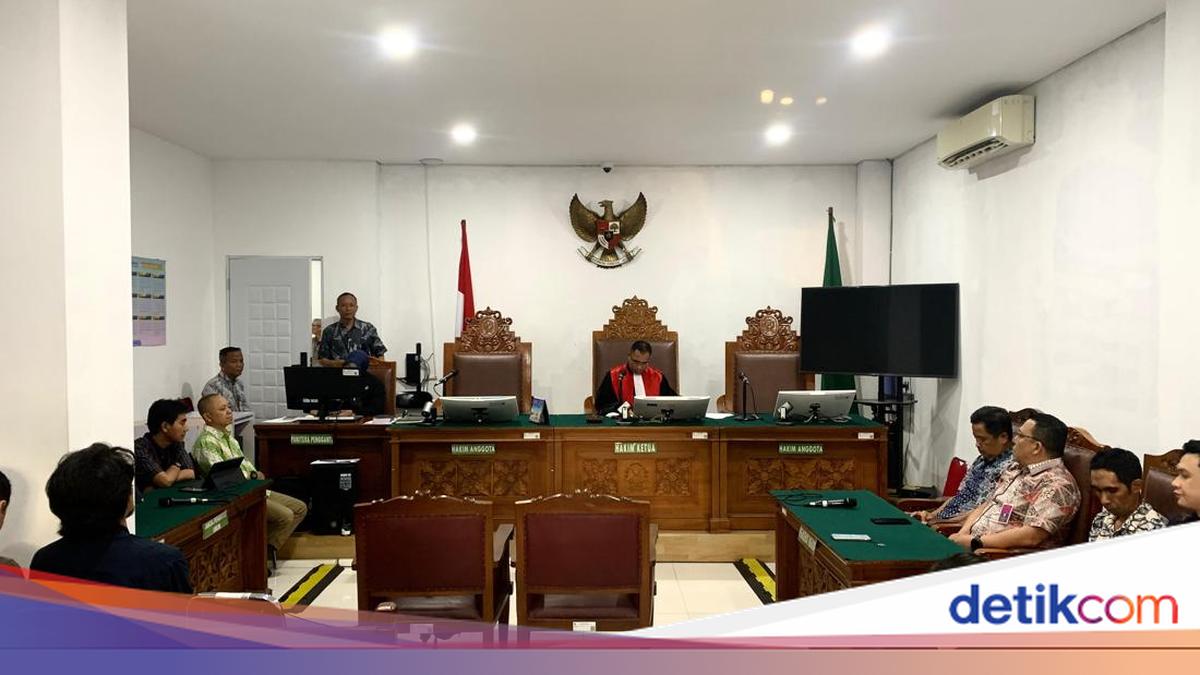
A judge has rejected a pre-trial motion filed by former Deputy Attorney General for Special Crimes (Jampidsus) Febrie Adriansyah concerning his detention and suspect status in an alleged money laundering case. The series of events in the alleged money laundering case involving Febrie is said to have taken place between 2018 and 2026.
This was revealed in the legal considerations of sole judge Richard Edwin Basoeki at the South Jakarta District Court on Friday (28/8/2026). The judge began by reading out his considerations on Febrie’s first argument concerning the disregard of Article 3 paragraph 1 of the Criminal Code (KUHP), which governs the temporal application of criminal law.
The judge explained that this provision embodies the principle of lex favorabilis or lex mitior, meaning that if a change in legislation occurs after an act has been committed, the new provision applies unless the old provision is more favourable to the perpetrator.
The judge further explained that Supreme Court Circular (SEMA) Number 1 of 2026, Part Two, Point One, Letter A, also provides guidance on Article 3 of the Criminal Code in cases that have already commenced trial and whose indictments still use the old provisions. In such cases, evidentiary proceedings use the new provisions, unless the old provisions are more favourable to the defendant.
“The guideline is indeed directed at the trial stage, but it affirms the principle that the temporal application of law requires a comparison between the old and new provisions and cannot be done automatically or partially,” the judge continued.
The judge stated that the pre-trial hearing must distinguish between two questions: which norm should ultimately be used to determine Febrie’s criminal liability, and whether the suspect designation on 24 July 2026 had a legal basis. The judge noted that the Attorney General’s Office’s letter designating Febrie as a money laundering suspect states that the series of acts was allegedly committed between 2018 and 2026.
“Considering that the suspect designation letter states a series of acts between 2018 and 2026, the period under investigation therefore spans both before and after the National Criminal Code came into force,” the judge said.
The judge stated that this circumstance makes it impossible to apply Article 3 of the Criminal Code simply by selecting one criminal threat and declaring that provision to be definitively lighter. The judge said it must first be established which acts were committed before 2 January 2026 and which were committed after, how the old and new elements are formulated, and which provision is more favourable overall.
“Considering that Article 622 paragraph 16 of the Criminal Code itself establishes a normative relationship between the provisions of the Money Laundering Law and the Criminal Code, namely between Article 3 of the Money Laundering Law and Article 607 paragraph 1 letter a, Article 4 with Article 607 paragraph 1 letter b, and Article 5 paragraph 1 with Article 607 paragraph 1 letter c. This relationship is even elaborated in both the petition and the respondent’s response,” the judge said.
“Considering that therefore the inclusion of both old and new provisions does not prove that the respondent is applying two criminal threats simultaneously to a single act. The inclusion can still be understood as an investigative construct of a series of acts spanning two legal regimes,” the judge continued.
The judge stated that a suspect designation is not a sentencing decision. At that stage, the judge said, investigators have not yet definitively determined which norm will ultimately form the basis of a guilty verdict.
“Considering that if in the examination of the main case it is later proven that certain acts were committed before the new Criminal Code came into force and the new Criminal Code provisions are more favourable, then Article 3 of the Criminal Code must be applied. If the old provisions are more favourable, the old provisions apply,” the judge said.
The judge said that the assessment of which provision is more favourable can only be made after the time period and concrete acts are established through evidentiary proceedings. The judge stated that determining the entire time period and elements of Febrie’s acts is a matter for the main evidentiary proceedings, not the scope of a pre-trial hearing.
“Considering that to decide this now, the pre-trial judge would first have to determine the entire time period and elements of the petitioner’s acts, which would mean entering into the substance of the case,” the judge said.
“Considering that therefore the judge is not disregarding Article 3 of the Criminal Code, but is of the opinion that the petitioner’s argument does not demonstrate the loss of the legal basis for the suspect designation under Article 90 of the Criminal Procedure Code. Considering that therefore the petitioner’s first argument is without legal merit and must be rejected,” the judge continued.
For information, Febrie’s pre-trial petition is registered under case number 135/Pid.Pra/2026/PB JKT.SEL. The judge declared the detention and suspect designation of Febrie in the money laundering case by the Attorney General’s Office to be lawful.
The respondent in this pre-trial is the Attorney General cq the Deputy Attorney General for Special Crimes at the Attorney General’s Office. Previously, a South Jakarta District Court judge also rejected Febrie’s pre-trial motion under case registration number 134 Pid.Pra/2026/PN JKT.SEL.
The object of that pre-trial classification concerned the lawfulness of the forced seizure measure. Respondent I was the Metro Jaya Regional Police, Respondent II was the Police’s Corruption Eradication Corps (Kortas Tipikor Polri), and the co-respondent was the Attorney General’s Office.
The judge declared the search, seizure, travel ban, and suspect designation of Febrie carried out by police investigators to be lawful. The judge also stated that the Attorney General’s Office need not conduct a fresh examination of Febrie’s case, which was transferred from the police.
Source: jawawa.id (https://jawawa.id/newsitem/pre-trial-reveals-febries-alleged-money-laundering-spanned-eight-years-1787921551)
Originally published by detikcom (https://news.detik.com/berita/d-8638647/terungkap-di-praperadilan-dugaan-tppu-febrie-berlangsung-selama-8-tahun), translated from Indonesian