
Prasasti sees opportunity for government to adjust Pertamax price
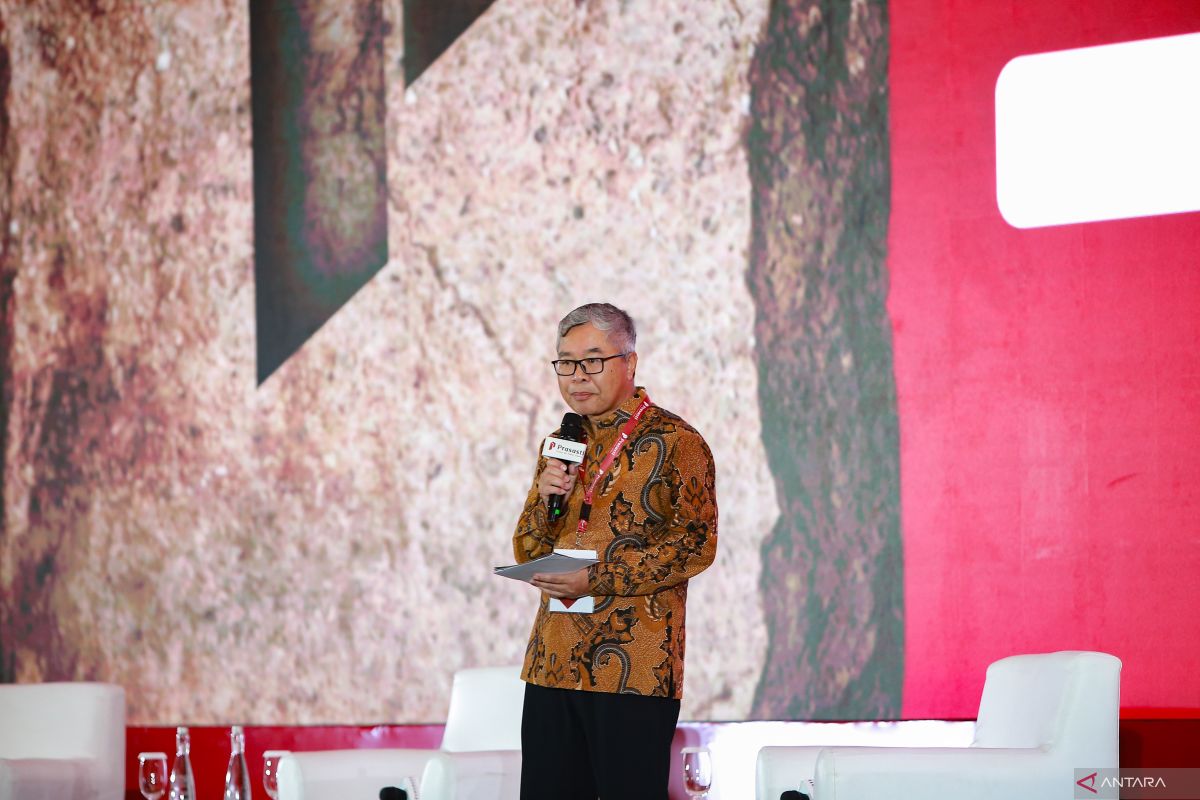
Jakarta (ANTARA) - Policy and Program Director Piter Abdullah assesses that the government has room to adjust the price of Pertamax fuel in line with market developments while ensuring subsidised fuel remains targeted. This opportunity arises as world oil prices have softened following a temporary peace agreement reached in mid-June. On 22 June 2026, Brent crude oil prices were around 80 US dollars per barrel.
“The decline in world oil prices opens up space for the government to adjust the price of Pertamax. This adjustment is not about returning to the old price, but rather lowering it reasonably in line with market developments. The government and Pertamina hold the calculations on the exact figure,” Piter said in Jakarta on Tuesday.
Nevertheless, he cautioned that the oil market remains vulnerable because Iran has repeatedly closed the Strait of Hormuz and follow-up negotiations have not been completed. Piter explained that fluctuations in world oil prices also affect domestic energy prices and demonstrate that macro assumptions in the state budget (APBN), particularly the Indonesian crude price (ICP) and the rupiah exchange rate, are highly exposed to global risks.
Therefore, a clear separation between subsidised and non-subsidised fuel is necessary to keep the economy more manageable. “The government’s obligation is to safeguard subsidised fuel. Non-subsidised fuel should be allowed to follow market prices. That way, the public understands which prices are maintained by the government and which follow the market,” he said.
Furthermore, Piter assessed that adjusting the price of Pertamax is important to prevent consumers from switching to Pertalite, which could potentially burden the subsidised fuel quota. “The lengthening queues for Pertalite indicate that some consumers have already switched. If left unchecked, the limited Pertalite quota may become insufficient. Supply and demand will no longer match, and the risk is scarcity,” he stated.
Therefore, the government needs to ensure the distribution of Pertalite remains targeted by improving the distribution mechanism. “The government must ensure that Pertalite distribution is precisely targeted. The distribution mechanism must be improved so that subsidised fuel truly reaches those who are entitled,” Piter said.
In the medium term, he stressed the importance of accelerating improvements in the energy mix. Indonesia has great potential from new and renewable energy sources and biomass to reduce fuel consumption and ease the subsidy burden. “Indonesia is very rich in energy sources, including new and renewable energy and biomass. This step can reduce fuel and gas consumption while lightening the subsidy burden,” Piter added.
From a fiscal perspective, the government has more room to manoeuvre on the spending side than on the revenue side. “State revenue relies on taxes, so suppressing it could have a negative impact. The most appropriate approach is spending efficiency and reprioritising programmes,” he said.
Piter views the softening of oil prices as a momentum that the government can leverage to organise energy and fiscal policies more effectively. Adjusting the Pertamax price is seen as a way to reduce consumer migration to subsidised fuel, while improvements in distribution and the energy mix will help maintain the health of the state budget amidst global uncertainty. “Amidst this volatility, the courage to pursue efficiency and rearrange programme priorities is precisely the capital needed to make our state budget more resilient to shocks,” Piter concluded.