
Prasasti: Indonesian Policy Must Help Businesses Grow and Scale Up
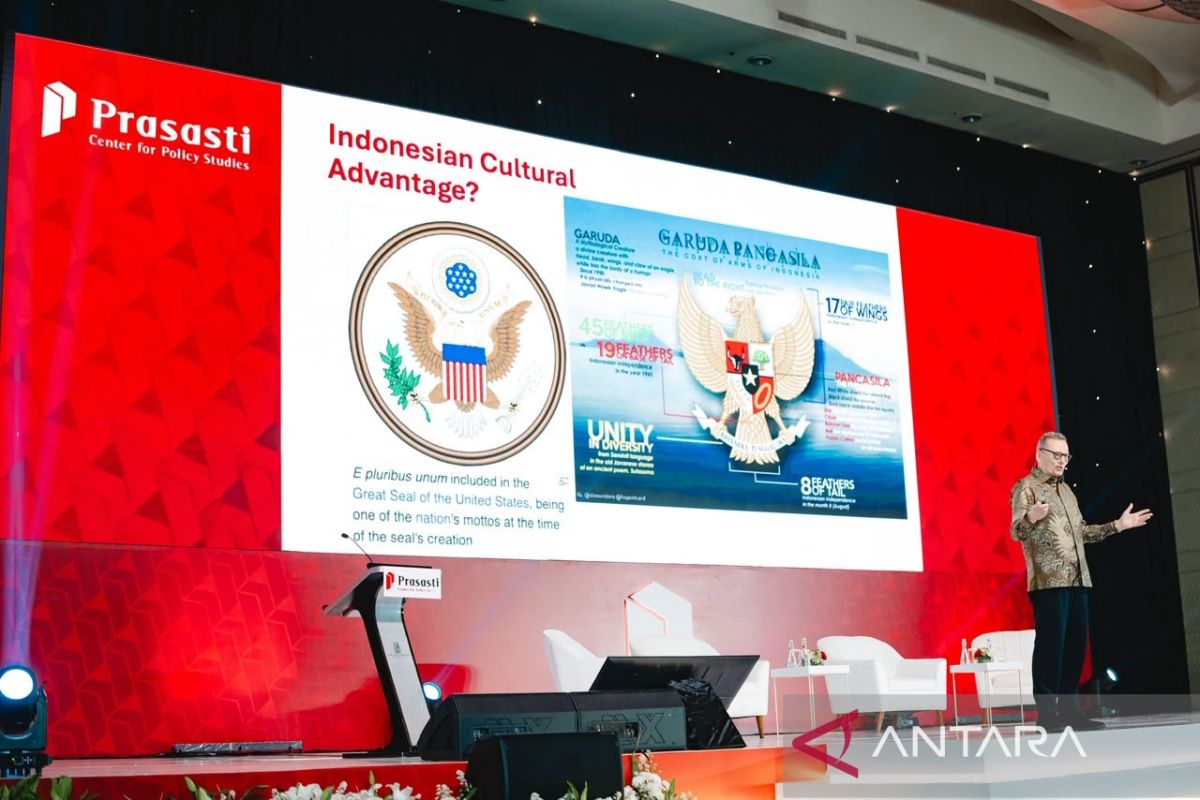
Jakarta (ANTARA) – The Prasasti Center for Policy Studies (Prasasti) says government policy should be directed towards removing barriers that prevent businesses from developing and scaling up, in order to drive economic growth and create quality jobs.
In its research, Prasasti noted that Indonesia’s large number of businesses has not yet been matched by the private sector’s ability to create quality employment. This depends on companies’ capacity to grow and expand their operations.
“Nearly all of Indonesia’s 26.4 million non-agricultural businesses are classified as micro or small, and only a small proportion have managed to grow into medium-sized or large businesses,” Prasasti Board of Advisors member Burhanuddin Abdullah said, citing the organisation’s research, The Missing Graduation, at the Prasasti Indonesia Policy Forum 2026 in Jakarta on Tuesday.
Burhanuddin said the private sector contributes around 90 per cent of national economic value added. The government and businesses therefore need to work together to promote economic growth.
“The government can set the direction, but institutions are what turn ambition into achievement. Prosperity grows when opportunity is open, competition is fair and rules provide certainty,” he said.
The research identified a number of obstacles that make it difficult for businesses to grow, while highlighting the government’s role in creating an environment that enables companies to move up to the next level.
Prasasti Executive Director Nila Marita said The Missing Graduation research was prompted by efforts to encourage more Indonesian businesses to grow and create quality jobs.
“Businesses in Indonesia are not all the same. Some are survivalist, supporting livelihoods, while others aspire to expand but have not yet managed to do so. Understanding the factors holding these businesses back is an important step for Indonesia towards creating more quality jobs,” she said.
To identify businesses’ growth potential and the obstacles they face, the The Missing Graduation report classified companies according to their performance, capabilities and growth orientation.
The classification was used to analyse which companies had the potential to grow, how their growth could contribute to quality job creation, and what factors were holding them back.
The research found that 1 million businesses, or 4 per cent, were top performers: companies with strong capabilities that had already achieved growth.
Another 12.3 million businesses, or 47 per cent, were classified as constrained gazelles. This group includes businesses that are growth-oriented but need to strengthen their capabilities, as well as those with adequate capabilities whose growth remains constrained.
Meanwhile, around 13.1 million businesses, or almost half of the total, were classified as lagging firms.
Of these, 13 million micro or small businesses were categorised as survivalist enterprises. These businesses may have emerged in response to the limited availability of decent jobs.
Prasasti Research Director Adhi Nugroho Saputro said Indonesia’s opportunity to drive economic growth lies in businesses that have both the ability and the willingness to grow.
“The number of top performers and constrained gazelles in Indonesia is not small; together, they account for half of the country’s businesses. Our focus should be on removing the barriers that prevent these businesses from growing, so they can create more quality jobs in Indonesia,” he said.
Prasasti said the barriers separating highly capable companies from lagging businesses were largely institutional.
Three main obstacles consistently distinguished the two groups: labour issues, regulation and bureaucracy, and illegal levies.
The findings are consistent with the work of 2024 Nobel laureate in Economics James A. Robinson, in his book Why Nations Fail.
According to Robinson, a prosperous society needs inclusive institutions that provide equal opportunities for everyone.
“To become an innovative society, we need to build an institutional system capable of drawing out all the latent talent in society and giving people a path to rise. That is why the word ‘inclusive’ is so important,” Robinson said at the forum.
To address these obstacles, Prasasti recommended that the government focus its policies on helping businesses move up to the next level.
First, it should improve governance, particularly in relation to workforce quality, ease of licensing and eradicating illegal levies, while ensuring certainty in regulations and policy.
Second, it should tailor government support to the needs of each sector and business size, including expanding access to financing for micro-enterprises with growth potential.
Third, it should increase the availability of decent jobs.
Source: jawawa.id (https://jawawa.id/newsitem/prasasti-indonesian-policy-must-help-businesses-grow-and-scale-up-1791906819)
Originally published by Antara (Indonesian) (https://www.antaranews.com/berita/5784509/prasasti-kebijakan-ri-perlu-bantu-usaha-berkembang-menjadi-unggul), translated from Indonesian