
Prasasti: DSI value could strengthen governance of natural resource exports
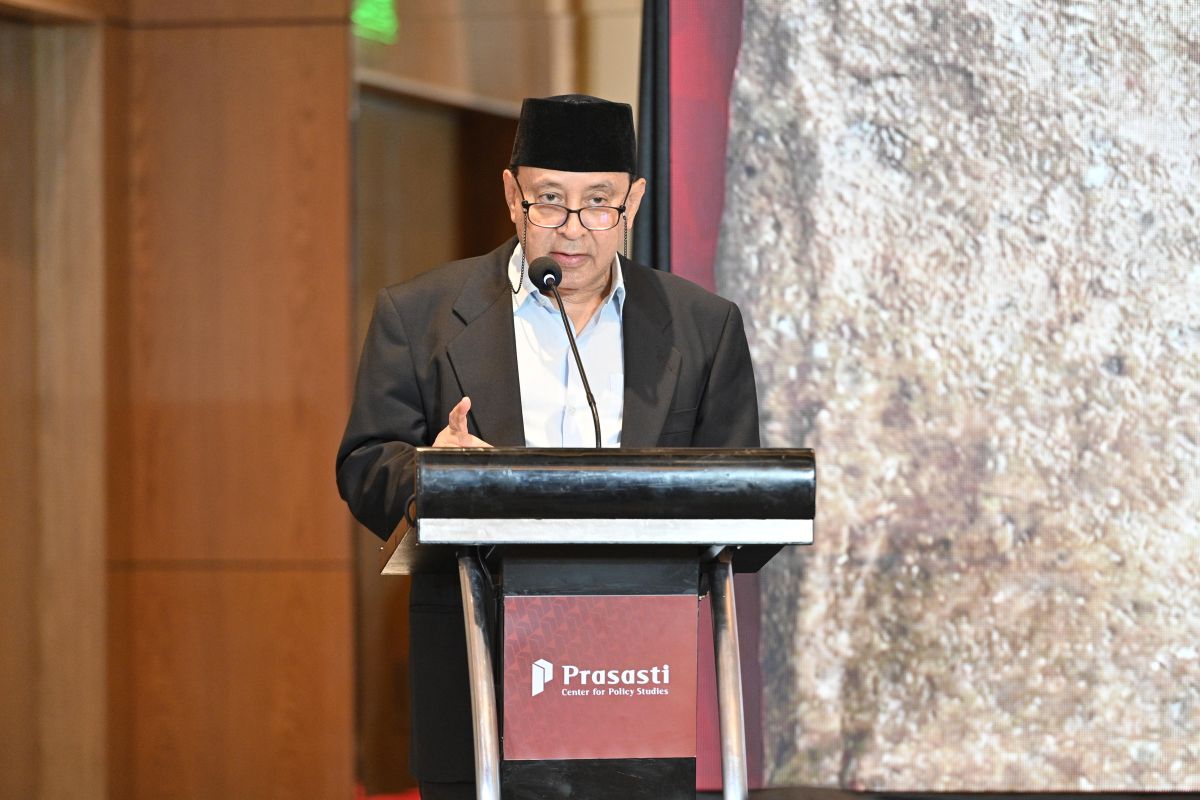
Indonesia cannot continue to allow high-value commodities to exit through a fragmented system of recording and transactions. Jakarta (ANTARA) - The Prasasti Center for Policy Studies, a policy research institute, says that the establishment of PT Danantara Sumber Daya Indonesia (DSI) as an export aggregator could strengthen the governance of strategic natural resource (SDA) commodities.
Fuad Bawazier, a member of the Board of Trustees of the Prasasti Center for Policy Studies, said that tightening the governance of SDA exports is needed to improve export recording, price validation, and the repatriation of export proceeds.
“Strengthening SDA export governance through DSI is an important and strategic agenda,” Fuad said, according to a statement in Jakarta on Friday.
He noted that Indonesia, as a major commodity country, requires instruments capable of consolidating recording, price validation, and repatriation of export proceeds in a more systematic manner.
Fuad believes DSI could become an instrument to ensure export values are recorded more accurately, export proceeds repatriated more optimally, and Indonesia’s bargaining position in global markets is strengthened.
He said the policy is also relevant amid pressures on the rupiah and the need to strengthen the state’s revenue base.
“Indonesia cannot continue to allow high-value commodities to exit through a fragmented system of recording and transactions,” he said.
Fuad highlighted indications that SDA exports have been under-invoiced from 1991 to 2024, estimated at around USD 908 billion, or the equivalent of Rp15,980.9 trillion.
He said the figure demonstrates the large potential export value that has not been optimally recorded for the national economy.
He added that aggregated export management is not new, both in Indonesia and in other countries.
Fuad cited tin management via PT Timah and oil and gas governance via the Special Work Unit for Upstream Oil and Gas (SKK Migas) under a Production Sharing Contract (PSC) scheme as forms of partial aggregation already in operation in Indonesia.
Globally, similar models are applied, including through state energy companies such as Saudi Aramco and QatarEnergy, state-run trading firms in China such as COFCO, and single-exporter models like Zespri in New Zealand’s kiwifruit sector.
Policy and Programme Director of Prasasti, Piter Abdullah, said the success of DSI will be heavily dependent on clarity of implementation mechanisms and the quality of policy communication to business actors, investors, and the public.
“Kebijakan ini sangat baik secara substansi. Tantangannya adalah memastikan persepsi pasar dan industri tetap positif selama masa transisi,” Piter said in English? Actually, we should translate fully: “The policy is very good in substance. The challenge is to ensure that market and industry perceptions remain positive during the transition,” he said.
He added that DSI should be positioned as a mechanism to strengthen recording, price validation, and repatriation of proceeds, not as an agency that takes margins through unilateral price controls.
Piter assessed that the government should promptly explain derivative rules, price formulas, audit mechanisms, and the governance of DSI openly to maintain market confidence.
“To investors, the most important message is that DSI is a mechanism of transparency and value recovery, not covert nationalisation or price controls not based on market principles,” he said.
The government previously strengthened the governance of exports of strategic SDA commodities through the establishment of DSI, with the initial phase covering palm oil, coal, and ferroalloy compounds.
Source: jawawa.id (https://jawawa.id/newsitem/prasasti-dsi-value-could-strengthen-governance-of-natural-resource-exports-1779542153)
Originally published by Antara (Indonesian) (https://www.antaranews.com/berita/5578195/prasasti-nilai-dsi-dapat-perkuat-tata-kelola-ekspor-sumber-daya-alam), translated from Indonesian