
Pramono to Develop Ciangir Integrated Livestock Centre
The Jakarta Provincial Government has begun developing an integrated livestock area in Ciangir, Legok District, Tangerang Regency, Banten, as a cattle fattening hub to support the capital’s food security. The project, valued at approximately Rp1 trillion, is targeted to commence construction in November 2026.
Jakarta Governor Pramono Anung stated that the approximately 20-hectare site, owned by the Jakarta Provincial Government, will be utilised as an integrated food production zone. In addition to cattle farming, the area will be developed for poultry farming, fisheries, and urban farming.
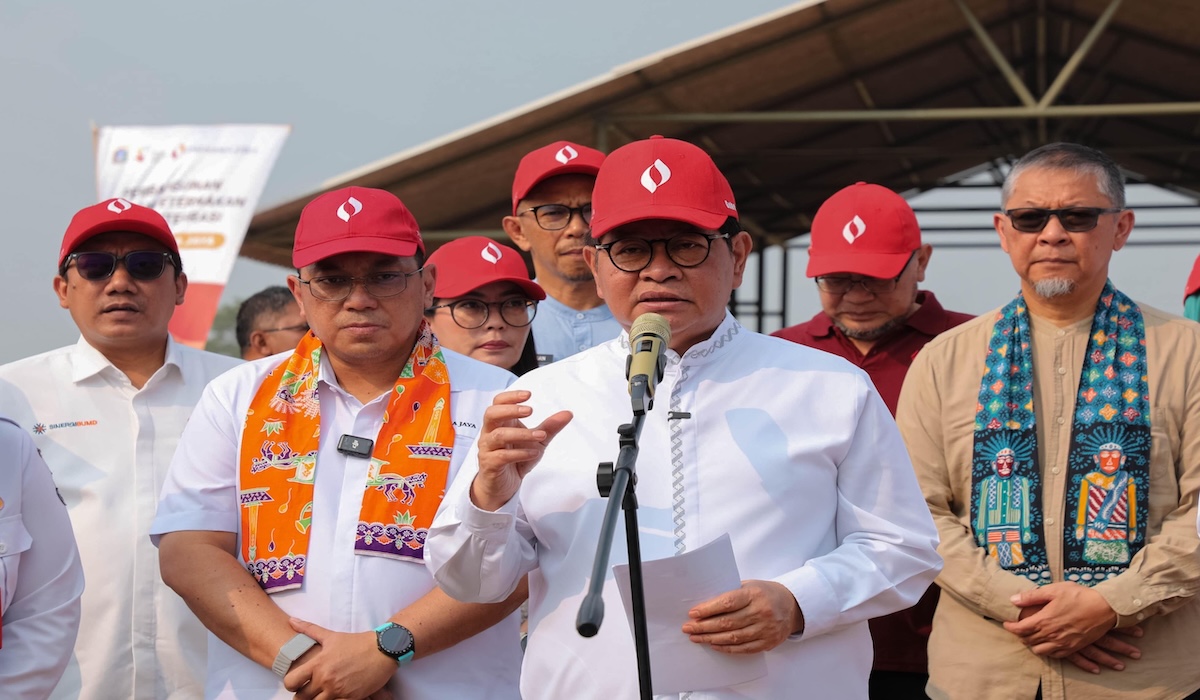
“The food security initiatives being developed here include cattle farming, as well as poultry, fish, and so on,” Pramermono said during a site visit on Friday (31/7).
Pramono emphasised that the Ciangir area will not serve as an alternative waste management site to replace the Bantargebang Waste Treatment Facility. He clarified that the entire land is projected to become a modern livestock and agricultural zone to strengthen Jakarta’s food supply.
“This place is entirely not what people might think—it is not an alternative to Bantargebang, not at all,” he asserted.
He explained that infrastructure development is slated to begin in November 2026 with an investment value of around Rp1 trillion, though preparations may start earlier. Pramono has instructed the Environmental Agency, the Food Security, Marine and Agriculture Agency (KPKP), and the Regional Asset Management Agency to expedite all tasks within the Jakarta Provincial Government’s authority.
Meanwhile, the President Director of Perumda Dharma Jaya, Raditya Endra Budiman, stated that the development follows the approval for the use of Regional Property (BMD) by the Jakarta Regional Asset Management Agency. The area will be managed by Dharma Jaya as a modern cattle fattening centre to maintain the meat supply for Jakarta’s residents.
According to Raditya, the integrated livestock area is designed with an upstream-to-downstream concept. Facilities to be provided include cattle fattening and quarantine pens, feed warehouses, silage bunkers, laboratories, weighbridges, slaughterhouses, meat processing facilities, cold storage, wastewater treatment plants (IPAL), and forage land.
In addition to strengthening the meat supply, the project is expected to create new jobs, encourage partnerships with forage-providing farmers, and stimulate economic activity for the local community. The project is currently in the stage of inter-agency coordination, socialisation, and licensing, with the first phase of construction targeted for late 2026.