
Pramono tells Jakarta Environment Agency not to handle waste half-heartedly
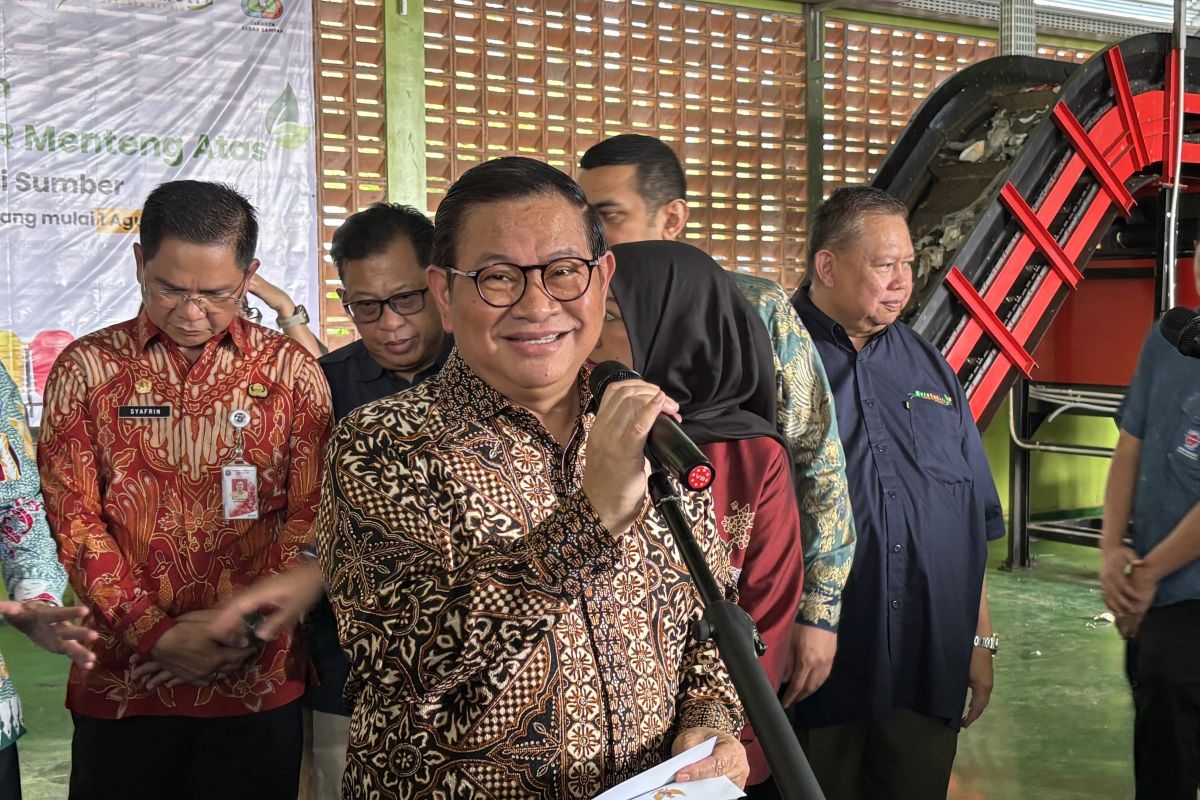
Jakarta (ANTARA) - Jakarta Governor Pramono Anung has reminded civil servants, particularly those within the Jakarta Environment Agency and sub-district offices, not to handle the city’s waste problem half-heartedly.
“I ask the Environment Agency and sub-district offices not to approach this waste issue half-heartedly. One of our problems is doing things half-heartedly,” Pramono said in Jakarta on Thursday.
Pramono said special meetings on waste have been held every week since Governor’s Instruction (Ingub) No. 5 of 2026 on the Movement for Waste Sorting and Processing at Source came into force, obliging all residents to sort their waste at home.
“Because this waste problem is a very serious matter,” he said.
Pramono stated that the Jakarta Provincial Government is seriously addressing waste comprehensively.
One effort under way is optimising waste processing sites based on the reduce, reuse and recycle concept (TPS 3R) to cut the volume of waste sent to the Bantargebang Integrated Waste Processing Site (TPST).
“Whereas before it was collect and dump, it is now sort, collect and process. The TPS 3R in Menteng Atas, for instance, used to be just a waste collection point,” he said.
Jakarta’s waste balance stands at 9,000 tonnes per day. However, each TPS 3R facility can only reduce waste sent to TPST Bantargebang by 25-50 tonnes daily.
Meanwhile, the Jakarta Provincial Government is strengthening waste reduction at source by encouraging residents to manage food more wisely.
This step is important because food scraps remain the largest component of the organic waste that must be collected, transported and processed by the government every day.
Head of the Jakarta Environment Agency Dudi Gardesi Asikin said reducing food waste from households and businesses would have a direct impact on easing the burden on the city’s waste management system.
He noted that of the total waste Jakarta generates each day, nearly half is organic waste, dominated by food scraps.