
Pramono Targets 10,000 Electric Buses on Jakarta Roads by 2030
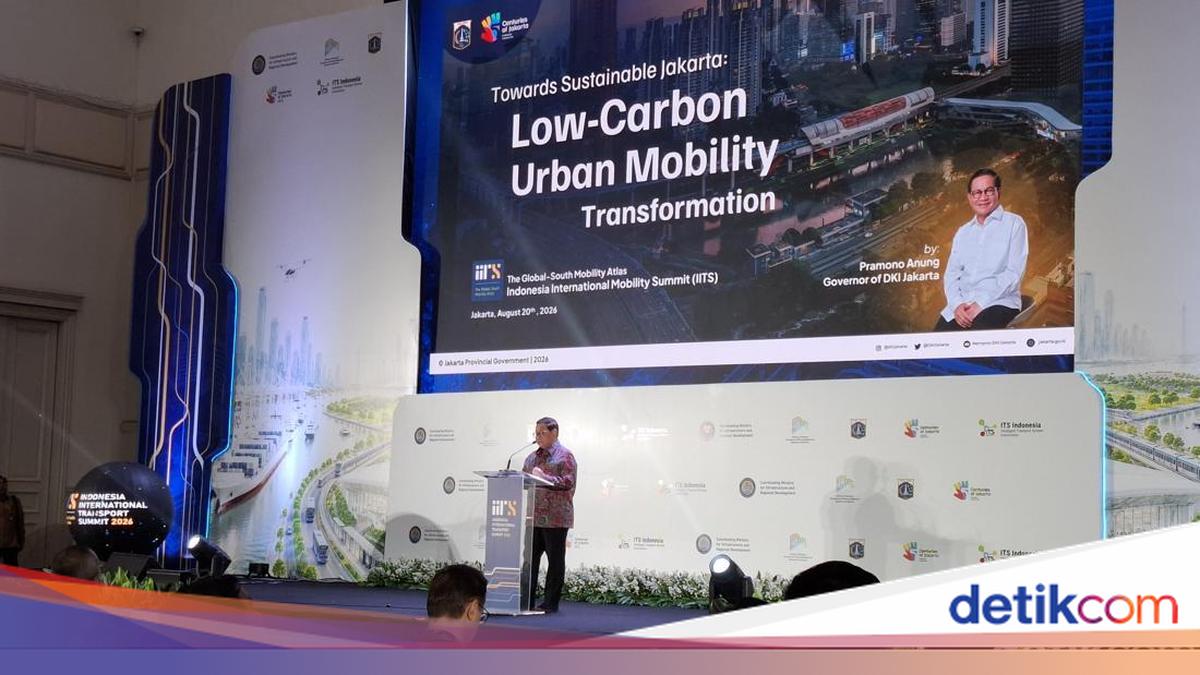
Jakarta Governor Pramono Anung is targeting 10,000 electric buses operating in the capital by 2030. At present, the number of electric buses in service in Jakarta is said to have reached around 500 units.
Pramono made the announcement while attending the Indonesia International Transport Summit (IITS) 2026 in Jakarta on Thursday (20/8/2026).
“Jakarta itself, I am targeting by 2030 — right now, as I speak, there are roughly 500 electric buses — I am targeting more than 10,000 electric buses by 2030,” Pramono said.
Pramono said the electrification of public transport is one of Jakarta’s measures to reduce emissions. In addition to electric buses, the Jakarta provincial government will encourage the use of hydrogen-powered and hybrid buses.
“Not only electric buses, but also hydrogen and hybrid, so that this provides room and opportunity for anyone who wants to reduce emissions in Jakarta to work together with the Jakarta provincial government,” he said.
Pramono also noted that the transport sector is the largest contributor to greenhouse gas emissions in Jakarta. In 2024, the transport sector accounted for 52% of Jakarta’s direct emissions.
He said the transition to low-carbon transport is part of Jakarta’s target of achieving net zero emissions by 2050. The Jakarta provincial government is also targeting a 30% reduction in greenhouse gas emissions by 2030.
“This means the entire bus fleet in Jakarta will be electrified. A truly sustainable Jakarta requires a reliable, extensive and clean public transport system,” he explained.
On the other hand, Pramono said increasing public transport usage is one of his administration’s priorities. According to him, public transport service coverage in Jakarta has now reached 93%.
He also noted that the proportion of public transport usage continues to rise. Currently, public transport usage is said to have reached more than 31%, up from around 23% previously.
“Our connectivity is now at 93%, and people who use transport continuously now exceed 31%, previously around 23%. There has actually been an increase of almost 14%,” Pramono said.
According to Pramono, the increase has been driven in part by the policy of free public transport fares for 15 community groups and the development of the Transjabodetabek service connecting Jakarta with its surrounding buffer areas.
“And this shows that our decision to exempt 15 groups, then connect with the suburban areas through what we call Transjabodetabek, has had an extraordinary impact on the increase,” he added.