
Pramono Says Collaboration Is Key to Tackling Jakarta's Waste Problem
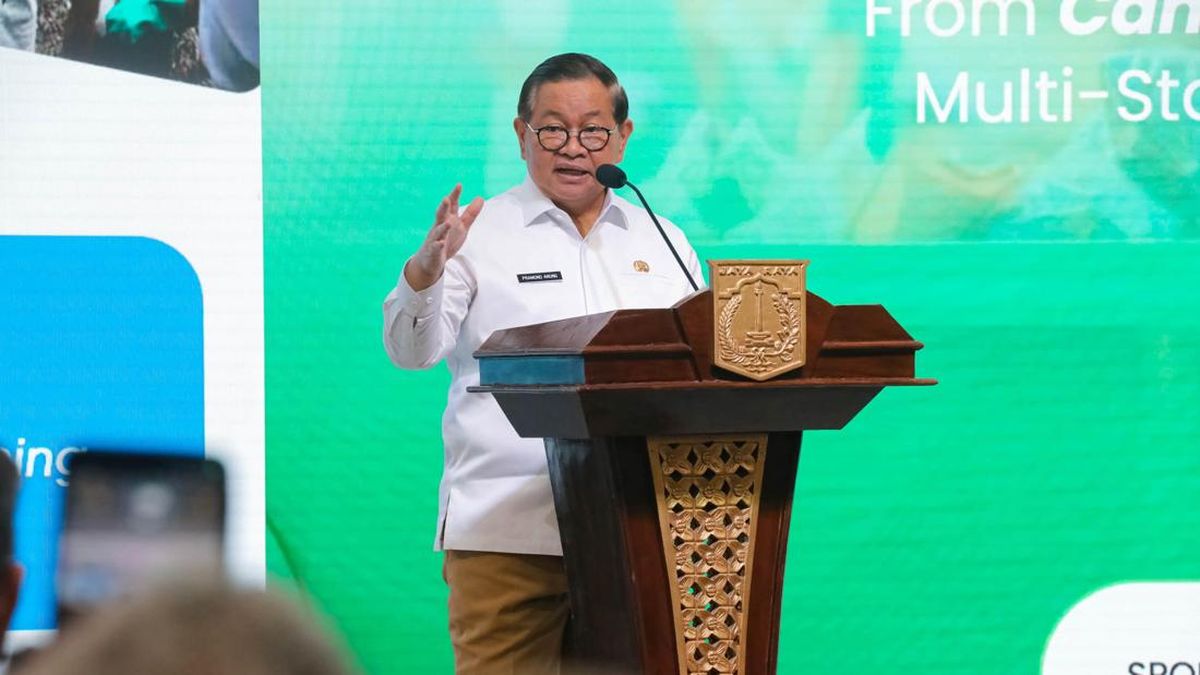
Jakarta Governor Pramono Anung has emphasised the importance of cross-sector collaboration to tackle the capital’s waste problem.
He made the remarks while delivering a keynote speech at the Local Hero Indonesia Forum 2026 at Grha Ali Sadikin, Jakarta City Hall, on Monday (31/8). The forum carried the theme “From Campaign to Collaboration: Strengthening Multi-Stakeholder Partnership for Sustainable Waste Management”.
The event brought together government, the public, businesses, academics, communities and the media to strengthen cooperation in achieving sustainable waste management.
Pramono said waste management patterns in Jakarta are now beginning to shift. Whereas previously waste was simply transported and then disposed of, the government is now encouraging sorting and processing from the source.
“The old pattern was collect-and-dispose. Now it is becoming sort-collect-process. This change in principle certainly requires seriousness and cooperation from all of us so that it can run well,” said Governor Pramono, while expressing appreciation to the Indonesia Water Institute for initiating the forum.
According to Pramono, Jakarta produces more than 9,000 tonnes of waste every day. That amount is equivalent to around 3.17 million tonnes of waste per year.
He believes the problem cannot be solved by the government alone. For that reason, the involvement of the public and the business sector is considered an important part of changing waste management patterns.
One development highlighted by Pramono is the increase in the number of households sorting their waste. The waste sorting movement launched on 10 May 2026 is said to be starting to show results.
The percentage of households sorting waste increased from 5.31 percent to 23.14 percent.
In addition, organic waste management through waste banks has also increased. The volume of organic waste managed through waste banks rose from 1,046 tonnes to 1,432 tonnes.
At the same time, the amount of waste sent to the Bantargebang Integrated Waste Processing Site (TPST) has decreased by around 500 tonnes per day.
“This certainly has a fairly good meaning for us, we are already on track. For that reason, seriousness and sustainability from the community are needed in implementing the waste sorting movement. This movement and the handling of waste problems in Jakarta really must be addressed comprehensively,” he said.
Pramono stressed that the change must not stop as a momentary movement. According to him, consistency and oversight are needed so that the new waste management pattern can run sustainably.
He even asked for the waste issue to become a routine agenda discussed within Jakarta City Hall.
In addition to encouraging waste reduction at source, the Jakarta Provincial Government is also developing waste processing facilities.
One of them is the RDF Rorotan facility, which is currently said to be able to process around 800 to 1,000 tonnes of waste per day.
Pramono said comprehensive waste handling can also have an impact on other environmental issues, including air quality and transport policy in Jakarta.
According to him, better waste management can have a multiplier effect, such as helping to reduce pollution while supporting the development of an electric vehicle ecosystem.
Meanwhile, Founder and Chairman of the Indonesia Water Institute Firdaus Ali expressed appreciation for the Jakarta Provincial Government’s commitment to tackling the waste problem.
“Behavioural change must start from households and continue to be strengthened through cross-sector collaboration,” he said.
Firdaus hopes the Local Hero Indonesia Forum 2026 can become a space for various community initiatives in waste management to develop into broader collaboration.
He also hopes the collaboration can have a real impact on environmental sustainability in Jakarta.