
Pramono Responds to MUI's Notes on Live Burial of Sailfin Catfish
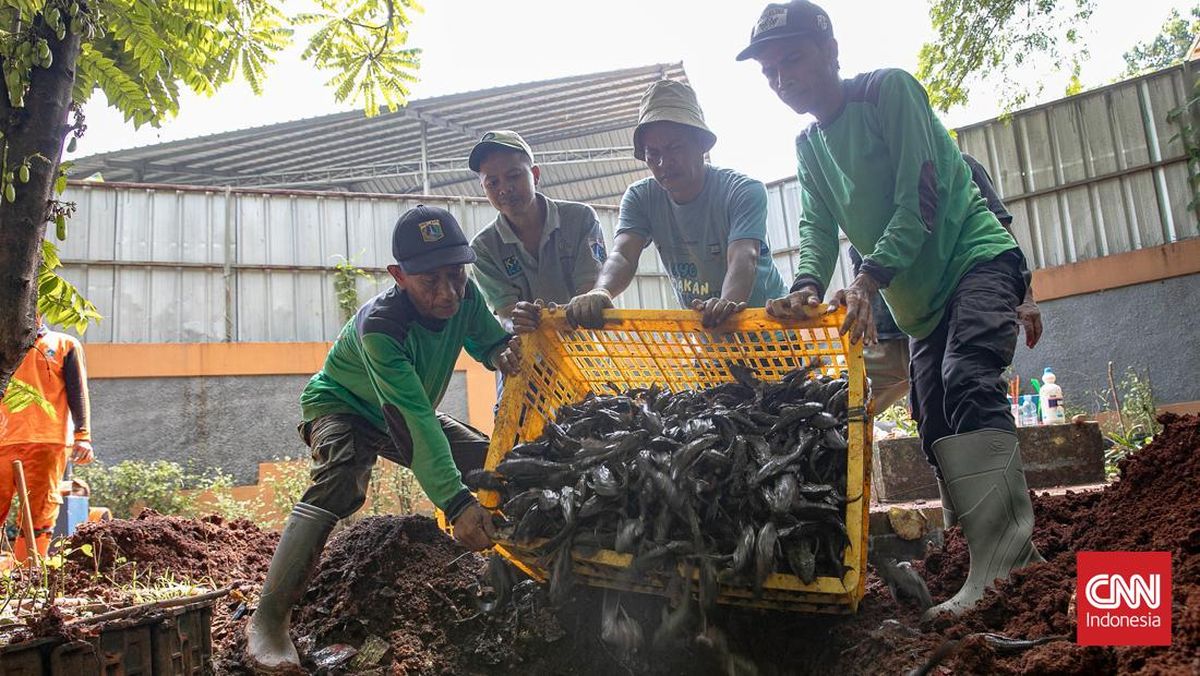
Jakarta Governor Pramono Anung has stated that he will open consultations with experts knowledgeable in Islamic sharia regarding the procedures for burying animals, following input from the Indonesian Ulema Council (MUI) on sailfin catfish. “Regarding the earlier question, there is advice and criticism from MUI; later, I will ask the experts to adjust the procedures,” said Pramono in South Jakarta. He explained that the policy of capturing sailfin catfish is implemented because their population in Jakarta’s waters has become overwhelmingly dominant. This condition, according to him, has disrupted the balance of the aquatic ecosystem. “Indeed, sailfin catfish in Jakarta’s aquatic biota already exceed 60 percent. Even the Ministry of Marine Affairs and Fisheries reports more than 70 percent, but I state more than 60 percent,” he said. Previously, the Secretary of the MUI Fatwa Commission, KH Miftahul Huda, highlighted the practice of mass burial of live sailfin catfish, deeming it contrary to two main Islamic principles: rahmatan lil ’alamin and animal welfare (kesrawan). Nevertheless, Miftah assessed that the DKI Jakarta Provincial Government’s step in controlling the sailfin catfish or pleco population has value in terms of public benefit, as it aligns with the concept of hifẓ al-bī’ah or environmental protection. This is based on the fact that sailfin catfish have the potential to damage river ecosystems and threaten local fish species. “That aligns with maqāṣid syariah, entering the category of modern ecological necessities,” said Kiai Miftah, when speaking with MUI Digital in Jakarta on Saturday (18/4). He also explained that the policy relates to the principle of Hifẓ an-Nasl, namely preserving the sustainability of living beings. By controlling invasive species, biodiversity can be maintained, and the risk of local species extinction can be minimised. However, from a sharia perspective, Miftah viewed there to be an issue with the method used. He emphasised that although killing animals is permitted if there is benefit, burying the fish while they are still alive contains an element of torture because it prolongs death. Additionally, the method is deemed not in line with the principle of ihsan in Islamic teachings and contradicts animal welfare ethics that emphasise minimising suffering. “That method is considered to cause unnecessary suffering,” he said.