
Pramono Optimises 31 TPS 3R, Prepares 40 Hectares of Land in Ciangir for Organic Waste Management
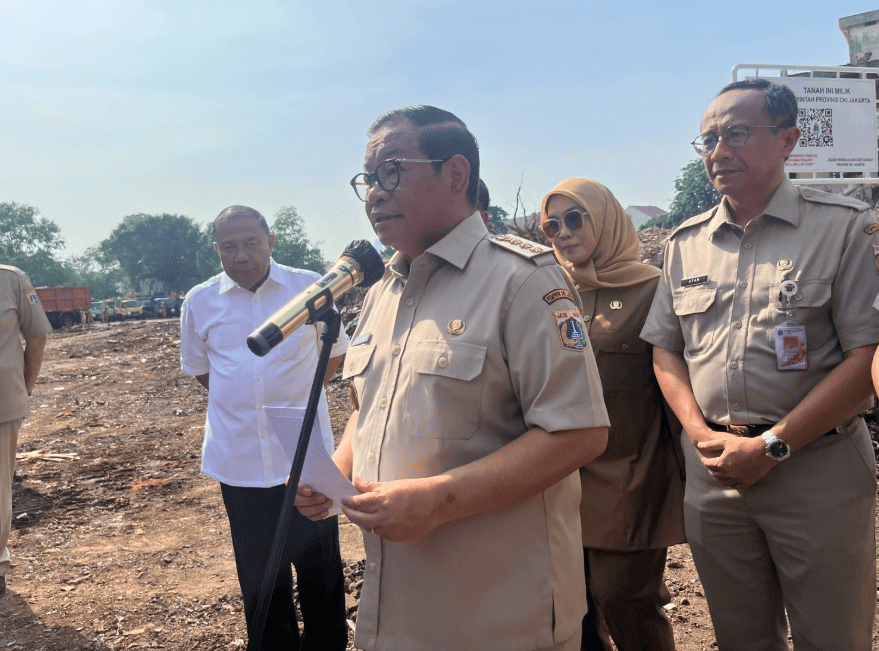
The DKI Jakarta Provincial Government will not add new Reduce-Reuse-Recycle waste processing facilities (TPS 3R) until the end of 2026. The government’s current focus is to optimise the 31 existing TPS 3R facilities so they can process waste to maximum capacity and reduce dependence on the Bantargebang landfill.
DKI Jakarta Governor Pramono Anung said the TPS 3R concept is no longer merely a waste collection point. All these facilities will be transformed into processing centres with a sort, transport, and process system.
“In the past, TPS 3R only stored waste, but now all TPS 3R facilities are being converted to sort-transport-process. If that can be done, the amount of waste that must be sent to Bantargebang will decrease quite significantly while we await the construction of the waste-to-power plant,” said Pramono in South Jakarta on Thursday (30 July).
According to him, the optimisation of TPS 3R will also be driven through creative financing schemes with the private sector. Collaborative models such as those undertaken with MoreGo and Metro are cited as examples of waste management solutions that will be expanded across Jakarta. “We are open to cooperation like this because it provides mutual benefits,” he said.
Meanwhile, the Head of the DKI Jakarta Environment Agency, Dudi Gardesi, explained that there are currently around 31 TPS 3R facilities spread across Jakarta. However, most are not yet operating optimally.
He said the concept used at the Menteng Atas TPS 3R will be replicated so that every facility has a processing capacity of up to 100 tonnes per day through collaboration with third parties.
“For next year, there will be no new TPS 3R additions. Our focus is on optimising existing ones. If all 31 TPS 3R facilities can reach a capacity of 100 tonnes, the total could reach around 3,000 tonnes per day,” said Dudi.
In addition to optimising TPS 3R, Pramono revealed that the DKI Provincial Government has cleared a 40-hectare site in Ciangir, Banten, which will be dedicated exclusively to organic waste processing.
According to him, the facility will become part of Jakarta’s waste management ecosystem, from organic waste separation, inorganic waste processing, RDF production, to residue that will still be sent to Bantargebang. “Tomorrow I will see the Ciangir site directly. This is an important part of Jakarta’s waste management ecosystem,” he said.