
Pramono Calls on High-Rise Buildings to Reactivate Water Mist Systems
The Jakarta provincial government has instructed all managers of high-rise buildings equipped with water mist facilities to reactivate them immediately. The move is intended to accelerate the removal of volcanic ash deposits and maintain air quality across the capital.
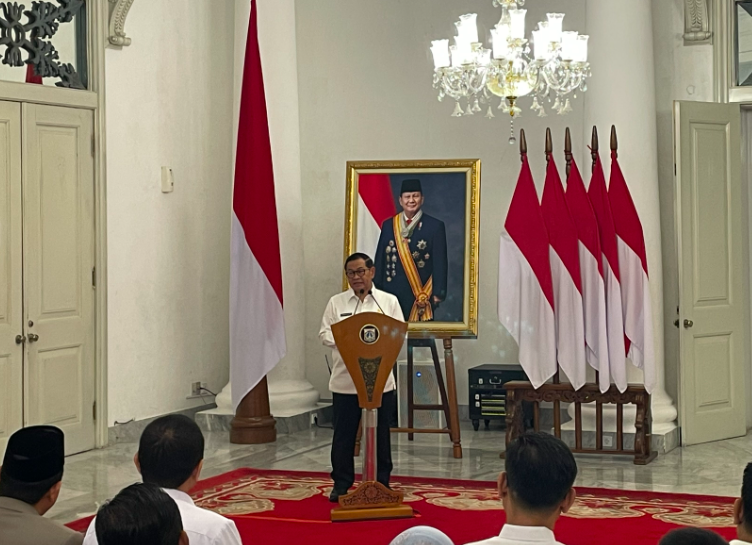
Jakarta Governor Pramono Anung stressed that the handling of volcanic ash impacts is being carried out in an integrated manner, involving the Fire Service, the Regional Disaster Management Agency (BPBD) and the Public Order Agency (Satpol PP).
“Cooperation between the fire service, BPBD, Satpol PP and related agencies continues to be optimised. Water mist spraying will continue until tomorrow, and we are asking buildings that have such facilities to help activate them,” Pramono said at City Hall on Monday (7/9).
He said that optimising water spraying from the air and from high-rise buildings could reduce the impact of volcanic ash. Pramono assured that all Jakarta provincial officials would remain on standby in the field until air conditions in the city truly return to normal.
Previously, high PM10 concentrations were recorded across large areas of Central, East and South Jakarta. After spraying, areas with high PM10 readings were largely confined to eastern Cilincing and south-eastern Cipayung.
Head of the Jakarta Environment Agency (DLH), Dudi Gardesi, said the spraying is carried out to dampen ash that has settled on roads and other surfaces so that it does not become airborne again.
“Officers are out conducting spraying, whilst air conditions are continuously monitored so that protective measures for residents can be adjusted to needs on the ground,” Dudi said.
The provincial government has deployed fire engines, water tanker trucks and mobile water mist units. The operation involves the Fire and Rescue Service, the Environment Agency and the Parks and Urban Forest Service, coordinated by the Regional Secretary.
According to Dudi, dried volcanic ash can be lifted back into the air by wind or vehicle movement. For this reason, ash is dampened before clean-up to curb its spread into the atmosphere.
PM2.5 monitoring also shows a narrowing of areas with high concentrations in parts of North and East Jakarta. However, Kembangan and Kebon Jeruk still require particular attention.
Meanwhile, sulphur dioxide (SO₂) levels have yet to show uniform improvement. The provincial government therefore continues to monitor all pollutant parameters to determine further steps.
Dudi stressed that monitoring results form the basis for identifying priority areas. Evaluations also take into account wind, rainfall and other pollution sources so that the impact of spraying on air quality can be assessed more accurately.
“We will use monitoring results to determine locations that need to be prioritised, as well as to communicate developments in air conditions openly,” he said.
The provincial government has urged residents to remain vigilant by wearing masks when outdoors and to reduce outdoor activities in areas affected by ash. Settled ash should also be dampened before being cleaned up.
Members of the public can monitor air quality through udara.jakarta.go.id and follow official information from the Environment Agency, BPBD and the Meteorology, Climatology and Geophysics Agency (BMKG). “The safety of residents is our guiding principle. The government’s response must be swift and its handling well targeted,” Dudi concluded.