
Pramono Appoints Two Student Anti-Hoax Ambassadors to Strengthen Digital Literacy
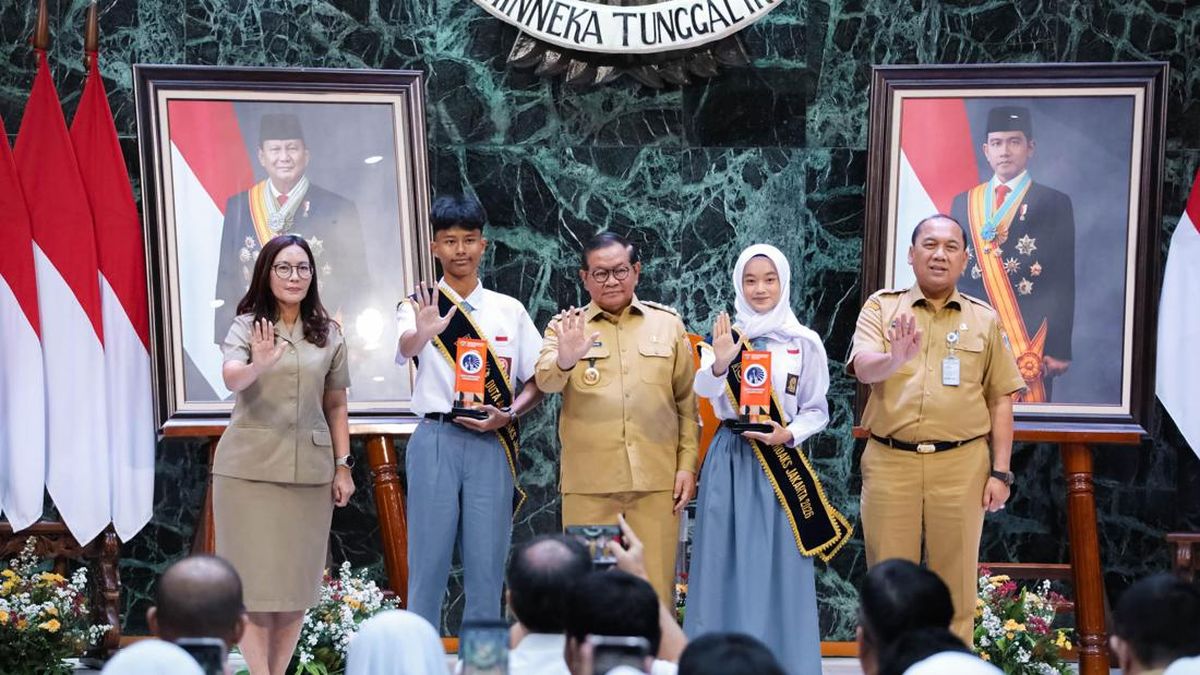
Jakarta Governor Pramono Anung has appointed two Jakarta 2026 Anti-Hoax Ambassadors to strengthen digital literacy and prevent the spread of false information among students. The pair will take part in educational activities and digital campaigns over the coming year.
The appointment ceremony was held at Balai Agung, Jakarta City Hall, on Monday (2 November). The two students selected were Winda from SMAN 68 Jakarta and Muhammad Ibrahim Gumay from SMAN 71 Jakarta.
They were chosen from 356 candidates representing 119 state senior high schools in Jakarta. Their role will be to encourage young people to be more critical when receiving, checking and sharing information online.
Pramono said young people’s involvement in the anti-hoax movement was important because their daily lives were closely connected to social media and technological developments.
“Especially as they are in close contact with social media every day and are part of the digital ecosystem. This event is also intended to involve young people in thinking critically about what is actually happening,” Governor Pramono said.
According to Pramono, the challenge for society in the digital era is no longer limited to gaining access to technology. The ability to distinguish accurate information and recognise hoaxes is equally important.
Information can now spread rapidly across various digital platforms. This makes it essential for people to be more cautious before believing or sharing content.
Pramono said Jakarta achieved the country’s highest score in the 2025 Indonesian Digital Society Index (IMDI), with 56.97. However, this achievement needs to be matched by improvements in the public’s ability to identify and counter hoaxes.
The Jakarta Provincial Government, Pramono said, has provided the Jalahoaks service for fact-checking and clarifying information. The public is encouraged to use it when they encounter information whose accuracy is uncertain.
“The Jakarta Provincial Government already has Jalahoaks as a means of fact-checking and clarifying information. We want people to use this service when they come across information whose accuracy is unclear. Unverified information must not be allowed to spread and cause public anxiety,” he said.
Pramono hopes the Jakarta 2026 Anti-Hoax Ambassadors will do more than simply serve as award recipients. They are also expected to drive digital literacy by encouraging their peers and school communities to develop critical and responsible social media habits.
Alongside countering false information, Pramono also urged young people to use their digital creativity to introduce Jakarta to a wider audience ahead of the city’s 500th anniversary in 2027.
“Jakarta will turn 500 in 2027. I want young people to help introduce Jakarta through creative, positive and, of course, fact-based content,” he said.
Meanwhile, Jakarta Communication, Informatics and Statistics Agency (Diskominfotik) head Marulina Dewi explained that the 2026 Anti-Hoax Ambassador programme had gone through several selection stages. These included administrative screening, training and the development of digital literacy campaign projects.
Participants had previously attended in-house training and campaign-planning sessions in Ancol, North Jakarta. Ten finalists were then selected to carry out campaign projects from 28 August to 25 September 2026.
The campaigns were presented to a panel of judges on 29 September 2026, after which two students were named Jakarta 2026 Anti-Hoax Ambassadors.
Marulina said young people had an increasingly strategic role in the digital ecosystem. They are not only consumers of information, but also produce content and shape opinions among their peers.
“Young people are not only recipients of information, but also content creators and opinion-shapers in their social circles. That is why the Anti-Hoax Ambassador programme is designed to enable students to drive changes in digital behaviour,” Marulina said.
Over the next year, the two ambassadors will run interactive educational programmes at schools alongside Diskominfotik and Indonesia’s Ministry of Communication and Digital Affairs (Komdigi).
The programme will also include monthly digital campaigns, the establishment of anti-hoax agents in schools, and education on a range of issues affecting Jakarta.
“They will visit schools to provide interactive education together with Diskominfotik and Komdigi. They will also run monthly digital campaigns and establish anti-hoax agents at schools, working with their communities to take part and provide education based on issues in Jakarta,” Marulina said.
Source: jawawa.id (https://jawawa.id/newsitem/pramono-appoints-two-student-anti-hoax-ambassadors-to-strengthen-digital-literacy-1793602301)
Originally published by CNN Indonesia (https://www.cnnindonesia.com/nasional/20261102122851-25-1422258/pramono-kukuhkan-2-pelajar-duta-antihoaks-perkuat-literasi-digital), translated from Indonesian