
Pramono Anung: Informal Waste Workers Deserve Real Protection
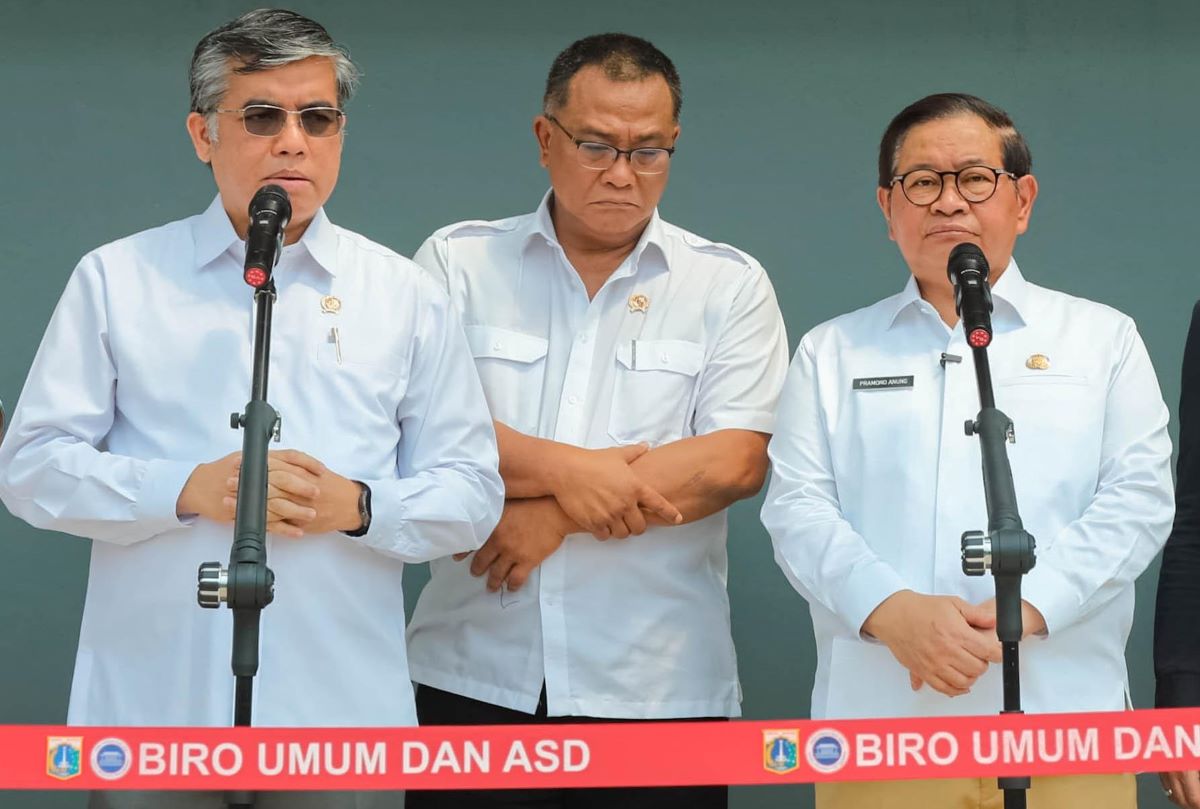
The Jakarta Provincial Government is accelerating the transformation of waste management while strengthening social protection for informal workers in the waste sector. This move marks a paradigm shift in the capital’s waste management from a conventional system to an integrated one. Jakarta Governor Pramono Anung stressed that Jakarta can no longer rely on the old pattern of transporting and dumping waste at final processing sites. The management system is now being massively directed towards sorting, transporting, and processing. Pramono conveyed this while attending the launch of the National Movement for Social Protection for Indonesia’s Informal Waste Sector at the Rorotan RDF facility in Cilincing, North Jakarta, on Monday (10/8). “The DKI Jakarta Provincial Government fully welcomes the central government’s initiative and we will provide full support to offer real protection for informal workers in the waste sector, including waste sorting workers at Bantargebang (Bekasi City, West Java),” Pramono said. According to Pramono, changing the waste management system is an absolute necessity for Jakarta as a global city. The DKI Provincial Government is reinforcing this policy through Gubernatorial Instruction Number 5 of 2026. Starting from 1 August 2026, the Bantargebang Integrated Waste Processing Site (TPST) will gradually only accept residual waste. Meanwhile, waste that still has value will be directed to be sorted and processed from the source. “We issued Gubernatorial Instruction Number 5 of 2026 which truly changes Jakarta’s pattern in handling waste. If previously it was transport, dump, and bury at Bantargebang, now it becomes sort, transport, and process,” he said. The DKI Provincial Government is targeting 100% waste management in Jakarta by 2028. To support this target, a number of processing facilities continue to be developed in Bantargebang, Tanjung Priok, Sunter, and Rorotan, including the optimisation of refuse derived fuel (RDF) facilities. “If it goes according to plan, the waste balance in 2028 will be resolved and become zero dumping at Bantargebang,” Pramono said. Waste sorting efforts at the community level are also being encouraged. As of early August 2026, the waste sorting rate in Jakarta had reached 23.14%. Currently, Jakarta is supported by 8,615 waste processing facilities, 2,247 waste banks, and 31 TPS 3R facilities capable of producing processed products with a capacity of around 100-150 tonnes per day. In addition to improving facilities, the DKI Provincial Government is also tightening enforcement against illegal waste dumping practices, particularly those carried out by businesses. “If previously it was left alone, now I ask that things like this be announced to the public, the company’s name, where the waste came from, why it was dumped there, and so on,” Pramono asserted. Business operators proven to have violated regulations have been subject to administrative sanctions in the form of a Rp5 million fine, with the threat of business licence revocation if they repeat the violation. The transformation of waste management in Jakarta goes hand in hand with fulfilling the rights and protection of informal workers. Since 2017, the DKI Provincial Government has facilitated BPJS Employment protection for around 4,000 waste sorting workers at the Bantargebang TPST. In 2026, a budget allocation of approximately Rp806 million was prepared for the payment of these protection premiums. “Most recently in 2026, we paid out approximately Rp806 million. For that reason, we request that this good programme can be continued together,” Pramono said. On the same occasion, Minister of Manpower Yassierli emphasised the importance of equal social security coverage for all workers. “We want 100% of Indonesian workers, whether they are in the formal or informal sector, to receive social protection,” Yassierli said. Meanwhile, Minister of Environment Jumhur Hidayat appreciated Jakarta’s firm steps in integrating waste management and worker welfare. He assessed that Jakarta has a great opportunity to become a national model. The government is targeting the complete resolution of Jakarta’s waste problems by 2028 at the latest, supported by the implementation of an extended producer responsibility (EPR) policy to encourage producer accountability. According to Jumhur, this step also triggers the emergence of green jobs and strengthens the circular economy. “Waste management does not necessarily have to be squalid. Jakarta shows that waste management facilities can be built well and become an example for other regions,” he concluded.