
Pram Supports Hunt for Plecos to Protect Aquatic Ecosystems
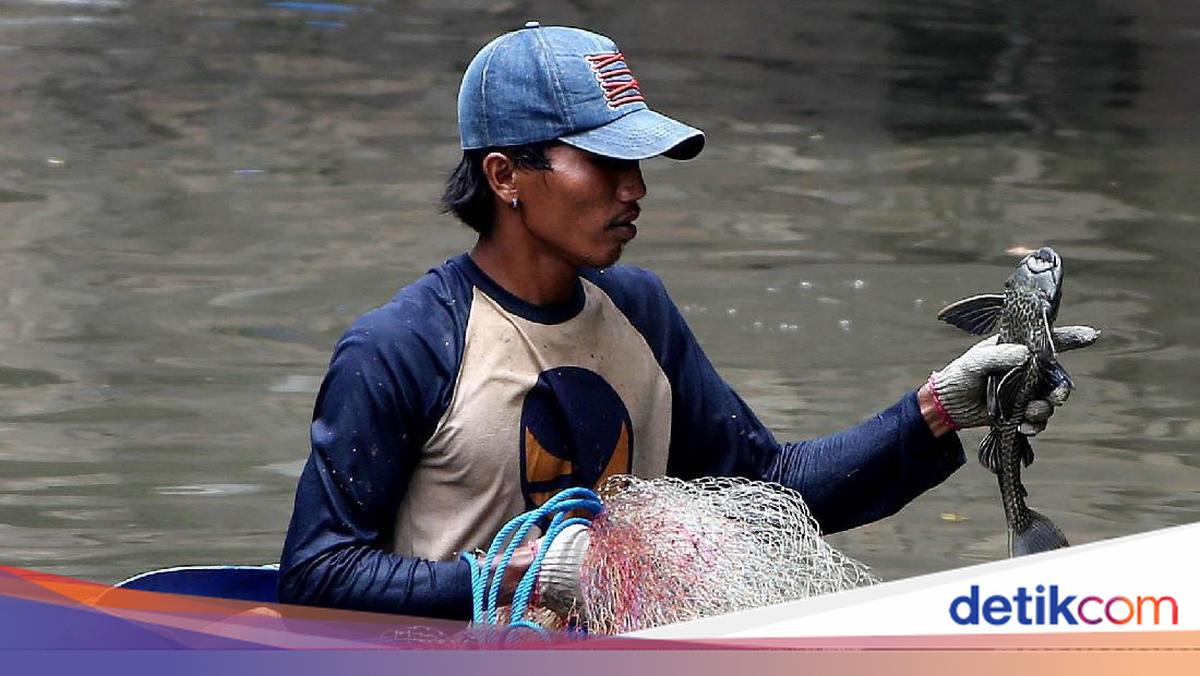
The pleco fish is being eagerly hunted by various parties. Communities, government apparatus, and even the Indonesian National Armed Forces (TNI) are netting plecos to save the environment.
The hunt for plecos in Jakarta was initially driven by environmentally conscious residents concerned about the state of the Ciliwung River. The population of plecos has increased significantly in the Ciliwung due to the absence of predators above them.
The lack of natural predators has allowed these fish, scientifically known as Hypostomus plecostomus, to breed rapidly. This situation has enabled the fish to dominate the freshwater ecosystem in Jakarta.
Through videos frequently shared on social media, the activity of hunting plecos has become increasingly popular. Many parties are netting or directly catching plecos due to concerns over damage to Indonesia’s freshwater ecosystems.
The number of entities capturing plecos to maintain the balance of aquatic environments is growing. The government and TNI are also participating in catching these invasive fish to curb their population.
Pram Supports Pleco Hunt
Jakarta Governor Pramono Anung supports the recent surge in pleco captures across several river flows in the capital. He backs massive capture efforts to reduce their population.
“I approve if it is done on a massive scale to reduce the pleco population. What was done by the Community Protection and Security Unit (PPSU) and the Central Jakarta Mayor yesterday, the Jakarta Provincial Government gives its appreciation,” said Pramono at Lapangan Banteng, Central Jakarta, on Saturday (11/4/2026).
He assesses that the presence of these fish has the potential to disrupt ecosystem balance. He states that the invasive nature of plecos threatens the existence of local fish.
According to him, the pleco population could dominate and disrupt the food chain in the freshwater ecosystem if not controlled.
“If left unchecked, other fish like wader and so on could disappear,” he said.
In addition to impacting the ecosystem, Pramono also warns of potential risks if plecos are consumed. He mentions that the fish could contain harmful substances because they absorb contaminants in the water.
“Because they eat anything, their flesh has the potential to contain contamination from harmful substances,” he explained.
Plecos Captured in Canal in Front of PI
A joint team of 100 personnel from the Jakarta Marine Affairs and Fisheries Office (DKI KPKP), to the Central Jakarta Joint Command for Disaster and Emergency Response (Gulkarmat), conducted an operation to capture plecos in the Cideng Canal, right in front of Plaza Indonesia (PI), Menteng. Dozens of large-sized plecos were caught.
Head of the Jakarta DKI KPKP Office, Hasudungan A Sidabalok, stated that the plecos were captured because they are considered to potentially disrupt the river ecosystem. The invasive fish will be culled.
“Previously, we had also resolved a similar issue in the Ciliwung Canal. The result was the capture of 41 large-sized plecos,” said Hasudungan in a statement on Friday (10/4).
The dozens of fish caught in the Cideng Canal were taken to the Centre for Promotion and Certification of Fishery Products (PPSHP) of the Jakarta DKI KPKP Office to be culled by burial. These fish have very high resilience because they can survive in water with low oxygen content.
“We hope that after the capture of plecos in the Cideng Canal flow, it will be healthier because the invasive fish that disrupt the ecosystem and are difficult to control have been removed,” he added.
Meanwhile, Central Jakarta Mayor Arifin explained that the capture and culling of these fish aims to educate residents not to consume fish containing bacteria from waste dumped into the channels.
“Residual waste dumped into the Cideng Canal becomes food for plecos, so if residents consume this fish, it is feared to impact health. We will conduct similar captures in canals or rivers where they breed prolifically,” said Arifin.