
Prajogo Pangestu's Listed Companies Slump; Rp300 Trillion Wealth Evaporates, Yet He Remains Rich?
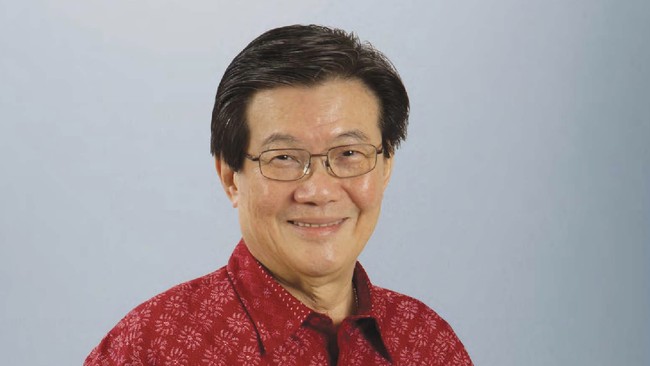
Jakarta, CNBC Indonesia - Pressure on the stocks of Prajogo Pangestu’s conglomerates has deepened throughout 2026. As of the close of trading in session I today, Tuesday 19 May 2026, most Barito Group affiliated issuers were still moving in a sharply weak trend year-to-date, with several down more than 50%. The weakness came after market sentiment was shaken by MSCI rebalance results, which removed several Barito Group core stocks from the MSCI Global Standard Indexes. Earlier, MSCI formally expelled PT Barito Renewables Energy Tbk (BREN), PT Chandra Asri Pacific Tbk (TPIA), and PT Petrindo Jaya Kreasi Tbk (CUAN) from their global indices. That decision amplified selling pressure on shares that had previously been known as the drivers of the market capitalisation rally on the Indonesia Stock Exchange. Prajogo’s Shares Have Plummeted Year-to-Date Based on trading data up to the close of session I on 19 May 2026, Barito Group stocks registered deep corrections compared with their year-start levels. PT Petrindo Jaya Kreasi Tbk (CUAN) was the worst performer, tumbling about 71.79% year-to-date. Next, PT Barito Renewables Energy Tbk (BREN) was down about 69.07% year to date, PT Barito Pacific Tbk (PTRO) down about 59.18%, PT Chandra Asri Pacific Tbk (TPIA) down about 55.43%, then CDIA down around 47.60%, and PT Barito Pacific Tbk (BRPT) down about 38.84%. As a comparison, the Composite Stock Price Index (IHSG) had fallen about 26.03% year to date. In other words, the majority of the Prajogo Group shares have faced far greater pressure than the market as a whole. MSCI Effect and Liquidity Pressure Pressure on Barito Group shares intensified after MSCI conducted a stringent evaluation of liquidity and the free float levels of issuers with large market capitalisations. In recent years, Prajogo’s shares have been known for very large market capitalisation with aggressive price movements. The phenomenon even gave rise to the term ‘Prajogo Kungfu’, a strategy of building premium valuations through a relatively tightly held float. This strategy successfully lifted the valuations of Barito Group companies and even made Prajogo Pangestu one of the richest people in Asia at the peak of stock valuations. But now, as global sentiment shifts and liquidity standards tighten further, shares with a limited free float are facing substantial pressure. Global investors are no longer looking only at market capitalisation; they are also considering liquidity quality, the distribution of public share ownership, and the fairness of daily trading. Prajogo’s Wealth Continues to Erode The sharp corrections in Barito Group shares have directly impacted Prajogo Pangestu’s wealth. Previously, Prajogo’s wealth had peaked at around US$43.5 billion in October 2025 when his affiliated companies’ shares were in an exuberant phase. But after the long wave of corrections and the pressure from MSCI rebalancing, his wealth estimate as of 19 May 2026 had fallen to around US$17 billion. In other words, Prajogo’s wealth has evaporated by US$26.5 billion, or about Rp 300.9 trillion. The decline reflects how stock valuations that had surged aggressively are now undergoing a fairly sharp price normalisation. The fall also pushes Prajogo out of the world’s top 100 richest people. If in October 2025 he was ranked 46th, now his name is only at number 164. Market Enters a New Phase This condition signals that the market is moving into a more rational phase. A rally driven by global index narratives and jumbo market capitalisations is being tested by liquidity realities and fundamental quality. The corrections in Barito Group shares also reveal the high risks when valuations rely too heavily on sentiment and expectations of foreign passive fund flows, which are linked to market fears about the removal of these shares from the Index. Now, investors remain haunted by the depreciation of the rupiah against the US dollar, a potential deficit exceeding 3%, and policy uncertainty that could harm investors, meaning this negative sentiment also weighs on the IHSG and Indonesian issuers.
Source: jawawa.id (https://jawawa.id/newsitem/prajogo-pangestus-listed-companies-slump-rp300-trillion-wealth-evaporates-yet-he-remains-rich-1779546261)
Originally published by CNBC Indonesia (https://www.cnbcindonesia.com/research/20260519130123-128-735916/emiten-prajogo-pangestu-jeblok-harta-menguap-rp300-t-masih-terkaya), translated from Indonesian