
Pradi Supriatna: Integrity is a Non-Negotiable Principle for State Officials
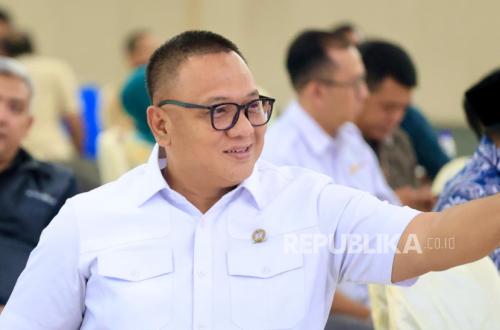
A member of the West Java Regional House of Representatives (DPRD), Pradi Supriatna, has stressed that integrity is a non-negotiable principle for every state administrator. He stated that public trust can only be built through honesty, transparency, and consistency in carrying out mandates.
This was conveyed by Pradi while speaking at an event held by the Indonesian Youth National Committee (KNPI) on the rooftop of the West Java DPRD building on Jalan Diponegoro, Bandung, on Friday afternoon. The event, attended by hundreds of participants from various backgrounds, served as a discussion forum on the importance of strengthening integrity values in governance.
Pradi stated that integrity is not merely a slogan but the primary foundation in every policy-making process. He said state administrators are required to place public interest above personal or group interests.
“Integrity is an obligation. Every state administrator must be able to maintain public trust through honest, responsible, and accountable actions,” he said.
According to Pradi, the challenges of governance are becoming increasingly complex. Therefore, all state apparatus must strengthen their commitment to ethical values, accountability, and professionalism to ensure optimal public services.
He believes that a culture of integrity must be built early and applied consistently across all levels of government. By doing so, practices of abuse of authority and conflicts of interest can be prevented.
Furthermore, Pradi invited all stakeholders to work together to create a clean governance ecosystem oriented towards the public interest. He noted that strong oversight must be accompanied by the moral awareness of each individual in carrying out their duties.
“Integrity is not only the responsibility of institutions but also the responsibility of every individual entrusted as a state administrator,” he said.
Pradi expressed hope that the values of integrity will become a working culture within the government. In this way, public trust in state institutions can continue to increase, while also encouraging the realisation of good, clean governance that serves the community.