
Practitioners: Optimising domestic gas requires integrated infrastructure
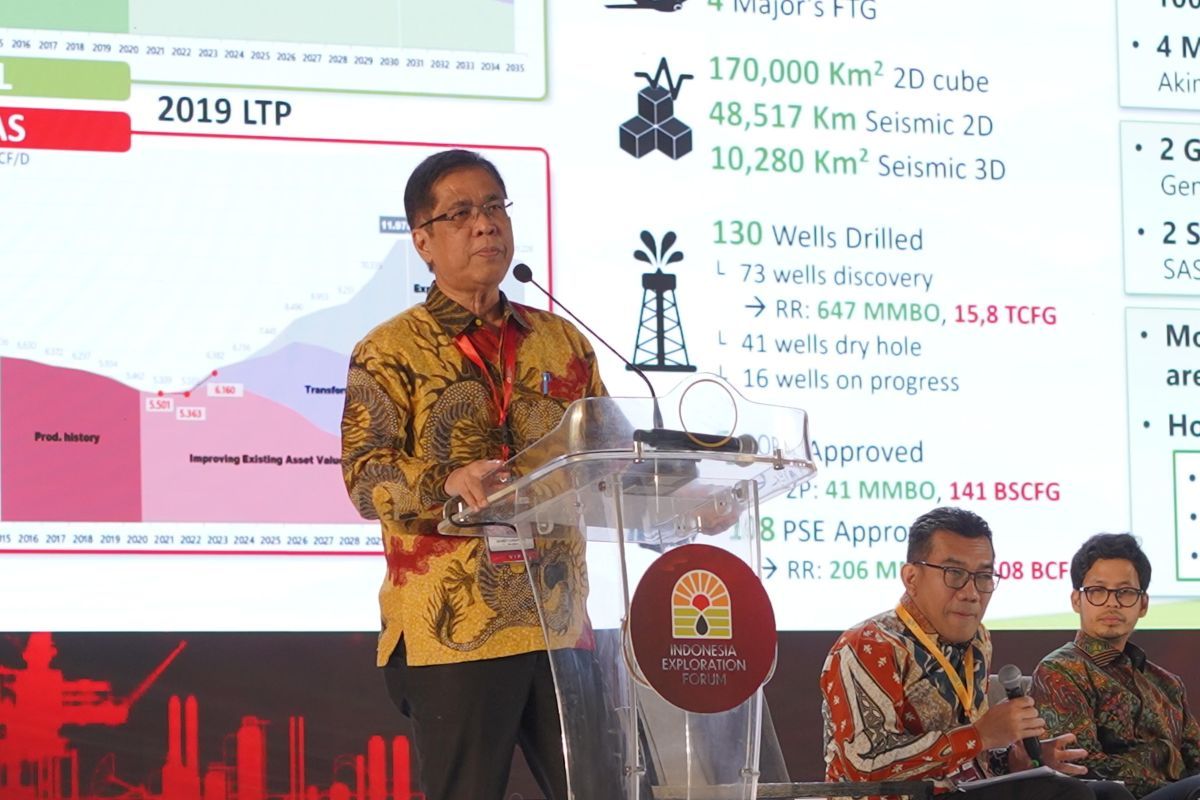
Oil and gas practitioner Benny Lubiantara said optimising domestic gas must begin with creating an ecosystem capable of providing economic certainty for field development and investment.
Benny, in a statement in Jakarta on Tuesday, assessed that the availability of gas resources and reserves alone is not enough without supporting infrastructure and markets that allow gas to be produced, distributed, and absorbed sustainably.
“The driver is the availability of infrastructure and markets, which will ultimately determine the economics of the project,” he said.
“An infrastructure-led exploration approach is one of the relevant strategies for accelerating the monetisation of gas discoveries,” said the former Deputy for Exploration, Development, and Work Area Management at the Special Task Force for Upstream Oil and Gas Business Activities (SKK Migas).
According to Benny, economic certainty is becoming increasingly important as exploration is directed towards areas that have not been widely explored. Besides requiring data and infrastructure, developing such areas carries greater risk and requires larger investment.
“To encourage massive exploration, particularly in unexplored basins, fiscal and policy breakthroughs are needed that can improve project economics. Fiscal terms are not the only factor,” he said.
He assessed that ease of doing business, regulatory certainty, infrastructure availability, and market prospects also greatly determine investment decisions.
Benny added that domestic gas policy must also maintain a balance between the interests of consumers and producers.
Meanwhile, another oil and gas practitioner, Hadi Ismoyo, said optimising domestic gas requires infrastructure capable of connecting production centres with demand centres economically and reliably.
According to him, infrastructure development must be designed as part of a single supply chain, not standing alone without taking into account supply availability or end-user needs.
“Pipeline networks remain the backbone of gas distribution, but for areas where building pipelines is not yet geographically or economically feasible, CNG, mini LNG, LNG, and regasification facilities can serve as alternatives. The important thing is that all such infrastructure is designed in an integrated manner with gas sources and user markets,” he said.
According to Hadi, market certainty is a crucial factor in ensuring infrastructure development can achieve the required economies of scale.
“Gas is not enough just to be found and produced. Gas must be monetised and reach users at a competitive cost. Therefore, policy, investment, infrastructure, and markets must move within a single integrated design,” he said.