
Practitioner reminds that energy conversion to CNG must empower local communities
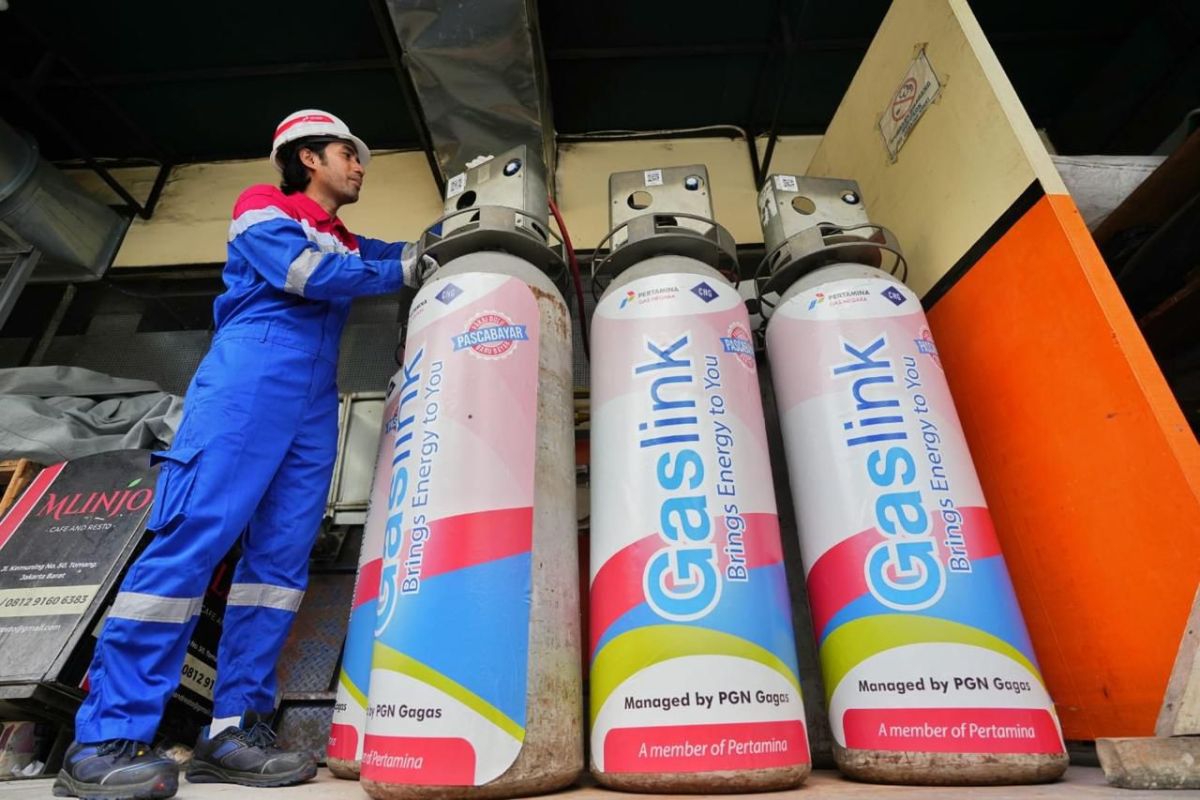
Jakarta (ANTARA) - Entrepreneurship practitioner Khalilur Abdullah Sahlawiy, or Gus Lilur, has reminded that the energy conversion to Compressed Natural Gas (CNG) from Liquefied Petroleum Gas (LPG) must be strengthened by the government’s commitment to empowering communities in gas-producing areas.
He stated that this energy conversion step represents a significant opportunity that should be welcomed with gratitude.
“Unlike LPG, which still relies heavily on imports, CNG is sourced from domestic natural gas,” said Gus Lilur in a statement received in Jakarta on Thursday.
He opined that empowering communities in gas-producing regions would prevent locals from merely being spectators and remaining impoverished amid abundant natural gas wealth.
If implemented correctly, he said, the policy could save foreign exchange, reduce subsidies, and allow communities to access energy at lower prices.
Thus, not only for Indonesia, Gus Lilur noted that the conversion from LPG to CNG holds deeper significance for gas-rich regions where communities still grapple with poverty.
The founder and owner of Bandar Gas Madura (Basmara) exemplified the natural wealth in Madura, which has flowed out for years to support major industries in East Java but has not sufficiently elevated the economic dignity of Madura’s people.
In fact, according to him, Madura is not a resource-poor island but one rich in gas. Over the years, Madura’s natural gas has been a primary supporter of East Java’s energy needs.
He conveyed widely cited data indicating that Madura’s natural gas supplies around 70 percent of East Java’s industrial requirements, particularly from the Kangean area in Sumenep via underwater pipelines.
Therefore, he believes that when the government plans to convert from LPG to CNG, Madura should no longer be just a bystander.
He proposed that if the state intends to build a CNG ecosystem, Madura must become one of its centres.
One approach, he added, is that if a mother station or main gas station is to be built for producing and distributing CNG, it should not be entirely controlled by external parties.
Gus Lilur said that regional governments in Madura, Regional-Owned Enterprises (BUMD) in Madura, local cooperatives, pesantren, and Madura entrepreneurs must be given space as primary actors or at least as strategic partners.
He emphasised that the main CNG station is not an ordinary facility but the heart of future gas distribution.
“From there, natural gas is compressed, prepared, and sent to various distribution points. From there, CNG can flow to households, MSMEs, pesantren, small industries, transportation, markets, ports, and people’s economic centres,” he stated.
Gus Lilur assessed that if such a strategic facility is controlled only by large conglomerates, the LPG to CNG conversion would merely repeat the old pattern, where resources come from the region but added value flows to various capital centres.
Previously, the Ministry of Energy and Mineral Resources (ESDM) targeted Compressed Natural Gas (CNG) to replace 3 kg LPG cylinders starting this year to reduce energy import dependency.
“This year,” said the Director General of Oil and Gas (Dirjen Migas) of the Ministry of ESDM, Laode Sulaeman, when met on the sidelines of the “CNG & LNG for the People” event held in Jakarta on Tuesday.
Laode explained that preparations for small-sized CNG cylinders are currently underway, as CNG has different characteristics compared to LPG.
CNG has a pressure of around 250 bar, which is much stronger than LPG’s pressure range of 5–10 bar.