
Prabowo's Strategy to Counter War Impact: Coal Export Tax - WFH!
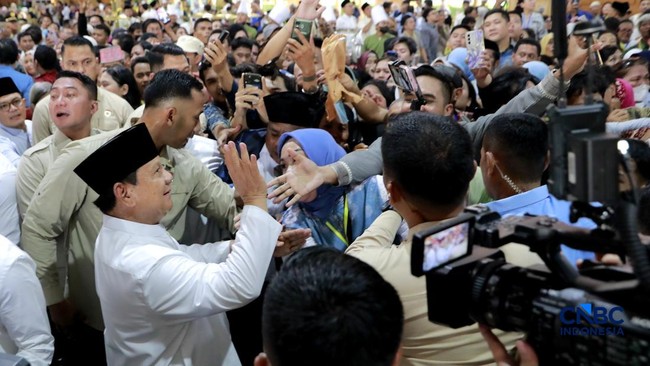
President Prabowo Subianto is preparing strategic steps to be implemented to anticipate the impact of the war in the Middle East on Indonesia’s economy. Several policies are being drafted to cushion potential pressures on society, particularly the risk of rising energy and commodity prices. Coordinating Minister for the Economy Airlangga Hartarto stated that these policies are directed towards keeping the state budget deficit below 3% of GDP. He conveyed this after attending a limited meeting held by President Prabowo with several ministers on Thursday (19/3/2026) last week. “We are maintaining the state budget so that the deficit remains below 3% and in line with the directives from the Full Cabinet Session, which has been discussed with technical ministries. This is achieved through efficiencies across various ministries and agencies. With these efficiencies, the 3% deficit can be maintained,” Airlangga explained. One of the efforts to be undertaken is increasing coal production volume through adjustments to the Work Plan and Budget (RKAB). The government is reviewing adjustments to policies on coal export taxes or export duties to increase state revenues, in line with the upward trend in commodity prices. In the energy sector, the government is pushing for the acceleration of converting diesel power plants (PLTD) to solar power plants (PLTS) as an efficiency measure amid high oil prices. This mandate has been assigned to the Danantara Investment Management Agency for immediate follow-up. The government is also reviewing work flexibility policies through a Work From Home (WFH) scheme for one day in every five working days. “There are savings in terms of mobility usage; the petrol savings are quite significant, one-fifth of what we usually spend,” Airlangga stated. The government is currently refining the technical aspects of implementing this policy. The WFH implementation is expected not only to apply to Civil Servants (ASN) but also to be adopted by the private sector and local governments. The plan for implementing this policy is scheduled to begin after Eid al-Fitr 2026. However, the exact timing will still be determined further. “We’ll see the situation later. The oil price situation, the war situation. We’ll follow the developing circumstances,” he concluded. From all these policies, the government is not opting for fuel price increases. These various steps reflect the government’s adaptive and measured response in maintaining economic stability, while strengthening the direction towards energy self-sufficiency and national resilience.